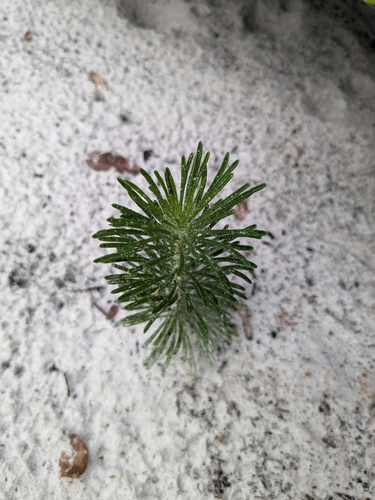
Balduina, Genus, angustifolia, Species,
- Genus & species
coastal plain honeycombhead
Southeastern United States coastal plain
Overview
Balduina angustifolia is an annual or biennial herb in the daisy family, forming a basal rosette in its first season and a branched flowering stem 12–32 inches (30–80 cm) tall afterward. Stems are wiry and well-branched in the upper half, each branch ending in a single yellow flower head 1–1.5 inches (2.5–4 cm) across. The ray florets are yellow with shallowly three-lobed tips and surround a darker yellow disc. After the florets drop, the receptacle dries into a pitted, honeycomb-like structure that gives the plant its common name. Leaves are narrow and linear, 0.4–1.5 inches (1–4 cm) long, crowded near the base and reduced upward. It grows in deep, dry sands of the southeastern coastal plain, including sandhills, scrub, and roadside cuts. Flowering occurs in late summer and autumn, drawing native bees and other small insects. Because it is short-lived and reseeds rather than persisting, populations shift from year to year with disturbance and the availability of open sand. It tolerates extreme drought and nutrient-poor soil but fails on heavy, wet, or shaded sites.
Native Range
Balduina angustifolia is native to the southeastern United States coastal plain, from South Carolina south through Florida and west to Mississippi.Suggested Uses
It is planted in sandhill and coastal-plain restoration, pollinator plantings, and dry sandy borders. It grows in xeric and low-water gardens where summer irrigation is absent.How to Identify
Appearance
Size & Dimensions
Height1' - 2'8"
Width/Spread8" - 1'4"
Colors
Flower Colors
Foliage Colors
Bloom Information
Detailed Descriptions
Foliage Description
green to grey-greenGrowing Conditions
Sun Requirements
Requires 6-12 hours of direct sunlight daily
• Full Sun: 6+ hours of direct sunlight
• Partial Shade: 3-6 hours of direct sunlight
• Full Shade: Less than 3 hours of direct sunlight
Water & Climate
Water Needs
Drought Tolerance
Drought tolerant when established
Care & Maintenance
Care Guide
Balduina angustifolia grows in full sun on deep, sharply drained sand. It needs no fertilizer and no supplemental irrigation once established, drawing on a taproot to survive dry periods. It is sown directly where it is to grow, as the taproot does not recover well from transplanting. Plants flower, set seed, and die within one to two years, maintaining populations by reseeding into open sand. It does not tolerate clay, standing water, or shade.Pruning
No routine pruning is needed. Dead stems may be cut to the ground after seed drop in winter. Leaving stems standing allows self-seeding into surrounding bare sand.Toxicity: Not assessed
UnknownPlanting Guide
Planting Methods & Timing
Planting Method
direct sow
Direct Sow Timing
fall