Austrostipa, Genus, spp., Multiple species,
- Genus
- Multiple species
speargrasses
Australia (with a few species in New Zealand)
Overview
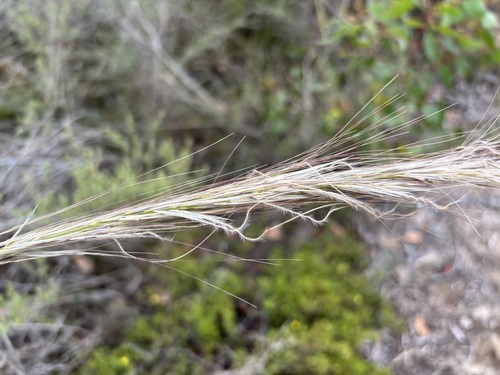
Austrostipa is a genus of about 60 to 65 species of perennial tussock grasses in the family Poaceae, almost all native to Australia with a few reaching New Zealand. Known as speargrasses or corkscrew grasses, they form dense clumps of narrow, often inrolled leaves and send up flowering stems 1 to 6.5 feet (0.3 to 2 m) tall. The flowerheads are open or narrow panicles bearing single-flowered spikelets, each seed tipped with a long, bent and twisted awn 1 to 6 inches (2.5 to 15 cm) long. As the awn dries and wets it coils and uncoils, driving the sharp-pointed seed into the soil or into animal hair. Leaves are green to grey-green and many species cure to straw colour over summer. The genus is widespread across Australian grasslands, woodlands, and semi-arid shrublands, where the grasses are major components of native pasture. They are deep-rooted and tolerate extended drought, poor soils, and heat. The penetrating awned seeds can lodge in the eyes, mouths, and skin of grazing stock and reduce wool value, which limits their use near livestock. Several species are grown in dryland and native gardens for their slender, airy flowering stems.
Native Range
Austrostipa is almost entirely Australian, occurring in every mainland state across grasslands, open woodlands, and semi-arid country. A small number of species extend to New Zealand. The genus is absent as a native from North America.Suggested Uses
Speargrasses are used in dryland, native, and revegetation plantings across Australia, where they bind light soils and are grazed by stock. The airy seed heads catch low light in meadow-style plantings. Their penetrating seeds are a drawback near paths, pets, and livestock yards.How to Identify
Appearance
Size & Dimensions
Height1' - 6'6"
Width/Spread1' - 3'
Bloom Information
Flowering stems are produced mainly in spring and early summer, roughly September to December in the southern hemisphere, with timing shifting earlier in warmer inland areas. The panicles and their long awns persist into summer as the seed matures. Plants often flower in response to winter and spring rainfall.
Detailed Descriptions
Flower Description
Straw to golden brownFoliage Description
Green to grey-greenGrowing Conditions
Sun Requirements
Requires 6-12 hours of direct sunlight daily
• Full Sun: 6+ hours of direct sunlight
• Partial Shade: 3-6 hours of direct sunlight
• Full Shade: Less than 3 hours of direct sunlight
