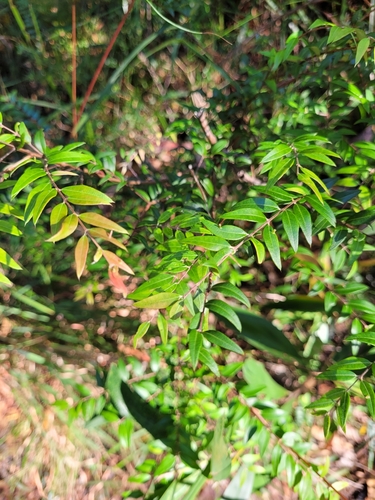
Austromyrtus, Genus, spp., Multiple species,
- Genus
- Multiple species
Overview
Austromyrtus is a small genus of evergreen shrubs in the myrtle family, native to coastal eastern Australia. A. dulcis, midyim or midgen berry, is a low spreading shrub 12-36 inches (30-90 cm) tall and up to 6 feet (1.8 m) wide, while other forms reach 3-6 feet (0.9-1.8 m). Leaves are small, narrow, 0.4-1 inch (1-2.5 cm) long, glossy deep green, with soft pink to bronze new growth. Small white flowers about 0.3-0.5 inch (8-13 mm) across, with five petals and a brush of many stamens, open from late spring into summer. They are followed by rounded white to pale grey berries speckled with grey-purple, 0.2-0.4 inch (5-10 mm) across, soft and sweet when ripe. Growth is dense and low-spreading. Plants need warmth and sharp drainage, and the foliage and roots are damaged by hard frost and waterlogged soil.
Native Range
Native to coastal and near-coastal eastern Australia, in Queensland and New South Wales. Grows in heath, open forest, and the margins of woodland on sandy and well-drained soils, often near the coast.Suggested Uses
Grown as a low groundcover, informal low hedge, and bush-tucker plant in coastal and native gardens, spaced 24-36 inches (60-90 cm) apart. The edible berries place it in productive and habitat plantings. Container culture suits warm-climate patios and sharply drained mixes.How to Identify
Appearance
Size & Dimensions
Height1' - 6'
Width/Spread2' - 6'
Bloom Information
White flowers open from late spring into summer, roughly October to January in the southern hemisphere. Flowering runs over several weeks, and berries ripen in late summer and autumn. Warm, sunny conditions bring the heaviest flowering and fruiting.
Detailed Descriptions
Foliage Description
glossy deep green with pink to bronze new growthGrowing Conditions
Sun Requirements
Requires 5-10 hours of direct sunlight daily
• Full Sun: 6+ hours of direct sunlight
• Partial Shade: 3-6 hours of direct sunlight
• Full Shade: Less than 3 hours of direct sunlight
Care & Maintenance
Care Guide
Plants grow in full sun to part shade in sandy, well-drained, slightly acid soil and tolerate coastal exposure once established. Hard frost and waterlogged soil damage the foliage and roots. Watering is regular through the first warm season, then occasional. A light trim after fruiting keeps the shrub dense and low. Few pests trouble the foliage. Plants grow from seed or semi-hardwood cuttings.Pruning
A light trim after fruiting shapes the shrub and keeps growth dense and low. Stray or frost-damaged stems are removed as needed. Plants tolerate clipping into a low informal hedge.Pruning Schedule
summer
Container Growing
Suitable for container growing
Minimum container size: 5 gallons
