Aubrieta, Genus, ×, Hybrid, 'Red Cascade', Cultivar,
- Genus
- Hybrid
- Cultivar
Red Cascade aubretia
Garden hybrid; genus {Aubrieta} is native to southeastern Europe and central Asia
Overview
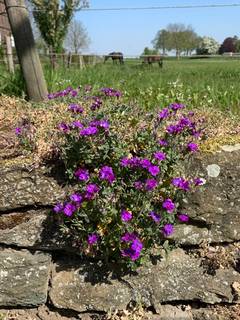
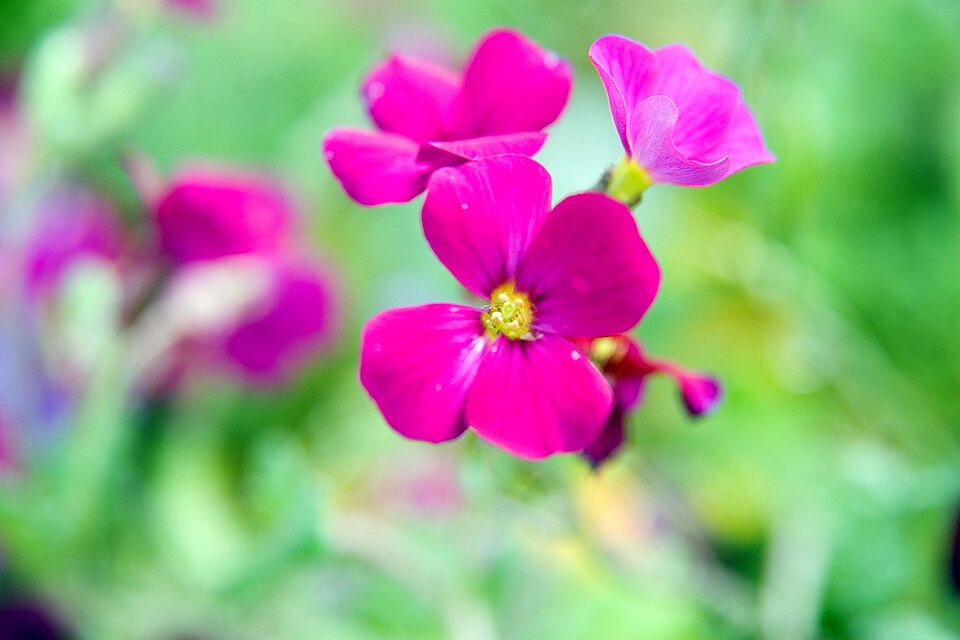
Aubrieta × 'Red Cascade' is a trailing, mat-forming perennial in the Brassicaceae family that grows 4–6 inches (10–15 cm) tall and cascades 18–24 inches (45–60 cm) wide. Dense clusters of four-petaled deep red to crimson-red flowers cover the gray-green foliage mat from March through May, producing one of the earliest concentrated spring flower displays among ground-cover perennials. Small, oblong, hairy gray-green leaves form an evergreen carpet year-round. The trailing habit suits this cultivar to cascading over stone walls, raised bed edges, and retaining walls. Post-bloom shearing by one-third to one-half is required; without it, the centre of the mat becomes woody and open, and the plant declines over 2–3 years. With consistent shearing, plants can persist 4–5 years or more. Sharp drainage is required; in wet, heavy, or humid conditions, crown rot develops, especially during summer heat. The genus performs in alkaline to neutral soils and tolerates limestone-derived ground. In hot, humid climates (USDA zones 8+), the plant is often short-lived, declining during the first or second summer. Cool-summer regions with lean, dry soils support persistence beyond 5 years.
Native Range
The genus Aubrieta is native to southeastern Europe and central Asia, occurring on rocky slopes, cliffs, and limestone outcrops across Turkey, Greece, the Balkans, and Iran. 'Red Cascade' is a garden hybrid selected for deep red flower colour and trailing habit.Suggested Uses
Used cascading over stone walls, retaining walls, and raised bed edges where the trailing mat drapes downward. Suited to rock gardens, crevice plantings, and between flagstones. Container culture works in shallow pots of 1 gallon (3.8 L) or more with gritty media. The deep red spring bloom is uncommon among rock garden plants, most of which flower in blue, purple, or white.How to Identify
Appearance
Size & Dimensions
Height4" - 6"
Width/Spread1'6" - 2'
Bloom Information
Flowering begins in March in mild climates and continues through May. Four-petaled deep red flowers cover the foliage mat for approximately 4 weeks. Bloom is concentrated in a single spring flush with no reblooming. The spring display coincides with early tulips and daffodils.
Detailed Descriptions
Flower Description
Deep red to crimson-redFoliage Description
Gray-green, small, oblong, hairyGrowing Conditions
Sun Requirements
Requires 6-10 hours of direct sunlight daily
• Full Sun: 6+ hours of direct sunlight
• Partial Shade: 3-6 hours of direct sunlight
• Full Shade: Less than 3 hours of direct sunlight
Care & Maintenance
Care Guide
Site in full sun with at least 6 hours of direct light. Lean, sharply drained soil is essential; tolerates alkaline and limestone-derived ground. Soil amendment with rich organic matter or fertiliser produces leggy growth and shortens lifespan. Water sparingly; established plants tolerate drought. Shear the entire plant back by one-third to one-half immediately after flowering — this is the single most important maintenance step and determines whether the plant persists or declines. In hot-summer climates, afternoon shade and dry conditions extend the planting's lifespan. Top-dress with gravel around the mat to keep foliage above wet soil.Pruning
Shear the entire plant back by one-third to one-half immediately after bloom in late spring. This promotes dense regrowth and prevents the centre from becoming woody. Without this annual shearing, the mat opens up and the plant declines. No other pruning is required.Pruning Schedule
Prune: May–June
late spring
Container Growing
Suitable for container growing
Minimum container size: 1 gallons