Atropa, Genus, spp., Multiple species,
- Genus
- Multiple species
Europe, North Africa, and western Asia
Overview
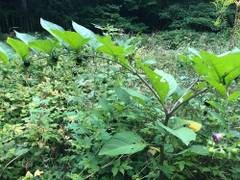
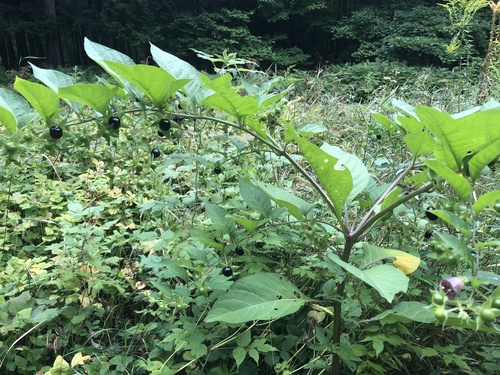
Atropa is a genus of about four herbaceous perennials in the nightshade family, native to Europe, North Africa, and western Asia. The principal species, A. belladonna, deadly nightshade, forms a bushy clump 24-72 inches (60-180 cm) tall from a thick root, with branching stems bearing ovate leaves up to 7 inches (18 cm) long in unequal pairs. Solitary bell-shaped flowers, dull purple-brown to violet, about 1 inch (2.5 cm) long, hang from the leaf axils from early summer into autumn. Each is followed by a glossy black berry about 0.6 inch (1.5 cm) across, cupped by a persistent green calyx. All parts contain tropane alkaloids including atropine, hyoscyamine, and scopolamine; the berries are the part most often eaten by mistake, and ingestion can be fatal to people and animals. Plants self-seed and die back to the rootstock in winter. Growth is fast in rich, moist soil, and clumps can reach full size in a single season. The foliage has a sharp, unpleasant scent when bruised.
Native Range
Native to central and southern Europe, North Africa, and western Asia to Iran. Grows in woodland clearings, scrub, hedge banks, and disturbed ground, usually on chalky or limestone soils in dappled shade.Suggested Uses
Grown in botanical, medicinal, and historical-plant collections and in shaded wild borders, spaced 24-36 inches (60-90 cm) apart. The toxicity of all parts limits its use where children, pets, or livestock have access. The black berries and bell flowers place it in woodland and curiosity plantings.How to Identify
Appearance
Size & Dimensions
Height2' - 6'
Width/Spread2' - 4'
Bloom Information
Bell-shaped purple-brown flowers open from early summer into autumn, about June through September. Flowering and fruiting overlap, so flowers and ripe black berries appear together on the same plant. Bloom continues for several weeks in warm weather.
Detailed Descriptions
Flower Description
dull purple-brown to violetFoliage Description
dull mid-greenGrowing Conditions
Sun Requirements
Requires 3-7 hours of direct sunlight daily
• Full Sun: 6+ hours of direct sunlight
• Partial Shade: 3-6 hours of direct sunlight
• Full Shade: Less than 3 hours of direct sunlight
Care & Maintenance
Care Guide
Plants grow in part shade in moist, fertile, well-drained soil and favour chalky or limestone ground. Full sun is tolerated where soil stays moist, while dry soil shortens the plant and its life. Self-sown seedlings appear around established plants and can spread into surrounding ground. All parts contain tropane alkaloids that are poisonous to people, pets, and livestock, with the glossy berries most dangerous to children. Few pests trouble the foliage, as the alkaloids deter grazing. Plants die back to the rootstock in winter and reshoot in spring.Pruning
Stems are cut to the ground in late autumn after they die back, or in early spring before new growth. Flower and fruit clusters are removed before berries ripen where self-seeding or accidental poisoning is a concern. Seedlings are dug out to limit spread.Pruning Schedule
fallearly spring