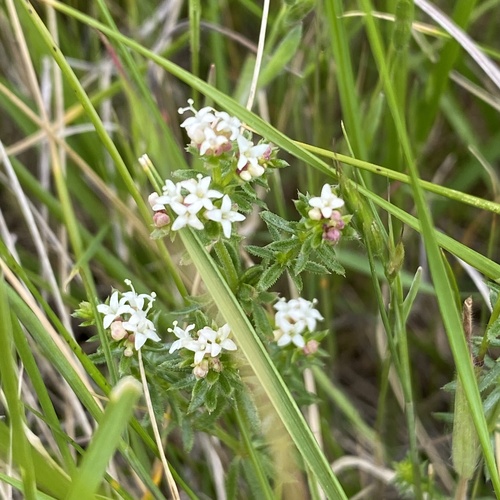
Asperula, Genus, conferta, Species,
- Genus & species
common woodruff
Overview
A low, spreading perennial herb forming loose patches 2-8 inches (5-20 cm) tall and 8-16 inches (20-40 cm) wide, with slender, four-angled stems that scramble through surrounding vegetation. Leaves are narrow and linear, 0.2-0.6 inch (5-15 mm) long, arranged in whorls of four to six around the stem. Flowers are tiny, about 0.1-0.2 inch (3-5 mm) across, white to pale pink, tubular with four spreading lobes, in small terminal clusters. Flowering occurs late winter through spring. The crushed foliage releases a coumarin scent as it dries. Fruit a small dry two-lobed nutlet. Spreads by slender rhizomes and self-seeding to form open colonies. Foliage thins in dry summer conditions.
Native Range
Native to south-eastern Australia in Queensland, New South Wales, Victoria, South Australia, and Tasmania. Grows in grassland, grassy woodland, and moist depressions on clay and loam soils, often among taller herbs and grasses.Suggested Uses
Used as a groundcover and filler among grasses in native and meadow gardens at 8-12 inch (20-30 cm) spacing. Suits informal plantings where its scrambling stems can knit through other low plants. The dried foliage is used for its hay-like scent.How to Identify
Appearance
Size & Dimensions
Height2" - 8"
Width/Spread8" - 1'4"
Bloom Information
Detailed Descriptions
Flower Description
White to pale pinkFoliage Description
GreenGrowing Conditions
Sun Requirements
Requires 3-8 hours of direct sunlight daily
• Full Sun: 6+ hours of direct sunlight
• Partial Shade: 3-6 hours of direct sunlight
• Full Shade: Less than 3 hours of direct sunlight
Care & Maintenance
Care Guide
Water during dry spells in the growing season; the plant tolerates seasonal drought once established. Grows in full sun to part shade on clay or loam soils with seasonal moisture. Spreads by rhizomes and self-seeding and can weave through other low plants. Cut back after flowering to tidy the patch. Few pests trouble it. No fertilizer is needed in average soils.Pruning
Trim spent stems after flowering to tidy the patch and reduce self-seeding. Cut back dry summer growth to ground level. The plant reshoots from rhizomes with autumn moisture. No structural pruning is required.Pruning Schedule
Prune: December–January
summer
Container Growing
Suitable for container growing
Minimum container size: 1 gallons