Artocarpus, Genus, altilis, Species,
- Genus & species
Breadfruit
New Guinea, the Maluku Islands, and the Philippines
Overview
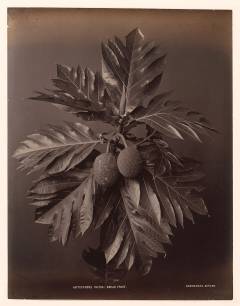
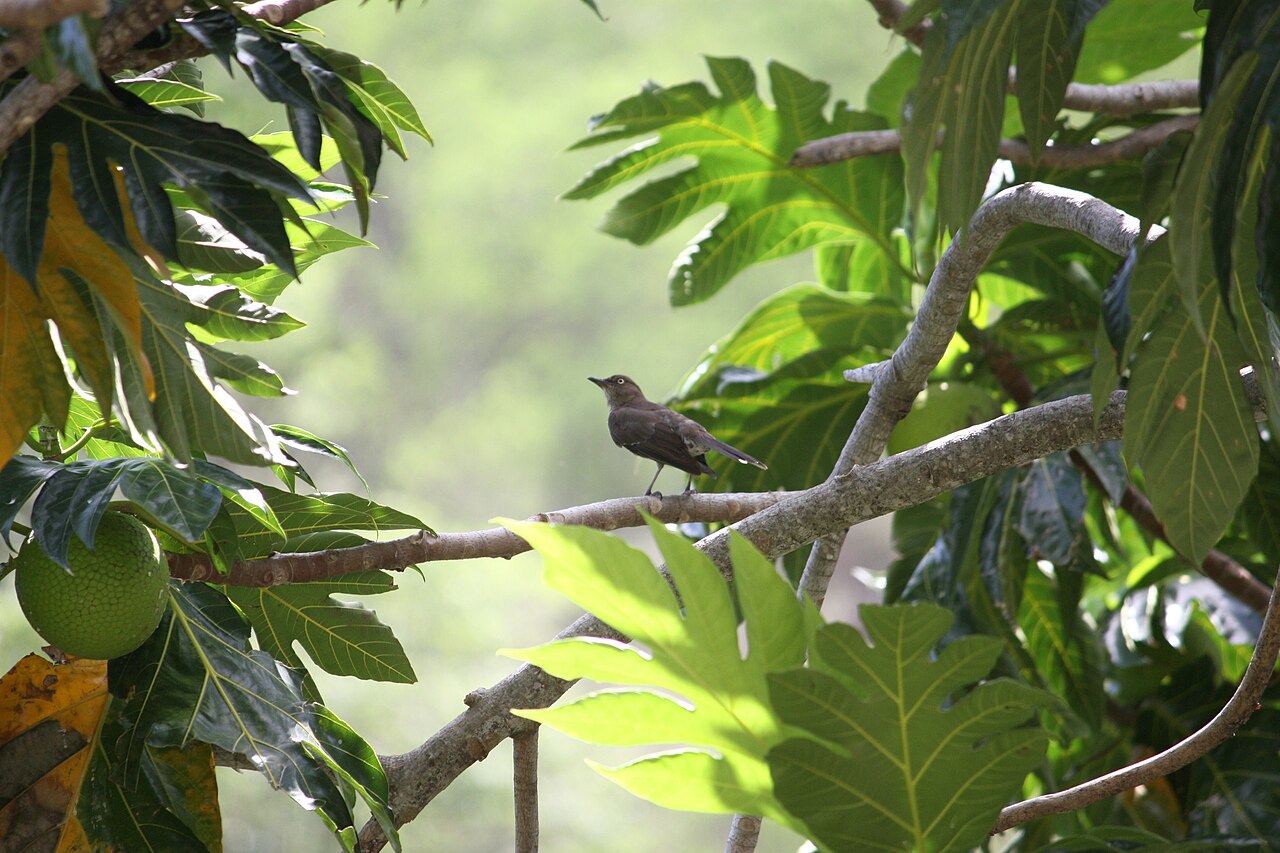
Artocarpus altilis is an evergreen tree 40-85 feet (12-26 m) tall with a spreading crown 30-50 feet (9-15 m) wide and a trunk 2-6 feet (0.6-1.8 m) in diameter. Leaves are 12-24 inches (30-60 cm) long, glossy dark green above, and pinnately cut into 5-11 pointed lobes, with pale veins and a rough upper surface. All parts exude white latex when cut. Male inflorescences are pendulous club-shaped spikes 5-12 inches (13-30 cm) long, while female heads are rounded and develop into a syncarp 4-12 inches (10-30 cm) across weighing 2-13 pounds (1-6 kg), with green to yellow-green skin patterned in polygonal facets and cream starchy flesh. Most cultivated varieties are seedless triploids propagated from root shoots rather than seed, so orchard trees within a region are frequently a single clone. A mature tree carries 50-200 fruit a year across a main summer crop and a lighter off-season crop. Roots are shallow and surface-spreading, which lifts nearby paving and leaves trees vulnerable in cyclone winds. The latex causes contact dermatitis in some people, and fruit falling from 30 feet (9 m) or more damages vehicles and roofing beneath the canopy.
Native Range
Artocarpus altilis was domesticated from A. camansi in New Guinea and the Maluku Islands, with wild relatives extending to the Philippines. Polynesian voyagers carried vegetatively propagated clones east across Oceania over roughly three thousand years, reaching Samoa, Tahiti, the Marquesas, and Hawaii. It is now grown throughout the humid tropics, including the Caribbean, West Africa, and northern South America.Suggested Uses
Grown as a staple starch crop in home gardens and orchards across Oceania, the Caribbean, and tropical Asia at spacings of 30-40 feet (9-12 m). The canopy shades coffee, cacao, and taro in mixed agroforestry plantings. Fruit is roasted, boiled, fermented into paste, or dried and milled into gluten-free flour, and the timber is worked into canoe hulls and surfboards.How to Identify
Appearance
Size & Dimensions
Height40' - 85'
Width/Spread30' - 50'
Bloom Information
Flowering runs February through July in the main cycle, with a lighter second flush from September to November in equatorial climates. Male spikes shed pollen for 3-5 days, then blacken and fall. Fruit develops over 15-19 weeks from pollination to harvest, so the main crop ripens between June and September in Hawaii. Trees begin flowering 3-6 years after planting from root cuttings.
Detailed Descriptions
Foliage Description
Glossy dark greenGrowing Conditions
Sun Requirements
Requires 6-12 hours of direct sunlight daily
• Full Sun: 6+ hours of direct sunlight
• Partial Shade: 3-6 hours of direct sunlight
• Full Shade: Less than 3 hours of direct sunlight
Care & Maintenance
Care Guide
Artocarpus altilis needs full sun, mean temperatures of 70-90F (21-32C), and annual rainfall of 60-100 inches (1,500-2,500 mm) spread through the year. It grows on deep, free-draining loam, sand, or coral substrate at pH 6.1-7.4 and copes with saline coastal soils, though waterlogging beyond a few days kills feeder roots. Hardiness stops at USDA zones 10-12; brief exposure below 40F (4C) causes leaf drop and temperatures below 32F (0C) kill the tree. Potassium and nitrogen are applied three or four times a year in bearing orchards, at roughly 1 pound (0.45 kg) of balanced fertilizer per inch of trunk diameter annually. Shallow roots are damaged by cultivation beneath the canopy, so mulch 4-6 inches (10-15 cm) deep is used in place of digging. Mealybugs, scale, and fruit-piercing moths are the recurring pests, and Phytophthora fruit rot follows extended wet weather.Pruning
Trees are headed back to 12-20 feet (3.7-6 m) during the first 3-5 years to hold fruit within reach and reduce wind sail. Pruning follows the main harvest, between January and March, and takes out dead wood, crossing limbs, and up to one third of the previous season growth. Cuts bleed latex heavily for several hours and are made in dry weather so the wounds seal. Branches over 4 inches (10 cm) in diameter regrow slowly and often die back at the cut.Pruning Schedule
Prune: January–March
winterearly spring