Aria, Genus, spp., Multiple species,
- Genus
- Multiple species
Whitebeam
Europe, North Africa, and temperate Asia
Overview
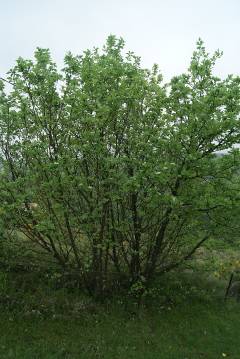
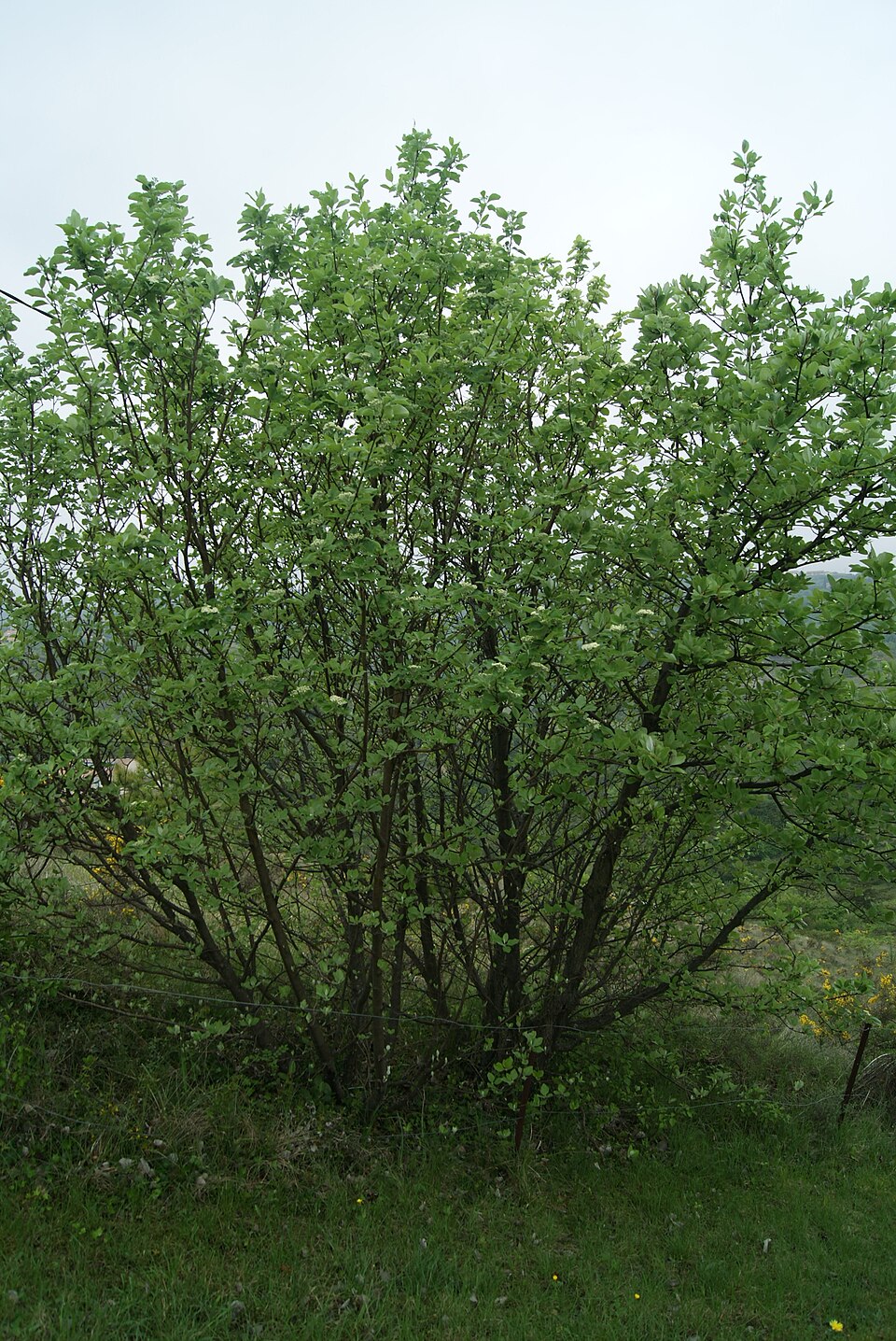
Aria is a genus of deciduous trees and shrubs in the rose family Rosaceae, known as whitebeams and segregated from Sorbus, native to Europe, North Africa, and temperate Asia. Plants range from large shrubs to trees 20-80 feet (6-25 m) tall, with a rounded to upright crown and smooth grey bark. The simple, oval to elliptic leaves are 2-5 inches (5-13 cm) long, toothed or shallowly lobed, dark green above and densely white-felted beneath, so the canopy flashes silver as the leaves turn in the wind. In late spring the trees bear flat-topped clusters of small white five-petaled flowers, followed in autumn by clusters of rounded berries about 0.3-0.6 inch (8-15 mm) wide that ripen orange-red to scarlet and are eaten by birds. Many whitebeams are apomictic, setting seed without cross-pollination, so local populations breed true and some are confined to single hillsides or gorges. The genus grows on chalk, limestone, and other well-drained soils, in open woodland, scrub, cliffs, and rocky slopes. Plants tolerate exposure, wind, drought, and poor alkaline ground, and the felted leaves and autumn berries hold interest from spring through fall.
Native Range
Native to Europe, North Africa, and temperate Asia. Plants grow in open woodland, scrub, hedgerows, cliffs, and rocky slopes, often on chalk and limestone.Suggested Uses
Aria is grown as a street, garden, and park tree and as a windbreak or screen, valued for its silver-backed foliage and autumn berries. The flowers draw bees and the berries feed birds. Smaller and shrubby species are grown in mixed plantings and on dry, chalky banks where larger trees struggle.How to Identify
Appearance
Size & Dimensions
Height20' - 80'
Width/Spread15' - 40'
Bloom Information
Flowering occurs in late spring, generally May to June, with flat-topped clusters of small white flowers opening over a couple of weeks and drawing bees and other insects. Green berries follow through summer and ripen orange-red to scarlet in autumn. The fruit is taken quickly by birds once ripe.
Detailed Descriptions
Foliage Description
dark green above, white beneathGrowing Conditions
Sun Requirements
Requires 4-10 hours of direct sunlight daily
• Full Sun: 6+ hours of direct sunlight
• Partial Shade: 3-6 hours of direct sunlight
• Full Shade: Less than 3 hours of direct sunlight