Arenaria, Genus, serpyllifolia, Species,
- Genus & species
thyme-leaved sandwort
Europe, temperate Asia, North Africa
SunFull Sun
Overview
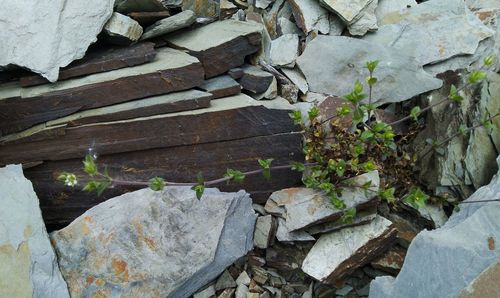
Arenaria serpyllifolia is a small, much-branched annual of the pink family, forming low, wiry tufts 1–10 inches (2.5–25 cm) tall, often greyish with short hairs. The tiny, oval, pointed leaves are 0.1–0.3 inch (3–8 mm) long, stalkless, and paired along slender stems, resembling the leaves of thyme. From April to August it carries many small white flowers about 0.2 inch (5–6 mm) across, with five unnotched petals shorter than the pointed green sepals, opening in dry sunny weather. The plant grows on dry, bare, open ground, including sandy and chalky soil, arable margins, paths, walls, rocky banks, and gravel, across Europe, Asia, and North Africa, and is widely naturalized elsewhere. It tolerates poor, thin, drought-prone soils and completes its life cycle quickly, often within a few months. It is intolerant of shade and dense vegetation, depending on open ground to set seed. Plants are short-lived and renew entirely from the heavy seed crop each year.
Native Range
Arenaria serpyllifolia is native to Europe, temperate Asia, and North Africa, and is widely naturalized in North America and beyond. It grows on dry, bare, open ground such as sandy and chalky soil, arable land, paths, walls, and gravel.Suggested Uses
Used mainly in wildflower and bare-ground habitats and in studies of pioneer plants on poor soils rather than in ornamental planting. It colonizes gravel, paving cracks, and dry open soil where little else grows.How to Identify
Appearance
Size & Dimensions
Height1" - 10"
Width/Spread2" - 8"
Bloom Information
Flowers open from April to August, mainly in dry sunny conditions, and close in dull weather. Each flower forms a small flask-shaped capsule that releases numerous tiny seeds. Seeding is heavy and rapid, allowing repeated generations on open ground.
Detailed Descriptions
Foliage Description
grey-greenGrowing Conditions
Sun Requirements
Requires 6-12 hours of direct sunlight daily
• Full Sun: 6+ hours of direct sunlight
• Partial Shade: 3-6 hours of direct sunlight
• Full Shade: Less than 3 hours of direct sunlight
Water & Climate
Water Needs
Drought Tolerance
Drought tolerant when established