Ardisia, Genus, crenata, Species,
- Genus & species
coralberry
Overview
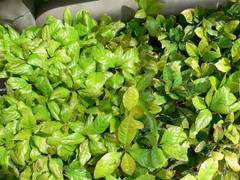
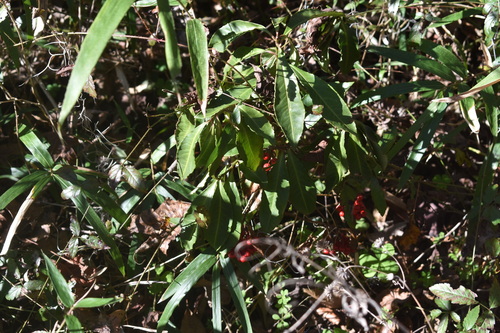
Ardisia crenata is an evergreen shrub reaching 24-72 inches (60-180 cm) tall and 24-48 inches (60-120 cm) wide, with an upright, sparingly branched form and a single main stem when young. The leaves are alternate, leathery, and glossy dark green, 3-6 inches (7.5-15 cm) long, with wavy, scalloped (crenate) margins. In summer it bears small white to pale pink flowers in drooping clusters below the foliage. These are followed by long-lasting, bright red, round berries about 0.25 inch (6 mm) across that hang in clusters through winter and into the next flowering. The berries and foliage are reported toxic to livestock and pets. Native to East Asia, the species has escaped cultivation and is listed as an invasive plant in Florida, Texas, Louisiana, and other Gulf states, where birds spread the seed into woodlands. It tolerates deep shade and forms dense understory stands that crowd out native plants, which is the basis for its invasive listing.
Native Range
Ardisia crenata is native to East Asia, including Japan, China, Korea, and parts of Southeast Asia, where it grows in moist, shaded broadleaf forest. In the southeastern United States it has naturalized from plantings and spread into woodlands.Suggested Uses
Grown as a shade shrub and container plant for foliage and winter berries in frost-free climates. In regions where it is invasive, it is replaced by non-spreading native shrubs with similar berries. Spaced 24-36 inches (60-90 cm) apart where planted.How to Identify
Appearance
Size & Dimensions
Height2' - 6'
Width/Spread2' - 4'
Bloom Information
Flowering occurs in summer, mainly June and July, with small white to pink flowers in nodding clusters. Berries develop in fall and ripen bright red, holding on the plant through winter and into the next flowering. Fruit and flowers can appear together on established plants.
Detailed Descriptions
Flower Description
white to pinkFoliage Description
dark greenGrowing Conditions
Sun Requirements
Requires 2-6 hours of direct sunlight daily
• Full Sun: 6+ hours of direct sunlight
• Partial Shade: 3-6 hours of direct sunlight
• Full Shade: Less than 3 hours of direct sunlight
Care & Maintenance
Care Guide
Grow in partial to full shade in moist, humus-rich, well-drained soil. This species tolerates deep shade and a range of soils but is damaged by hard frost and frozen ground. In zones 8-11 it stays evergreen, while colder spells can kill top growth or whole plants. Little fertilizer is needed in decent soil. Birds eat the berries and spread seed widely, and the plant self-sows into surrounding ground. Because it is invasive in parts of the southeastern United States, its cultivation is discouraged in those regions.Pruning
Prune in early spring to shape the plant and remove leggy or frost-damaged stems. Cutting off the berry clusters before they ripen reduces self-seeding and spread. Plants resprout from the base after hard pruning.Pruning Schedule
Prune: March
early spring
Container Growing
Suitable for container growing
Minimum container size: 5 gallons