Araujia, Genus, spp., Multiple species,
- Genus
- Multiple species
moth plant
Overview
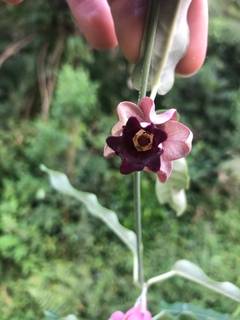
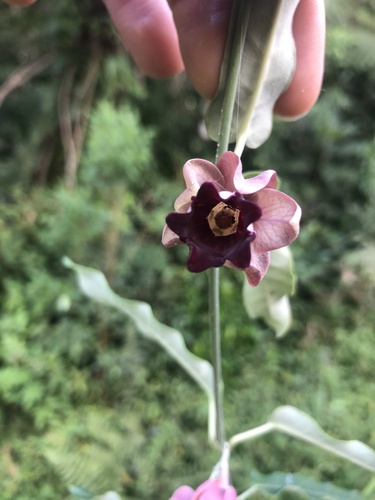
Araujia is a genus of twining, evergreen climbers in the dogbane family Apocynaceae, native to South America and containing a handful of species. Plants climb by twining stems to 16-30 feet (5-9 m), with opposite, arrow-shaped to oblong leaves 2-4 inches (5-10 cm) long that are dark green above and pale, downy white beneath. All parts release a milky latex when cut. From summer into autumn the vines bear clusters of bell-shaped flowers about 0.75-1 inch (2-2.5 cm) across in white to pale pink, often with darker streaks inside. A. sericifera, the moth plant or cruel plant, is the species seen most widely; its common names come from the way visiting moths are briefly caught by the tongue in the flowers as they feed and pollinate. The flowers give way to large, ridged, pear-shaped pods 3-5 inches (8-13 cm) long that split to release many seeds, each carried on a tuft of silky hairs that drift on the wind. The genus grows in warm-temperate to subtropical scrub, forest edges, and disturbed ground, and A. sericifera has naturalized as a weed across Australia, New Zealand, and other mild regions, where it smothers shrubs and trees. The latex and seeds are toxic if eaten, and the sap can irritate skin.
Native Range
Native to South America, including Brazil, Argentina, Peru, and neighboring countries. Plants grow in warm-temperate to subtropical scrub, forest margins, and disturbed ground.Suggested Uses
Araujia is grown in warm gardens to cover fences, arbors, and large trellises for quick evergreen screening, though its weedy spread limits its use. The night-scented flowers draw moths and other pollinators. Within its native range the silky seed floss has been gathered for stuffing and tinder.How to Identify
Appearance
Size & Dimensions
Height16' - 30'
Width/Spread6' - 15'
Bloom Information
Flowering runs from summer into autumn, with clusters of fragrant white to pink bells opening over many weeks. Moths and other night-flying insects pollinate the flowers and are sometimes briefly trapped by the tongue. Large pods develop through autumn and split open in winter to shed their plumed seeds.
Detailed Descriptions
Flower Description
white to pale pinkFoliage Description
dark green, white beneathGrowing Conditions
Sun Requirements
Requires 4-10 hours of direct sunlight daily
• Full Sun: 6+ hours of direct sunlight
• Partial Shade: 3-6 hours of direct sunlight
• Full Shade: Less than 3 hours of direct sunlight