Aponogeton, Genus, natans, Species,
- Genus & species
floating water hawthorn
Tropical and subtropical Asia (India, Sri Lanka, Bangladesh, and parts of Southeast Asia); still and slow-moving freshwater habitats including ponds, ditches, rice paddies, and seasonal pools from lowlands to approximately 3,000 feet (900 m).
Overview
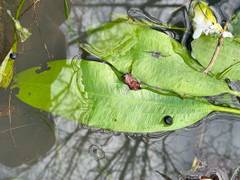
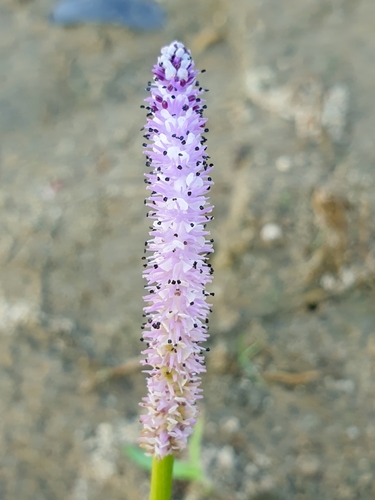
Aponogeton natans is an aquatic perennial in the small Aponogetonaceae family (a monocot family of approximately 50 species, all aquatic), growing from a tuberous rootstock anchored in the bottom substrate of still or slow-moving freshwater. Leaves are floating, oblong-elliptic, 2-6 inches (5-15 cm) long and 0.75-2 inches (2-5 cm) wide, bright green, with a smooth surface and parallel venation characteristic of the genus and the broader monocot lineage. Petioles extend from the submerged tuber to the water surface, adjusting in length to the local water depth typically 12-24 inches (30-60 cm), with the petiole growing as needed to keep the leaf blade floating at the surface as water levels rise and fall through the season. The inflorescence is a single-forked spike (the bifid form, where the spike axis splits into two arms partway along its length, distinguishes the species from related Aponogeton with simple unforked or multi-forked spikes) that emerges 1-2 inches (2.5-5 cm) above the water surface, bearing small white fragrant flowers arranged in a dense one-sided cluster along the spike axis. Fragrance is sweet and vanilla-like, most noticeable on warm days. The species is native to tropical and subtropical Asia, where it grows in ponds, slow rivers, rice paddies, and seasonal pools across India, Sri Lanka, Bangladesh, and parts of Southeast Asia. Differs from the more widely cultivated Aponogeton distachyos (water hawthorn from South Africa) in being less cold-hardy and requiring water temperatures above 60°F (15°C) for active growth; tubers go dormant when water temperature drops below 55°F (13°C), which restricts the species' outdoor cultivation to USDA zone 10 and tropical climates. In the Pacific Northwest, the species is grown as a container aquatic in lined ponds or indoor water gardens, with the container moved indoors before water temperature drops in autumn and the tuber overwintered in a cool frost-free location at 40-50°F (5-10°C) with the soil kept barely moist. The Aponogetonaceae family shares with the broader aquatic monocots (including Hydrocharitaceae, Cymodoceaceae, and Posidoniaceae) the floating-leaf-with-submerged-rhizome growth strategy that allows aquatic plants to capture sunlight at the water surface while anchoring in the bottom substrate, with carbon dioxide and dissolved nutrients absorbed from the water column through both leaf and root tissue. Susceptible to aphids on the emergent flower spikes and to crown rot if tubers are stored too wet during winter dormancy.
Native Range
Aponogeton natans is native to tropical and subtropical Asia, with a range covering India, Sri Lanka, Bangladesh, and parts of Southeast Asia. The species occurs in still and slow-moving freshwater habitats including ponds, ditches, rice paddies, and seasonal pools, from lowlands to approximately 3,000 feet (900 m) in elevation. The tropical Asian wet-season-and-dry-season climate cycle shapes the species' annual growth pattern (active growth during the warm wet monsoon, tuber dormancy during cooler or drier periods), and the rice-paddy habitat association in the home range has integrated the species into traditional Asian agricultural wet-cropping systems where the floating leaves shade the water surface and the tubers are sometimes harvested for food.Suggested Uses
Grown in container water gardens, lined half-barrels, and indoor aquatic displays. The floating leaves shade the water surface and reduce algae growth in small ponds by limiting light penetration into the water column. In tropical and subtropical climates (USDA zones 10-12), the species is planted permanently in ponds and slow streams as a year-round aquatic. In the Pacific Northwest, the species is treated as a tender aquatic and overwintered indoors during the cold months from October through April, with outdoor placement restricted to the warm summer window from May through September when water temperatures support active growth.How to Identify
Appearance
Size & Dimensions
Height1" - 2"
Width/Spread1' - 2'
Bloom Information
White fragrant flowers appear intermittently from late spring through autumn whenever water temperatures exceed 65°F (18°C). Each emergent spike rises above the water surface and opens progressively from the base upward over 5-10 days, and in continuously warm conditions flowering is nearly continuous through the summer months. Pollination is by insects visiting the emergent spikes for the sweet vanilla-like fragrance and the small floral nectar reward. Small green fruit develop underwater after pollination, and seed dispersal happens in the local water column through gravity and water flow.
Detailed Descriptions
Flower Description
White; small fragrant flowers arranged along one side of an emergent single-forked spike that rises 1-2 inches (2.5-5 cm) above the water surfaceFoliage Description
Bright green; floating oblong-elliptic leaves with smooth surfaces and parallel venation typical of the monocot Aponogetonaceae familyGrowing Conditions
Sun Requirements
Requires 4-8 hours of direct sunlight daily
• Full Sun: 6+ hours of direct sunlight
• Partial Shade: 3-6 hours of direct sunlight
• Full Shade: Less than 3 hours of direct sunlight
Care & Maintenance
Care Guide
Plant tubers 2-3 inches (5-8 cm) deep in a container of heavy loam topped with gravel to prevent water clouding from substrate disturbance, and submerge the container in still water 6-18 inches (15-45 cm) deep. Site selection runs to full sun to partial shade. Water temperature must remain above 60°F (15°C) for active growth, and the species enters dormancy below 55°F (13°C). Aquatic plant fertilizer tablets pushed into the substrate every 4-6 weeks during the growing season carries the nutrient demand, since the species cannot draw nutrients from typical garden soil amendments. In the Pacific Northwest, the species is grown in a container pond or lined half-barrel that can be moved indoors or into a greenhouse before water temperature drops below 55°F (13°C) in autumn. During winter dormancy, the container is held in a cool frost-free location at 40-50°F (5-10°C) with the soil kept barely moist, and submersion resumes in spring when water warms above 60°F.Pruning
Dead or yellowing floating leaves are removed throughout the growing season to maintain water clarity. Spent flower spikes are cut at the water surface after bloom completes. During autumn dormancy onset, all dead foliage is removed before the tuber moves to the overwintering location. No other pruning is needed.Container Growing
Suitable for container growing
Minimum container size: 5 gallons