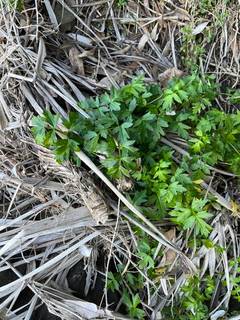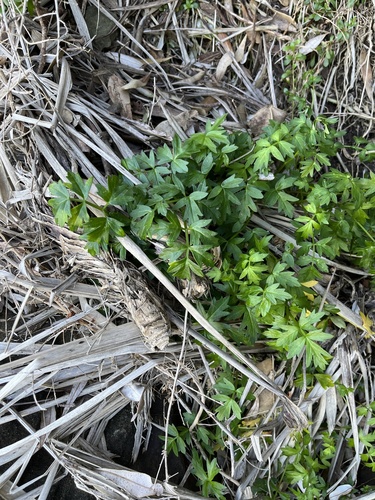
Apium, Genus, spp., Multiple species,
- Genus
- Multiple species
celery
Europe, Asia, Africa, and the Americas
SunFull Sun – Part Shade
WaterHigh
Overview
Apium is a genus of aromatic herbs in the carrot family Apiaceae, native to temperate and subtropical regions of Europe, Asia, Africa, and the Americas, and the source of cultivated celery. Plants are biennials or short-lived perennials with grooved, branching stems and glossy, pinnately divided leaves whose crushed foliage releases a strong celery scent. They grow 1-3.5 feet (30-100 cm) tall, forming a rosette in the first season and a flowering stem in the second. Tiny white to greenish-white flowers are packed into compound umbels 1-2.5 inches (2.5-6 cm) across, opening in summer and followed by small ribbed fruits about 0.06 inch (1.5 mm) long that carry the aromatic oils. A. graveolens, the wild ancestor of stalk celery, celeriac, and leaf celery, grows in coastal marshes and ditches and has been selected into these vegetable forms over centuries of cultivation. The genus tends toward wet ground, occurring in salt marshes, riverbanks, and damp meadows on fertile soils. Several wild species are edible, though the foliage of some can cause skin sensitivity in sunlight because of furanocoumarin compounds. Heat and drought push plants to bolt and turn bitter, ending their use as a vegetable.
Native Range
Native across temperate and subtropical Europe, Asia, Africa, and the Americas, with the celery species A. graveolens originating around the Mediterranean and Atlantic coasts. Plants grow in salt marshes, wet meadows, ditches, and along riverbanks.Suggested Uses
Apium is grown chiefly as a vegetable and culinary herb, supplying celery stalks, celeriac roots, and aromatic leaves and seed used as seasoning. In damp gardens and along pond margins the wild species are grown in herb and edible plantings. The summer umbels draw beneficial insects and small pollinators.How to Identify
Appearance
Size & Dimensions
Height1' - 3'6"
Width/Spread6" - 1'6"
Bloom Information
Flowering occurs in summer, generally June to August, in the plant second year of growth. The small white umbels open over several weeks and draw many small insects. Ribbed fruits ripen in late summer and autumn, after which biennial plants die.
Detailed Descriptions
Flower Description
white to greenish-whiteFoliage Description
greenGrowing Conditions
Sun Requirements
Requires 4-8 hours of direct sunlight daily
• Full Sun: 6+ hours of direct sunlight
• Partial Shade: 3-6 hours of direct sunlight
• Full Shade: Less than 3 hours of direct sunlight
Water & Climate
Water Needs
Care & Maintenance
Care Guide
Plants grow in full sun to part shade in consistently moist, fertile soil rich in organic matter, with a pH near 5.8 to 7.0. The genus is adapted to wet ground and tolerates brackish conditions, but it bolts and turns bitter under heat and drought stress. Cultivated celery is grown as a cool-season crop, started indoors and transplanted, and needs steady moisture and feeding for tender stalks. Hardiness varies, with most forms grown as annuals or biennials and damaged by hard frost. Propagation is by seed, which is small, slow to germinate, and sown shallowly. Slugs, leaf miners, and fungal blights are the main pests of cultivated plants.Pruning
Outer leaf stalks of cultivated celery are harvested as needed while the plant keeps growing from the center. Flowering stems are removed if leaf or stalk production is wanted, since bolting ends useful growth. Spent plants are cleared after seed ripens or after harvest.Container Growing
Suitable for container growing
Minimum container size: 3 gallons
Toxicity
Non-toxicPlanting Guide
Planting Methods & Timing
Planting Method
transplant
Indoor Start
10 weeks before last frost
Direct Sow Timing
early spring in cool conditions
Days to Maturity
85–120 days
Plant Spacing
8 inches