Aotus, Genus, spp., Multiple species,
- Genus
- Multiple species
golden pea
Overview
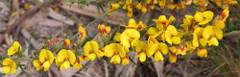
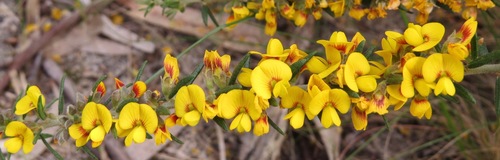
Aotus is a genus of small evergreen shrubs in the pea family Fabaceae, endemic to Australia and comprising about 15 species. Plants are wiry and much-branched, growing 1-6.5 feet (0.3-2 m) tall, with slender stems clothed in small, narrow leaves 0.2-1 inch (5-25 mm) long that often have margins rolled under toward the midrib. The pea-shaped flowers appear in spring along the upper stems, measuring about 0.4 inch (10 mm) across, with yellow to orange petals marked with red or brownish centers, a coloring shared with several unrelated Australian legumes grouped together as eggs-and-bacon plants. Flowers are followed by small, hairy, two-seeded pods. The genus occurs in heathland, dry sclerophyll forest, and coastal scrub, often on nutrient-poor sandy soils, and like many Australian legumes its roots fix nitrogen through symbiotic bacteria. Species range in habit from low, spreading subshrubs to erect plants over head height, with A. ericoides among the more widespread, forming open colonies after fire. The seeds carry a hard coat and germinate in flushes following bushfire or soil disturbance. Most species are frost-sensitive and adapted to dry summers and mild, wet winters, and individual plants tend to be relatively short-lived.
Native Range
Endemic to Australia, occurring across temperate and subtropical parts of the continent. Plants grow in heathland, dry open forest, and coastal scrub, typically on sandy or gravelly low-nutrient soils.Suggested Uses
Aotus is grown in native and water-wise gardens, on banks, and in heath or coastal plantings where its spring flowers add color among other Australian shrubs. The flowers draw native bees and other insects. Lower, spreading species are used as informal groundcover on dry, sunny slopes.How to Identify
Appearance
Size & Dimensions
Height1' - 6'6"
Width/Spread1' - 5'
Bloom Information
Flowering occurs mainly in spring, from August to November in the Southern Hemisphere, with scattered flowers at other times in mild areas. The massed yellow-and-red blooms last several weeks before giving way to small pods. Seed ripens by early summer and is shed as the pods dry and split.
Detailed Descriptions
Flower Description
yellow with red markingsFoliage Description
green to grey-greenGrowing Conditions
Sun Requirements
Requires 6-10 hours of direct sunlight daily
• Full Sun: 6+ hours of direct sunlight
• Partial Shade: 3-6 hours of direct sunlight
• Full Shade: Less than 3 hours of direct sunlight
Care & Maintenance
Care Guide
Plants need full sun and sharply drained, sandy or gravelly soil low in phosphorus, reflecting their heathland origins. Soil pH from 5.0 to 6.5 suits the genus, and most species decline in rich, fertilized, or waterlogged ground. They tolerate dry summers once established and are damaged by hard frost, suiting USDA zones 9 to 11 or frost-free Mediterranean climates. Propagation is from scarified or smoke-treated seed, which germinates erratically, or from semi-hardwood cuttings. Light watering during dry spells maintains the foliage, while overwatering and high humidity promote root rot. Plants are relatively short-lived and are often replaced every few years or regenerated from seed.Pruning
A light trim after flowering keeps plants bushy and removes spent blooms before seed sets. Cutting back into old, leafless wood is avoided, as many species do not reshoot from bare stems. Tip-pinching young plants encourages a denser, more compact habit.Container Growing
Suitable for container growing
Minimum container size: 3 gallons