Anthericum, Genus, spp., Multiple species,
- Genus
- Multiple species
St Bernard's lily
SunFull Sun – Part Shade
Overview
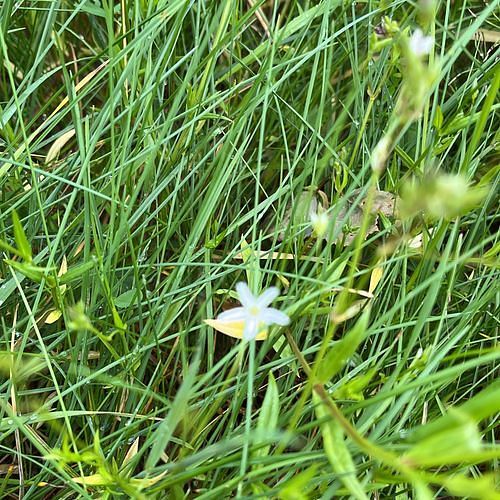
Anthericum is a genus of about fifty to sixty species of rhizomatous perennial herbs in the family Asparagaceae, distributed across Europe, Africa, and parts of the Americas. Plants grow from short rhizomes with fleshy roots, forming a basal tuft of narrow, grass-like leaves 6-24 in (15-60 cm) long. In late spring and summer slender, sometimes branched stems rise above the foliage, reaching 12-36 in (30-90 cm) and carrying loose racemes or panicles of small star-shaped flowers. Each flower is white, 0.6-1.2 in (1.5-3 cm) across, with six spreading tepals and prominent yellow anthers. The European A. liliago, St Bernard's lily, has unbranched stems of larger flowers, while A. ramosum bears airy branched panicles of smaller blooms. Flowering is followed by three-angled seed capsules. The genus dies back over winter in temperate species, while African members can be more or less evergreen in mild climates. Anthericum grows in dry grassland, rocky slopes, and open woodland, and the temperate species tolerate poor soils but are slow to bulk up into large clumps.
Native Range
Anthericum is native to Europe, Africa, and parts of the Americas. The familiar garden species A. liliago and A. ramosum grow in dry meadows and open woodland across central and southern Europe, while many other species occur in grassland and rocky habitats in sub-Saharan Africa.Suggested Uses
Anthericum is grown in dry borders, gravel and rock gardens, wildflower meadows, and naturalistic grassland, where the white summer flowers stand among grasses and lower perennials. The flowers draw bees and other pollinators. The temperate species suit low-water and Mediterranean-style plantings.How to Identify
Appearance
Size & Dimensions
Height1' - 3'
Width/Spread1' - 2'
Bloom Information
Flowering occurs in late spring and summer (roughly May-July in the Northern Hemisphere), with A. liliago opening earlier and A. ramosum later and over a longer period. The white star-shaped flowers open in succession up the stems for three to five weeks. Three-angled seed capsules ripen afterward and can be left for seeding or removed.
Detailed Descriptions
Foliage Description
greenGrowing Conditions
Sun Requirements
• Full Sun: 6+ hours of direct sunlight
• Partial Shade: 3-6 hours of direct sunlight
• Full Shade: Less than 3 hours of direct sunlight
Water & Climate
Water Needs
Drought Tolerance
Drought tolerant when established
Care & Maintenance
Care Guide
Across the genus, Anthericum grows in full sun to light shade in light, free-draining soil of low to moderate fertility, reflecting its grassland and rocky-slope origins. The temperate species tolerate drought once established and resist most pests, while the African species need frost protection in cool climates. Plants are slow to establish and increase, and do better left undisturbed once settled, lifting and dividing only in spring when clumps become congested. Heavy, wet winter soils cause the fleshy roots to rot, so sharp drainage matters most in cold areas. Little feeding is needed.Pruning
No real pruning is needed. Spent flower stems are cut back after blooming, or left to ripen and shed seed. Tired outer foliage can be tidied in autumn as the temperate species die down.Container Growing
Suitable for container growing
Minimum container size: 2 gallons