Angophora, Genus, costata, Species,
- Genus & species
smooth-barked apple
Overview
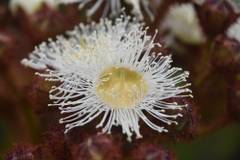
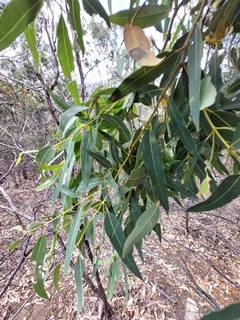
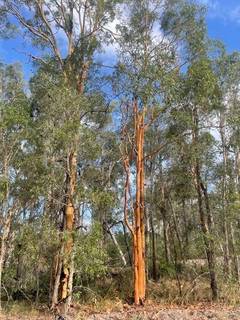
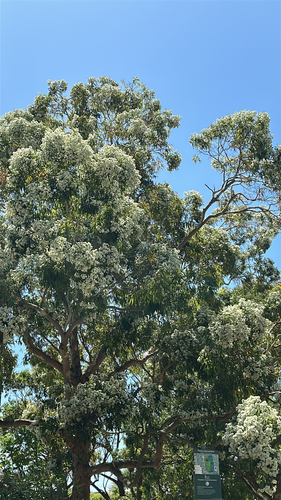
Angophora costata is an evergreen tree reaching 50-80 feet (15-25 m) tall, occasionally to 100 feet (30 m), with a broad, spreading crown and often a gnarled, leaning trunk. The smooth bark is shed in spring in irregular flakes, exposing a surface that is pink to orange when fresh and weathers to grey; the trunk is frequently dimpled and ribbed. Adult leaves are opposite, lance-shaped, 3-6 inches (8-15 cm) long, glossy green, with prominent veins. Unlike true eucalypts, the flower buds lack an operculum and instead have five small petals; the creamy-white flowers about 1 inch (2.5 cm) across are borne in large terminal clusters in early summer. The woody, ribbed fruit is 0.5-0.8 inch (12-20 mm) long. Growth is moderate to fast on suitable sites. The tree sheds bark, leaves, and branches and is prone to limb drop in dry weather, which limits its use over structures and paving. It tolerates poor sandy soils and drought once established but is frost-sensitive when young.
Native Range
Native to eastern Australia, along the coast and adjacent ranges from Queensland through New South Wales. Grows in dry sclerophyll forest and woodland on sandstone and sandy soils, from sea level to about 3,000 feet (900 m).Suggested Uses
Used as a shade and feature tree in large gardens, parks, and bushland settings, spaced 25-40 feet (7.5-12 m) from buildings and paving. Suited to sandy coastal and low-nutrient sites where larger trees are wanted. Limb shedding and surface roots limit its use in small gardens and near structures.How to Identify
Appearance
Size & Dimensions
Height50' - 80'
Width/Spread30' - 50'
Bloom Information
Flowers in early summer, mainly November to January, with heavy flowering at intervals of one to several years. The creamy-white flower clusters last 3-4 weeks and draw nectar-feeding birds and insects. Flowering is followed by woody fruit that persists on the tree for months.
Detailed Descriptions
Foliage Description
greenGrowing Conditions
Sun Requirements
Requires 6-12 hours of direct sunlight daily
• Full Sun: 6+ hours of direct sunlight
• Partial Shade: 3-6 hours of direct sunlight
• Full Shade: Less than 3 hours of direct sunlight
Care & Maintenance
Care Guide
Grows in full sun in sandy, well-drained, acidic soils and tolerates exposed coastal and rocky sites. Water young trees through the first two summers; established trees are drought-tolerant and need no irrigation in temperate climates. The shallow, spreading roots can lift paving and disturb foundations, so open ground suits it better than confined spaces. Bark, leaf, and branch litter is shed year-round. Limbs may drop suddenly in hot, dry weather. Few serious pests affect it, though scale insects and chewing larvae occur.Pruning
Remove dead, damaged, or low branches in late winter to shape young trees and reduce limb-drop risk over time. Mature trees need little pruning beyond deadwood removal. Heavy pruning can produce vigorous epicormic regrowth and weakly attached limbs.Pruning Schedule
Prune: July–August
winter