Anacamptis, Genus, pyramidalis, Species,
- Genus & species
pyramidal orchid
Europe, North Africa, and western Asia
Overview
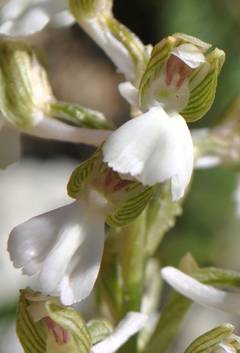
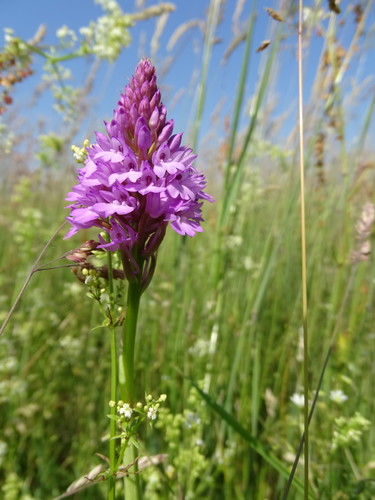
Anacamptis pyramidalis is a terrestrial orchid in the family Orchidaceae, producing a single upright flowering stem 4-24 inches (10-60 cm) tall from rounded underground tubers. Narrow, unspotted gray-green leaves clasp the lower stem, the lowest forming a loose basal rosette. The stem is topped by a dense, sharply conical flower spike 1.5-4 inches (4-10 cm) long that rounds out as more flowers open. Individual blooms are deep rose-pink, occasionally pale pink or white, each with a three-lobed lip carrying two raised ridges and a slender spur up to 0.6 inch (1.5 cm) long. The narrow spur holds nectar reachable mainly by long-tongued butterflies and day-flying moths, which pollinate the flowers. The species grows on lime-rich grassland, dunes, scrub margins, and roadside banks, almost always over chalk or limestone. Like other orchids it relies on soil fungi to germinate and reach flowering size over several years. It needs open, sunny ground and declines where grass grows tall or scrub closes in. Flower color and spike density vary between colonies.
Native Range
Anacamptis pyramidalis is native to Europe, North Africa, and western Asia, from the British Isles and the Mediterranean east to Iran. It grows widely on calcareous soils throughout this range.Suggested Uses
Grown in chalk and limestone wildflower meadows, sunny banks, and naturalistic grassland plantings, and occasionally in alpine troughs. The nectar-rich spurs draw butterflies and moths. It suits permanent, low-fertility grassland left largely undisturbed, since the tubers and fungal partners take years to settle.How to Identify
Appearance
Size & Dimensions
Height4" - 2'
Width/Spread4" - 8"
Bloom Information
Flowering runs from late spring into midsummer, mainly June and July, with the conical spike opening from the base upward. Each spike stays in flower for two to three weeks. Plants flower only after several years of growth from seed.
Detailed Descriptions
Foliage Description
gray-greenGrowing Conditions
Sun Requirements
Requires 6-12 hours of direct sunlight daily
• Full Sun: 6+ hours of direct sunlight
• Partial Shade: 3-6 hours of direct sunlight
• Full Shade: Less than 3 hours of direct sunlight
Care & Maintenance
Care Guide
Grow in full sun on thin, free-draining, neutral to alkaline soil over chalk or limestone. The orchid depends on symbiotic soil fungi, so it transplants poorly and is most reliably established from container-grown stock or natural spread. Rich soil, heavy feeding, and tall surrounding vegetation reduce flowering. Established plants need little attention and regrow each year from their tubers. Surrounding grass is mown or grazed short in late summer once seed has shed. Soils that stay wet in winter rot the tubers.Pruning
The plant needs no pruning. The faded spike is left to set seed, then cut down once brown if self-sowing is not wanted. Keeping competing grass short through late summer and autumn prevents the rosette from being shaded out.Container Growing
Suitable for container growing
Minimum container size: 2 gallons