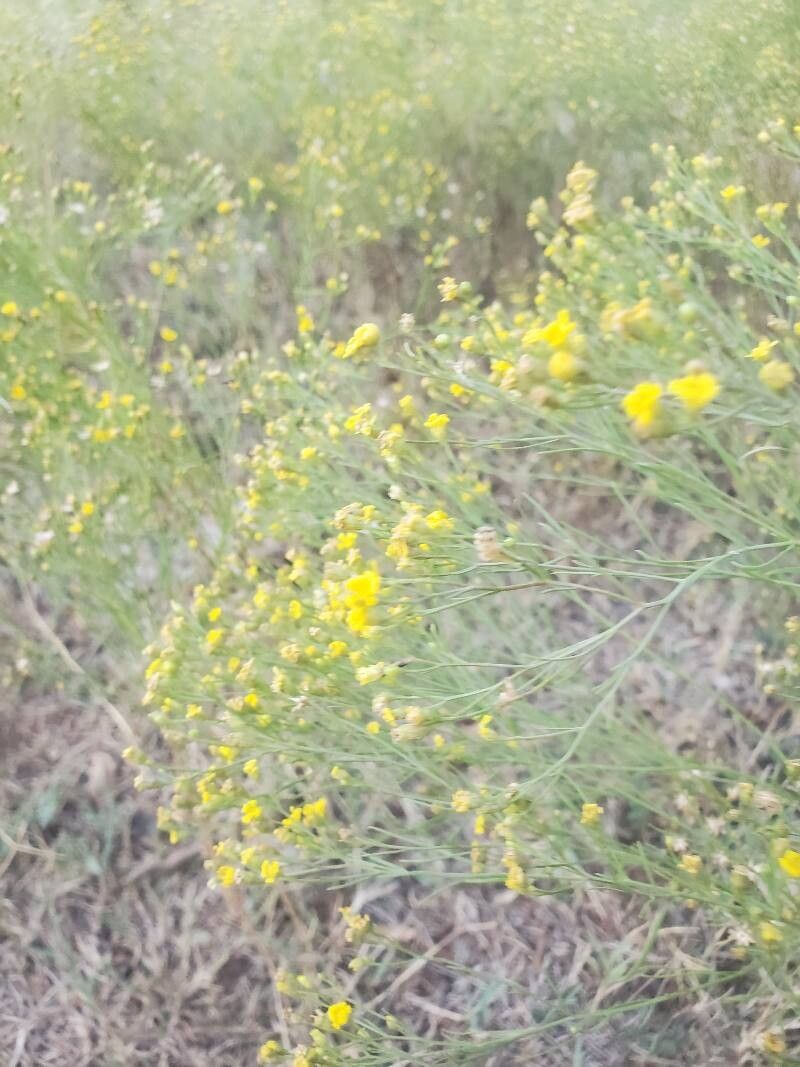
Amphiachyris, Genus, dracunculoides, Species,
- Genus & species
prairie broomweed
Overview
Amphiachyris dracunculoides is an annual forb in the aster family that grows 12–36 inches (30–90 cm) tall and 8–18 inches (20–45 cm) wide. A single erect stem branches repeatedly in the upper half to form a rounded, broom-like crown. The leaves are alternate, linear to narrowly lance-shaped, 0.8–2.4 inches (2–6 cm) long and less than 0.1 inch (2–3 mm) wide, with smooth margins and a resinous surface. From August to October the plant carries numerous small flower heads, each 0.2–0.3 inch (5–8 mm) across, with 5–10 yellow ray florets surrounding yellow disc florets. Bloom coincides with the end of the growing season, after which the entire plant dies. It germinates in spring on bare or disturbed ground and completes its life cycle in a single year. Populations increase on overgrazed rangeland and compacted soils where competing grasses are reduced. All foliage contains saponins and other compounds documented as toxic to cattle, sheep, and goats, and heavy grazing has been associated with reduced reproductive performance in livestock. The species tolerates drought, heat, and shallow rocky soils but does not persist in shaded or consistently moist sites. Root systems are shallow and fibrous from a slender taproot, with limited soil-holding capacity once the plant dies back in autumn.
Native Range
Native to the south-central United States, from Nebraska and Kansas south through Oklahoma and Texas into northern Mexico. It grows in prairies, plains, roadsides, and disturbed ground on calcareous and clay soils.Suggested Uses
Amphiachyris dracunculoides appears in native plant restorations and pollinator plantings on dry sites, where its late flowers supply nectar to small bees and flies. It is generally excluded from pastures grazed by livestock because of its toxicity.How to Identify
Appearance
Size & Dimensions
Height1' - 3'
Width/Spread8" - 1'6"
Bloom Information
Flowering runs from August to October, peaking in September across most of its range. Each plant produces hundreds of small yellow heads at once, and seed set follows within a few weeks. The display ends as the annual stems dry and die at the first hard frost.
Detailed Descriptions
Foliage Description
greenGrowing Conditions
Sun Requirements
Requires 6-12 hours of direct sunlight daily
• Full Sun: 6+ hours of direct sunlight
• Partial Shade: 3-6 hours of direct sunlight
• Full Shade: Less than 3 hours of direct sunlight
Water & Climate
Water Needs
Drought Tolerance
Drought tolerant when established
Care & Maintenance
Care Guide
Amphiachyris dracunculoides grows in full sun on dry, well-drained soils including clay, limestone, and gravel. It requires little to no supplemental water once established and tolerates extended drought and summer heat. Seed germinates in spring without pretreatment on bare soil. The plant self-sows freely and can spread across disturbed or overgrazed ground. It does not tolerate shade, waterlogged soil, or strong competition from established perennial grasses. Because all parts are toxic to grazing livestock, it is treated as a rangeland weed where cattle and sheep are present.Pruning
As a single-season annual, Amphiachyris dracunculoides requires no pruning. Plants can be cut or pulled before seed matures in autumn to limit self-seeding. Dead stems break down over winter.Toxicity Warning
Toxic to petsPlanting Guide
Planting Methods & Timing
Planting Method
direct sow