Amauropelta, Genus, noveboracensis, Species,
- Genus & species
New York fern
Overview
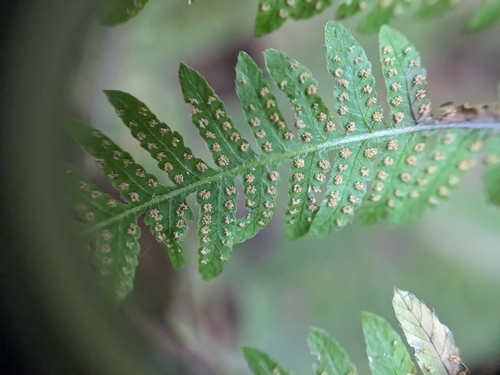
Amauropelta noveboracensis is a deciduous, colony-forming fern growing 12-24 inches (30-60 cm) tall from slender, creeping rhizomes that form loose stands. The fronds are lance-shaped and yellow-green, 8-24 inches (20-60 cm) long, tapering at both ends, narrowing toward the tip and also toward the base, where the lowest leaflets shrink to small wings. Each frond is once-divided into many pinnae cut into rounded lobes, with short hairs on the underside. Spore cases (sori) form small round dots near the margins on the undersides of fertile fronds in summer. The thin-textured fronds emerge pale in spring, stay light green through summer, and yellow before dying back at the first frost. Plants spread steadily by rhizome to form open patches. The fronds wilt quickly when cut or in drought.
Native Range
Native to eastern North America, from Newfoundland and Ontario south to Georgia and Arkansas. It grows in moist deciduous woodland, swamp edges, and shaded streambanks on acidic, humus-rich soils.Suggested Uses
Grown as a groundcover in shade and woodland gardens, along stream edges, and in rain gardens with steady moisture, spaced 12-18 inches (30-45 cm) apart. Its spreading habit fills large shaded areas but overruns small beds. It pairs with other moisture-loving woodland plants.How to Identify
Appearance
Size & Dimensions
Height1' - 2'
Width/Spread1' - 2'
Bloom Information
Reproduces by spores rather than flowers. Round spore cases ripen on the undersides of fertile fronds in mid to late summer and release spores into autumn. New fronds unfurl in spring and expand over a few weeks.
Detailed Descriptions
Foliage Description
yellow-greenGrowing Conditions
Sun Requirements
Tolerates up to 4 hours of direct sunlight daily
• Full Sun: 6+ hours of direct sunlight
• Partial Shade: 3-6 hours of direct sunlight
• Full Shade: Less than 3 hours of direct sunlight
Care & Maintenance
Care Guide
Grows in part to full shade on consistently moist, acidic soils high in organic matter. It needs steady moisture and browns at the edges in dry or sunny spots. The creeping rhizomes spread into broad colonies and can crowd smaller woodland plants. It tolerates winter cold across its range and dies back fully each autumn. Few pests or diseases affect it. Cutting back the dead fronds in late autumn or early spring keeps the patch tidy.Pruning
No routine pruning is needed. Dead fronds are removed in late autumn or early spring before new growth unfurls. Thinning spreading rhizomes at the edges limits the size of the colony.Pruning Schedule
Prune: March & November
fallearly spring
Container Growing
Suitable for container growing
Minimum container size: 2 gallons