Alyxia, Genus, ruscifolia, Species,
- Genus & species
chain fruit
Overview
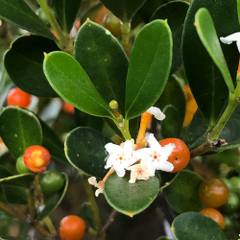
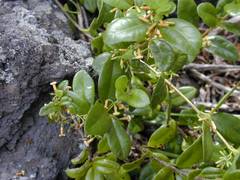
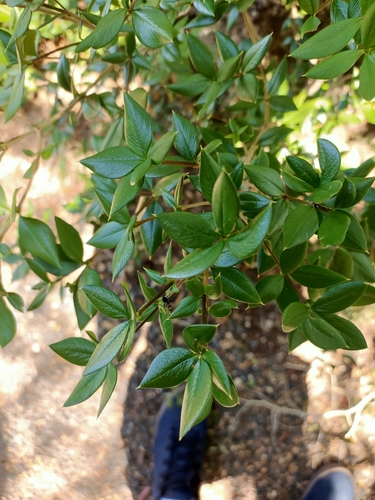
Alyxia ruscifolia is a stiff, evergreen shrub 1-3 m (3.3-10 ft) tall with wiry branches and milky sap typical of the dogbane family. The rigid, glossy dark green leaves are 1-4 cm (0.4-1.6 in) long, arranged in whorls of three and tapering to a sharp, spine-like point. Small, tubular, white to cream flowers about 1 cm (0.4 in) across are strongly and sweetly fragrant and appear over spring and summer. They are followed by bright orange to red fleshy fruits that develop in jointed, chain-like strings, giving the plant its common name. It grows in and along the margins of rainforest, vine thicket, and moist forest in eastern Australia, on a range of well-drained soils in part shade to full sun. The sharply pointed leaves make handling uncomfortable, the milky sap can irritate skin, and growth is fairly slow. Fruiting can be sparse on isolated plants, as cross-pollination improves the set.
Native Range
Native to eastern Australia, from New South Wales through Queensland, in rainforest, vine thicket, and moist forest margins.Suggested Uses
Used as a fragrant feature shrub, informal screen, or understorey plant in subtropical and warm-temperate native gardens. Suited to sheltered courtyards and shaded borders where the fragrance carries in still air. Also grown in containers in frost-prone areas so it can be moved under cover.How to Identify
Appearance
Size & Dimensions
Height3'4" - 10'
Width/Spread3' - 6'6"
Bloom Information
Detailed Descriptions
Flower Description
white to creamFoliage Description
glossy dark greenGrowing Conditions
Sun Requirements
Requires 3-7 hours of direct sunlight daily
• Full Sun: 6+ hours of direct sunlight
• Partial Shade: 3-6 hours of direct sunlight
• Full Shade: Less than 3 hours of direct sunlight
Care & Maintenance
Care Guide
Grows in part shade to full sun on free-draining soils rich in organic matter, with a pH of about 5.5-7.0. A sheltered, frost-free position with consistent moisture in the warmer months suits it, and it tolerates short dry spells once established. Heavy, waterlogged soils are poorly tolerated. The milky sap can irritate skin and eyes, and the leaf tips are sharp. It is frost-tender, with young growth damaged by cold. A surface mulch keeps the roots cool and conserves moisture.Pruning
Light pruning after fruiting shapes the shrub and encourages denser branching. Wayward or damaged stems can be removed at any time, with attention to the milky sap. The naturally compact habit needs little routine pruning.Pruning Schedule
Prune: February–March
summerfall
Container Growing
Suitable for container growing
Minimum container size: 7 gallons