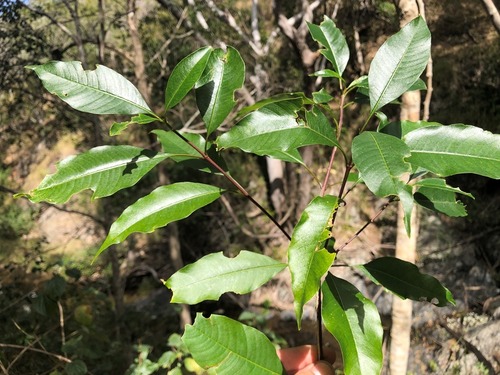
Alstonia, Genus, constricta, Species,
- Genus & species
bitterbark
Overview
Alstonia constricta is an evergreen tree 15-40 feet (5-12 m) tall with a rounded crown, rough corky bark, and milky white sap in all parts. The glossy leaves are 2-6 inches (5-15 cm) long, oval to lance-shaped, and arranged in whorls or pairs, dark green above and paler below. Clusters of small cream to white tubular flowers about 0.3 inch (7-8 mm) wide open mainly in summer and carry a sweet scent. Paired slender follicles 6-12 inches (15-30 cm) long follow, splitting to release flat seeds tipped with tufts of hair that are carried on the wind. It is native to inland eastern Australia, where it grows in dry woodland and along watercourses on clay and loam soils. The bark is intensely bitter and has a history of medicinal use as a fever treatment, which gives the tree its common name. All parts contain alkaloids and milky latex that can irritate skin and are toxic if eaten. The tree is drought tolerant once established but is frost sensitive when young.
Native Range
Alstonia constricta is native to inland eastern Australia, occurring in Queensland and New South Wales. It grows in dry woodland, scrub, and along seasonal watercourses on clay and loam soils.Suggested Uses
Grown as a shade and specimen tree in warm, dry-climate gardens and parks, and used in inland revegetation on clay and loam soils. Its tolerance of heat and drought suits it to low-water and rural plantings where frost is light.How to Identify
Appearance
Size & Dimensions
Height15' - 40'
Width/Spread12' - 25'
Bloom Information
Flowering occurs mainly in summer, with sweetly scented cream flowers in branched clusters at the stem tips. The long paired follicles develop afterward and ripen over several months before splitting. Flowering can vary with seasonal rainfall in its dry inland range.
Detailed Descriptions
Flower Description
cream to whiteFoliage Description
dark greenGrowing Conditions
Sun Requirements
Requires 6-12 hours of direct sunlight daily
• Full Sun: 6+ hours of direct sunlight
• Partial Shade: 3-6 hours of direct sunlight
• Full Shade: Less than 3 hours of direct sunlight