Allamanda, Genus, cathartica, Species,
- Genus & species
allamanda vine
Brazil, Guyana, Suriname, French Guiana, Venezuela
Overview
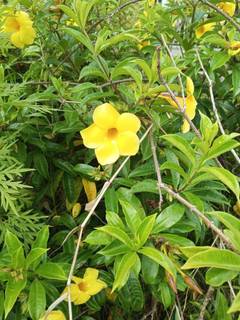
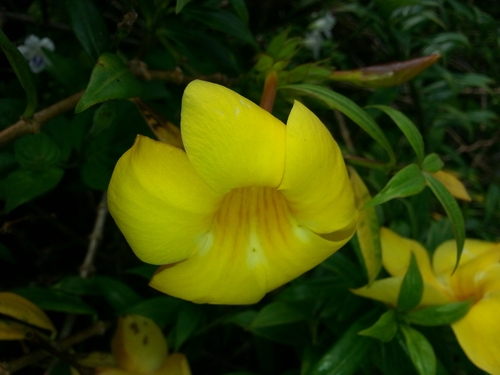
Allamanda cathartica is an evergreen scrambling shrub-vine reaching 10-20 feet (3-6 m) tall when supported, with a spread of 4-8 feet (1.2-2.4 m). Stems are flexible and lack tendrils; the plant climbs by leaning on adjacent supports and is typically tied to a trellis or fence to retain a vertical form. Leaves are arranged in whorls of three to four, lance-shaped to elliptic, 4-6 inches (10-15 cm) long, leathery, glossy dark green with prominent midribs. Flowers are funnel-shaped, 3-5 inches (7.5-12.5 cm) across, bright yellow with five overlapping lobes spreading from a tubular throat; flowering occurs nearly continuously in zones 10-11 with peak bloom from late spring through fall. Fruit is a spiny capsule 2-3 inches (5-7.5 cm) across releasing winged seeds. All parts contain a milky latex with cardiac glycosides; the latex causes skin irritation in some individuals and is toxic if ingested. Growth is fast at 3-6 feet (90-180 cm) per year in the ground in zones 10-11. Foliage damage occurs below 40°F (4°C) and the plant dies to the roots below 32°F (0°C). In zones 8-9, often grown as a container plant brought indoors for winter. Listed as a Category II invasive in Florida by the Florida Invasive Species Council.
Native Range
A. cathartica is native to northern South America, including Brazil, Guyana, Suriname, French Guiana, and Venezuela, where it grows in lowland tropical forests and along riverbanks. Naturalized populations occur in Central America, the Caribbean, southern Florida, Hawaii, and parts of Australia and Southeast Asia.Suggested Uses
Grown as a trellised vine or fence-cover in zones 10-11 in full sun. Container culture at 7+ gallons (26+ liters) in zones 8-9 with indoor winter storage. Spaced 6-8 feet (1.8-2.4 m) apart along fences or arbors. All parts contain toxic latex.How to Identify
Appearance
Size & Dimensions
Height10' - 20'
Width/Spread4' - 8'
Colors
Bloom Information
Flowers nearly continuously in zones 10-11 with peak bloom from late spring through fall. In zones 8-9 grown as a container plant, blooms from early summer through first frost. Individual flowers last 2-4 days; new flowers open in succession from the same flowering shoot for 4-6 weeks. Cool nights below 60°F (15°C) reduce flower production.
Detailed Descriptions
Foliage Description
Glossy dark green, leatheryGrowing Conditions
Sun Requirements
Requires 6-10 hours of direct sunlight daily
• Full Sun: 6+ hours of direct sunlight
• Partial Shade: 3-6 hours of direct sunlight
• Full Shade: Less than 3 hours of direct sunlight
Care & Maintenance
Care Guide
Newly transplanted vines need water weekly in the absence of rain during the first 6-8 weeks; established plants tolerate 7-10 days between waterings but flower production decreases during prolonged drought. Established plants benefit from a balanced 10-10-10 fertilizer applied every 6-8 weeks during the growing season. Spider mites occur in hot dry conditions, particularly on container plants brought indoors for winter; mealybugs and scale also occur on indoor plants. Whitefly populations build in greenhouse and conservatory conditions. All parts contain a milky latex with cardiac glycosides; the latex causes skin irritation in some individuals and is toxic if ingested by humans, dogs, cats, or livestock. In zones 9 or colder, container plants are typically moved indoors before nighttime temperatures fall below 50°F (10°C).Pruning
Pruning is typically done in late winter or very early spring before new growth resumes, cutting stems back by one-third to one-half to control size and stimulate flowering. Flowers form on new growth, so pruning before the growth cycle increases bloom production. Tip-pinching developing shoots during the growing season encourages branching. The cut latex causes skin irritation in some individuals.Pruning Schedule
Prune: February–March
early spring
Container Growing
Suitable for container growing
Minimum container size: 7 gallons