Image 1 of 13
1 / 13
Plant Reference
Ailanthus, Genus, altissima, Species,
- Genus & species
tree of heaven
Central and northern China and Taiwan; classified as invasive in most US states and many countries worldwide
Overview
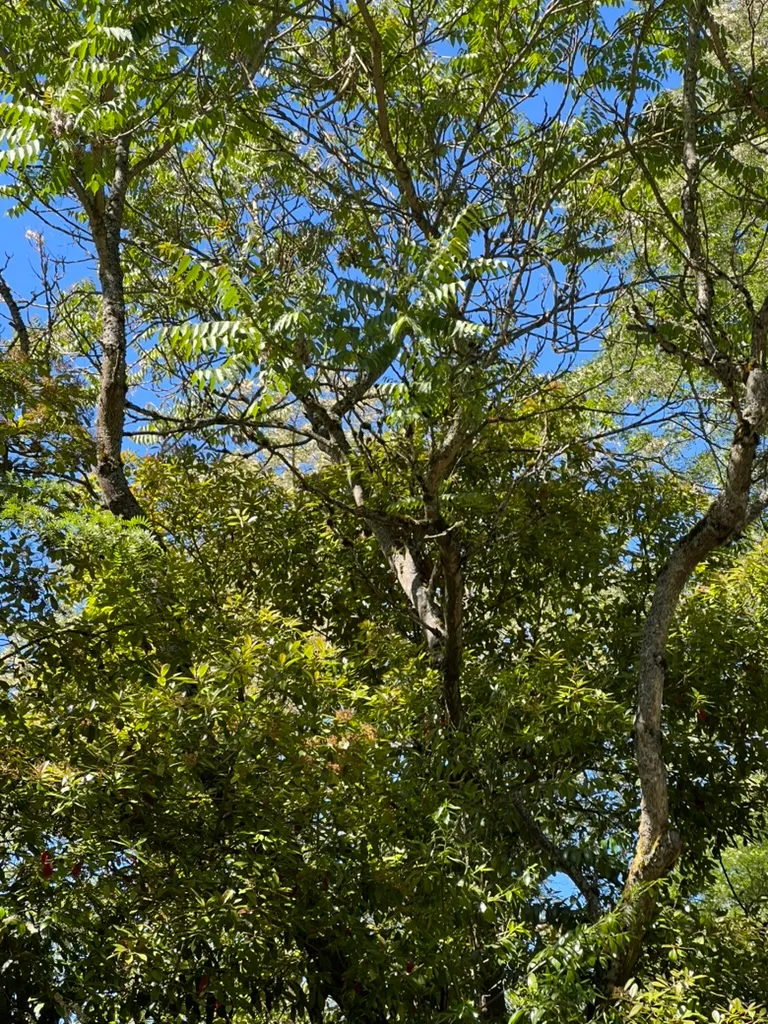
Ailanthus altissima is a deciduous tree in the family Simaroubaceae native to central and northern China, reaching 40-80 feet (12-24 m) tall and 30-50 feet (9-15 m) wide. Leaves are large, pinnately compound, with 11-25 leaflets each 2-5 inches (5-13 cm) long and 1-2 glandular teeth at the base — the glandular teeth and an unpleasant odor from the crushed foliage (often compared to rancid peanuts or burned rubber) are diagnostic. Yellow-green flowers in terminal panicles 8-16 inches (20-40 cm) long open in June and July, and male flowers carry a strong unpleasant odor. The species is dioecious, and female trees produce twisted samaras in large persistent clusters — a single mature female tree can release more than 300,000 seeds per year. The species is classified as invasive in most U.S. states and many countries worldwide and is recognized as an aggressively invasive tree across North America, Europe, Australia, and New Zealand — spread occurs both by prolific seed production and by aggressive root suckering. The root system releases allelopathic compounds (ailanthone) that suppress the growth of surrounding plants. The tree tolerates extreme conditions: air pollution, compacted soil, salt, drought, pH 4.5-8.0, and essentially any soil type. Growth averages 36-60 inches (90-150 cm) per year. Cutting the trunk without concurrent herbicide treatment stimulates vigorous re-sprouting from the root system, which can produce dozens of suckers from a single severed stump. The sap can cause contact dermatitis in sensitive individuals and all parts of the plant are toxic to pets and humans if ingested. Ailanthus serves as the primary host for the spotted lanternfly (Lycorma delicatula), a destructive invasive pest of fruit and hardwood crops.
Native Range
Ailanthus altissima is native to central and northern China and Taiwan, where it grows on disturbed sites, forest edges, and limestone slopes. The species was introduced to Europe in the 18th century and to North America in the late 18th century as an ornamental shade tree, and has since naturalized and become invasive across most of its introduced range.Suggested Uses
The species is classified as invasive in most U.S. states and many countries worldwide; planting is prohibited or discouraged across most of the introduced range. The species is included in the database for identification and management reference rather than as a planting recommendation. Local invasive-species regulations are consulted before any intentional planting, and removal protocols are followed where existing trees are present. Not suited to any residential, commercial, or natural-area planting context in invasive-range jurisdictions.How to Identify
Appearance
Size & Dimensions
Height40' - 80'
Width/Spread30' - 50'
Bloom Information
Yellow-green flowers in terminal panicles 8-16 inches (20-40 cm) long open in June and July, averaging 4 weeks of bloom. The species is dioecious — male and female flowers occur on separate trees. Male flowers carry a strong unpleasant odor and are wind- and insect-pollinated. Female trees produce twisted samaras in large persistent clusters, with a single mature female tree releasing over 300,000 seeds per year.
Detailed Descriptions
Flower Description
yellow-green; small; borne in terminal panicles 8-16 inches (20-40 cm) long; male flowers carry a strong unpleasant odorFoliage Description
medium green; pinnately compound leaves with 11-25 leaflets each 2-5 inches (5-13 cm) long with 1-2 glandular teeth at the base; crushed foliage has an unpleasant odorGrowing Conditions
Sun Requirements
Requires 4-12 hours of direct sunlight daily
• Full Sun: 6+ hours of direct sunlight
• Partial Shade: 3-6 hours of direct sunlight
• Full Shade: Less than 3 hours of direct sunlight