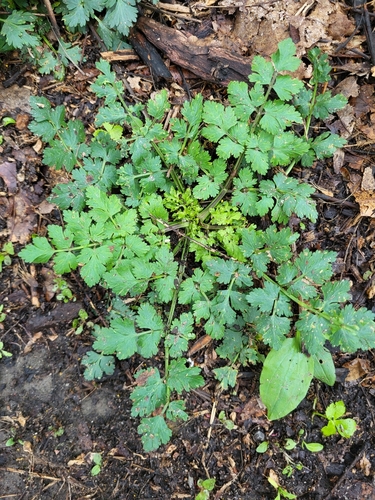
Aethusa, Genus, cynapium, Species,
- Genus & species
Fool's parsley
Europe, western Asia, and North Africa
SunFull Sun – Part Shade
WaterLow
Overview
Aethusa cynapium is an annual herb in the carrot family (Apiaceae), reaching 8–32 inches (20–80 cm) tall on a hollow, ridged, hairless stem. The leaves are two to three times pinnately divided into narrow segments, dark green above and paler beneath, with a disagreeable smell when crushed. From June to October it carries compound umbels 1–2 inches (2.5–5 cm) across of small white flowers, each umbel marked by three to four long, downward-pointing bracteoles on the outer side that separate it from related white-flowered umbellifers. The fruit is an egg-shaped ribbed schizocarp about 0.1 inch (3 mm) long. All parts contain polyacetylene compounds that are poisonous to humans and livestock if eaten, and the plant has been mistaken for garden parsley and wild chervil, a confusion behind several historical poisonings. It grows on fertile, disturbed soils in cultivated ground, gardens, waste places, and field margins. As a short-lived annual it completes its cycle in one season and sets abundant seed, so it spreads readily in tilled ground but does not persist in closed turf or dense perennial cover.
Native Range
Native to Europe, western Asia, and North Africa. Widely naturalized in North America, where it occurs as an introduced weed of cultivated and waste ground.Suggested Uses
Aethusa cynapium is not grown as an ornamental or a crop and is treated as a weed of arable land and gardens. Its toxicity rules out any culinary or medicinal use.How to Identify
Appearance
Size & Dimensions
Height8" - 2'8"
Width/Spread6" - 1'
Bloom Information
Flowering runs from June to October, peaking in midsummer. The small white flowers are grouped in flat-topped compound umbels 1–2 inches (2.5–5 cm) wide and are visited by short-tongued flies and small beetles. Ribbed fruits follow within a few weeks and shed seed into autumn.
Detailed Descriptions
Foliage Description
dark greenGrowing Conditions
Sun Requirements
Requires 4-8 hours of direct sunlight daily
• Full Sun: 6+ hours of direct sunlight
• Partial Shade: 3-6 hours of direct sunlight
• Full Shade: Less than 3 hours of direct sunlight
Water & Climate
Water Needs