Aegopodium, Genus, podagraria, Species,
- Genus & species
goutweed
Overview
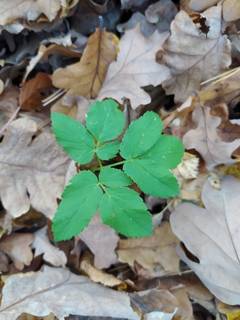
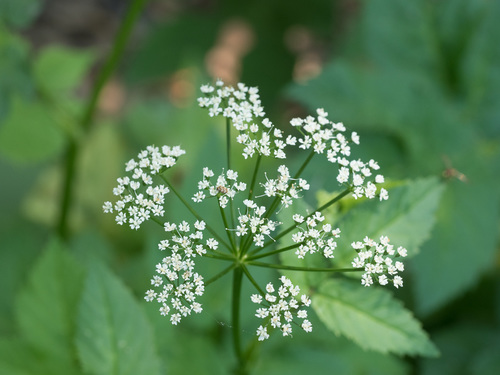
Aegopodium podagraria is a rhizomatous herbaceous perennial in the carrot family, forming dense, spreading mats of foliage 8-14 inches (20-35 cm) tall, with flowering stems rising to 2-3 feet (60-90 cm). The leaves are divided into three groups of three toothed, oval leaflets, each 1-3 inches (2.5-8 cm) long, carried on grooved, triangular stalks. From late spring into summer it produces flat-topped compound umbels 2-3 inches (5-8 cm) across of tiny white flowers on tall, hollow stems. The plant spreads by long, white, brittle rhizomes that creep just below the surface, and a fragment with a single node can start a new colony. It tolerates deep shade and poor soil and quickly forms a closed groundcover that excludes most other low plants. Top growth dies down in autumn and resprouts early the following spring. A green-and-white variegated form is grown in gardens, but the all-green wild type and reverted variegated plants spread aggressively and are considered weeds across much of North America and Europe. Crushed foliage has a pungent, carrot-family scent.
Native Range
Native to Europe and western Asia, where it grows in woodlands, hedgerows, and meadows. It was carried widely as a potherb and medicinal plant, once used to treat gout, which gives it its common name. It has naturalized across temperate North America and is regarded as invasive in many areas.Suggested Uses
Used as a tough groundcover for difficult dry shade under trees and shrubs, generally in confined or contained settings because of its spread. The variegated form is the one usually planted in gardens. In many regions it is managed as a weed rather than planted.How to Identify
Appearance
Size & Dimensions
Height8" - 3'
Width/Spread2' - 4'
Bloom Information
Blooms from late spring into midsummer, mainly June and July. The flat white umbels are visited by short-tongued bees, flies, and beetles. Plants often flower less in deep shade, spreading mainly by rhizome instead.
Detailed Descriptions
Foliage Description
greenGrowing Conditions
Sun Requirements
Requires 2-6 hours of direct sunlight daily
• Full Sun: 6+ hours of direct sunlight
• Partial Shade: 3-6 hours of direct sunlight
• Full Shade: Less than 3 hours of direct sunlight
Care & Maintenance
Care Guide
Grows in part to full shade and average to moist soils, tolerating poor and compacted ground where many plants struggle. It needs no feeding or watering once established and spreads quickly by rhizome. Because it can overrun beds, it is usually confined by deep root barriers or grown in isolated areas. Cutting or mowing the foliage repeatedly weakens it but rarely removes it, as rhizome fragments resprout. Digging that leaves any rhizome piece behind allows the colony to return. The variegated form is less vigorous than the green type but can revert.Pruning
Shearing the foliage to the ground after flowering removes tired leaves and triggers a flush of fresh growth. Removing flower heads before seed set limits one route of spread. The bulk of spread is by rhizome, so cutting alone does not contain it.Pruning Schedule
Prune: July
summer
Container Growing
Suitable for container growing
Minimum container size: 2 gallons