Aegiceras, Genus, spp., Multiple species,
- Genus
- Multiple species
river mangrove
Indo-West Pacific coasts (India to Australia)
Overview
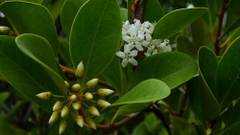
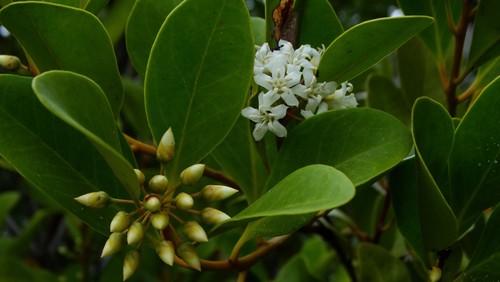
Aegiceras is a genus of two evergreen mangrove shrubs and small trees in the primrose family, growing along tropical and subtropical coasts of the Indian and western Pacific oceans. The river mangrove, A. corniculatum, is the more widespread, forming a many-stemmed shrub or small tree 3-20 feet (1-6 m) tall in the upper intertidal zone of estuaries and tidal creeks. The leathery, obovate leaves are glossy dark green above and dotted with salt glands that shed excess salt onto the leaf surface. Clusters of small, white, five-petalled flowers open in fragrant umbels and draw bees, and the genus is a source of mangrove honey. Each flower forms a narrow, curved, horn-shaped fruit, and the seed begins to germinate while the fruit still hangs on the plant, a habit called crypto-vivipary that suits dispersal by tidal water. The genus tolerates salt, waterlogging, and daily tidal flooding through salt-shedding leaves and shallow, spreading roots. It grows only in frost-free coastal conditions and cannot withstand cold, drought, or long periods out of brackish water.
Native Range
Aegiceras ranges through the tropics and subtropics of the Indo-West Pacific, from India and Sri Lanka through Southeast Asia and southern China to northern and eastern Australia and the Pacific islands. It grows in the upper intertidal zone of estuaries, tidal rivers, and sheltered coasts, rooted in soft saline mud.Suggested Uses
Used mainly for mangrove restoration, shoreline stabilisation, and coastal flood buffering along tropical estuaries. The flowers support beekeeping for mangrove honey, and stands provide nursery habitat for fish and shellfish. It is rarely grown as an ornamental and suits only tidal, saline coastal sites.How to Identify
Appearance
Size & Dimensions
Height3' - 20'
Width/Spread3' - 15'
Bloom Information
Flowering timing varies with region but often falls in spring and summer, with white, sweetly scented flowers borne in umbels. Bees work the flowers heavily, and the bloom yields a noted mangrove honey. Curved, horn-shaped fruits follow and ripen over the following months.
Detailed Descriptions
Foliage Description
dark greenGrowing Conditions
Sun Requirements
Requires 6-12 hours of direct sunlight daily
• Full Sun: 6+ hours of direct sunlight
• Partial Shade: 3-6 hours of direct sunlight
• Full Shade: Less than 3 hours of direct sunlight