Image 1 of 7
1 / 7
Plant Reference
Acorus, Genus, gramineus, Species, 'Ogon', Cultivar,
- Genus & species
- Cultivar
golden variegated sweet flag
Eastern Asia — Japan, Korea, and China; stream banks, wet meadows, and shallow water margins at low to middle elevations
Overview
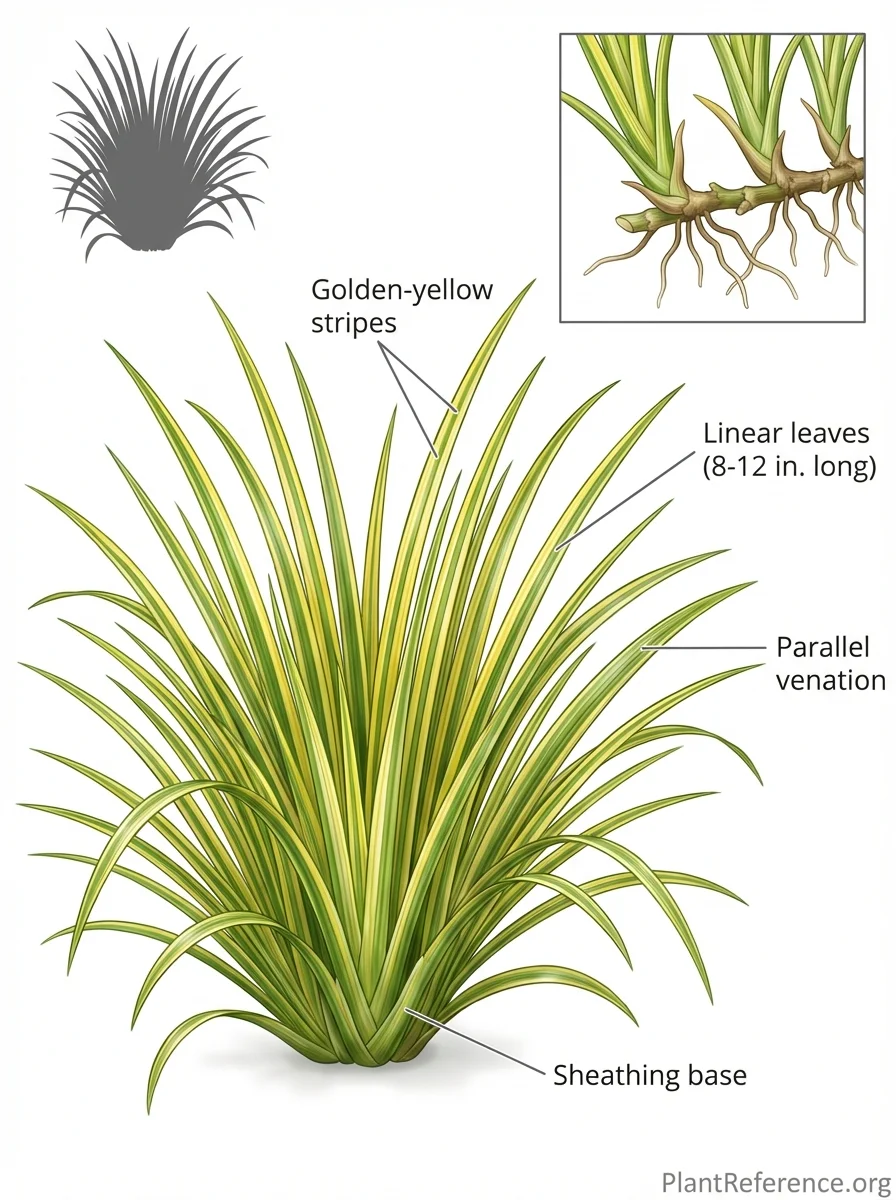
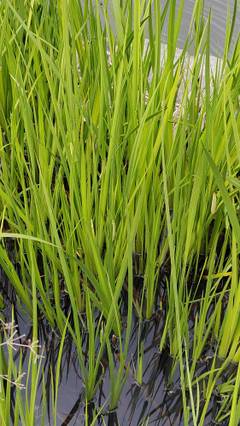
Acorus gramineus 'Ogon' is a small clumping evergreen perennial in the family Acoraceae growing 6–12 inches (15–30 cm) tall and 12–18 inches (30–45 cm) wide from a slowly creeping rhizome. The species is not a grass despite the grass-like foliage and the specific epithet gramineus (Latin for grass-like) — the genus Acorus belongs to the family Acoraceae, which molecular phylogenetic studies place among the oldest lineages within the monocotyledons, diverging from the rest of the monocots early in the evolutionary history of the group. The cultivar name 'Ogon' is Japanese for gold and refers to the golden-yellow and green-striped leaf color that is the main ornamental character. Leaves are narrow, grass-like, 6–12 inches (15–30 cm) long, arranged in a fan-like clump that spreads slowly by rhizome growth, and the entire plant contains essential oils that produce a sweet slightly spicy scent when the foliage is bruised or crushed — this aromatic character separates Acorus from all true grasses and from the superficially similar iris-family foliage plants, and rubbing a leaf and checking for the sweet scent is a reliable field test for the genus. The golden-yellow variegation of 'Ogon' is brightest in partial shade and fades toward chartreuse in deep shade, while full sun scorches the leaf tips and margins and produces brown damage on the golden foliage. Green inconspicuous spadix inflorescences 1–2 inches (2.5–5 cm) long are partially hidden among the leaf bases in July and August, but the spadix is rarely noticed and the plant is grown entirely for the foliage color and the aromatic fragrance. Native to eastern Asia — Japan, Korea, and China — growing along stream banks, wet meadows, and shallow water margins. Limitation: the species calls for consistently wet to moist soil and tolerates standing water and waterlogged conditions, and this absolute wet-soil requirement is the main cultural limitation — the species fails on well-drained garden positions that dry out during the growing season. Foliage is damaged by sustained freezes below 15 °F (−10 °C) but the rhizome survives and regrows in spring. Non-toxic and deer-resistant.
Native Range
Native to eastern Asia — Japan, Korea, and China — growing along stream banks, wet meadows, and shallow water margins at low to middle elevations. The genus Acorus has been cultivated in East Asian gardens for centuries as an aromatic foliage plant in water-garden and bog-garden settings, and the golden-leaved cultivar 'Ogon' was selected from the Japanese horticultural tradition and introduced to western gardens in the late 20th century.Suggested Uses
Used in bog gardens, pond margins, rain gardens, stream bank plantings, and in containers of at least 2 gallons (7.5 L) standing in saucers of water at 12–18 inch (30–45 cm) spacing between plants. The golden-yellow foliage brightens shaded wet positions where most other colored-foliage plants cannot grow because of the combination of shade and saturated soil conditions, and the aromatic foliage adds a sensory dimension to water-garden and bog-garden plantings where visitors brush against the leaves and release the sweet spicy scent. Companion plantings of Iris versicolor (blue flag iris), Caltha palustris (marsh marigold), Carex (sedges), and Juncus effusus (soft rush) pair well with the species in mixed wet-garden settings. Well-drained garden positions, dry positions, and full-sun positions in warm climates are unsuitable because of the absolute wet-soil requirement and the leaf-scorch sensitivity of the golden foliage.How to Identify
Appearance
Size & Dimensions
Height6" - 1'
Width/Spread1' - 1'6"
Bloom Information
Green inconspicuous spadix inflorescences 1–2 inches (2.5–5 cm) long are partially hidden among the leaf bases in July and August across a 1–2 week period, and the spadix carries tiny densely packed green flowers that are wind-pollinated and rarely noticed by garden visitors. The plant is grown entirely for the golden foliage and the aromatic fragrance rather than for the inconspicuous spadix inflorescence.
Detailed Descriptions
Flower Description
green inconspicuous spadix 1-2 inches (2.5-5 cm) long partially hidden among the leaf bases; the spadix carries tiny densely packed green flowers that are rarely noticed — the plant is grown entirely for the foliage and the fragrance rather than for the flowersFoliage Description
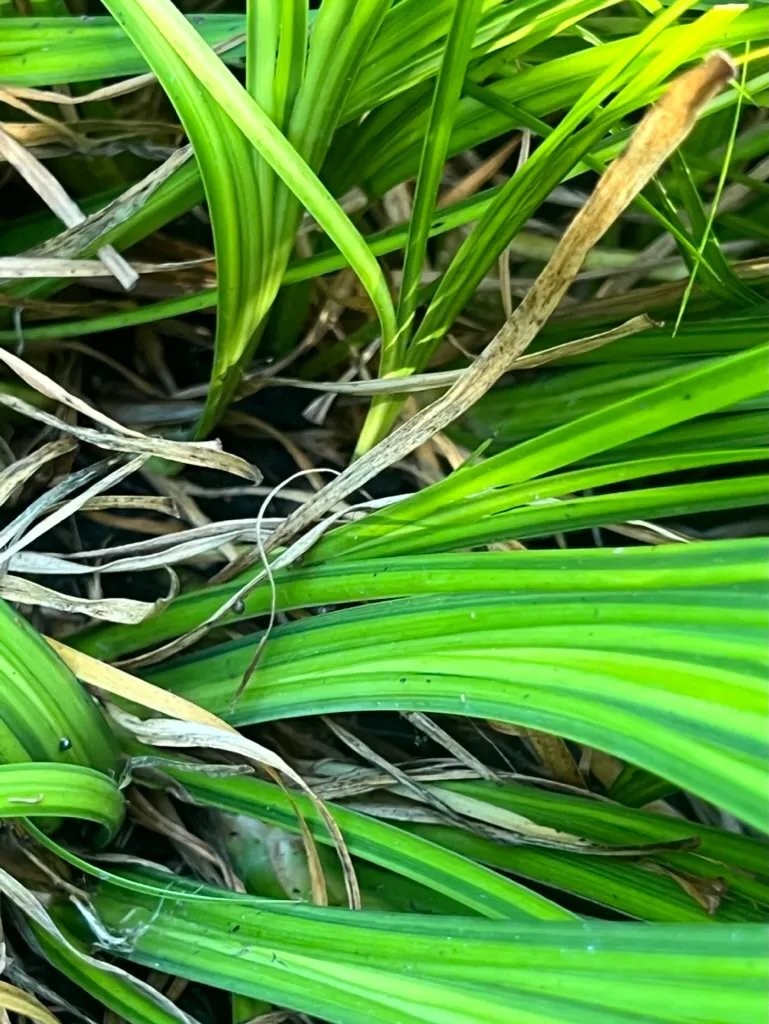
golden-yellow with green longitudinal stripes; narrow grass-like leaves 6-12 inches (15-30 cm) long arranged in a fan-like clump; the entire plant contains essential oils and the crushed foliage releases a sweet slightly spicy scent; 'Ogon' is Japanese for gold and refers to the golden leaf color; evergreen in mild climates and semi-evergreen in cold climates where the foliage is damaged by sustained freezes below 15°F (-10°C) but regrows from the rhizome in springGrowing Conditions
Sun Requirements
Requires 2-6 hours of direct sunlight daily
• Full Sun: 6+ hours of direct sunlight
• Partial Shade: 3-6 hours of direct sunlight
• Full Shade: Less than 3 hours of direct sunlight
Care & Maintenance
Care Guide
Site in partial shade to full shade with 2–6 hours of direct sun per day. The golden-yellow variegation of 'Ogon' is brightest in partial shade (2–4 hours of morning sun with afternoon shade) and fades toward chartreuse in deep shade, while full sun scorches the leaf tips and margins and produces brown damage on the golden foliage — partial shade is the suited exposure for maintaining the golden coloration without scorch. Wet to boggy soil with a pH of 5.5–7.0 is required because the species tolerates standing water and waterlogged conditions and fails on well-drained positions that dry out during the growing season. The species calls for consistently wet to moist soil through the full year and is not drought-tolerant at any stage of growth. Winter-damaged foliage is combed out or cut back in early spring (March) before the new growth emerges from the rhizome, and division of crowded clumps is done every 3–4 years in spring by lifting and separating the rhizome sections. Non-toxic and deer-resistant. Hardy in USDA zones 5–9.Pruning
Winter-damaged or tattered foliage is combed out by hand or cut back to 2–3 inches (5–7 cm) above the rhizome in early spring (March) before the new season's golden growth emerges. Division of crowded clumps is done every 3–4 years in spring by lifting the clump and separating the rhizome sections into individual fans, each with roots attached, and replanting at the original depth in wet soil. No other pruning is needed through the growing season.Pruning Schedule
Prune: March
early spring
Container Growing
Suitable for container growing
Minimum container size: 2 gallons
Toxicity
Non-toxicBotanical Flashcard