Overview
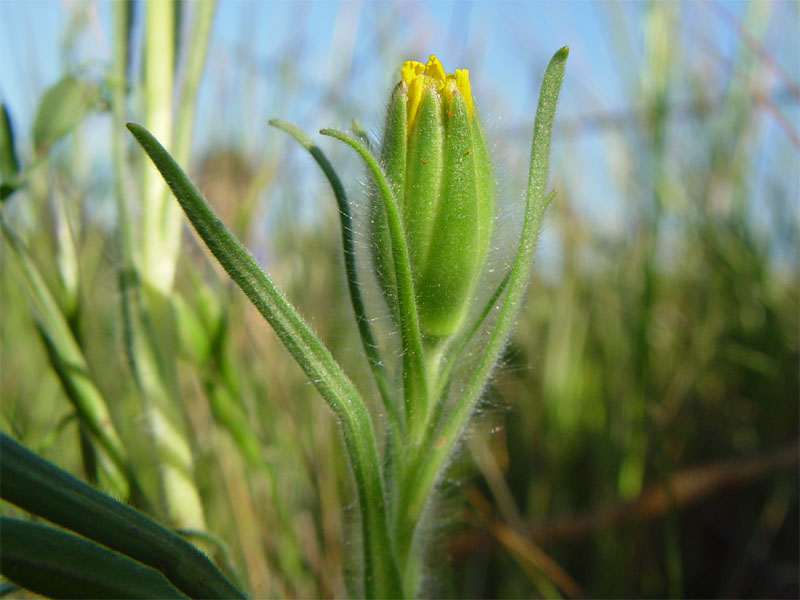
Achyrachaena mollis is an annual herb reaching 4-16 inches (10-40 cm) tall, with a slender, often branched stem covered in soft hairs. Leaves are linear to lance-shaped, 1-4 inches (2.5-10 cm) long, grey-green, hairy, and clustered toward the base and lower stem. Flower heads are small, 0.3-0.5 inch (8-13 mm) wide, with short yellow ray florets that age to red and orange-tipped disc florets, opening in spring. As the fruit matures, the seed head expands: each achene carries 5-10 silvery-white, papery, scale-like pappus segments that spread outward into a rounded, translucent sphere 1-2 inches (2.5-5 cm) across, persisting after the flowers fade. Plants complete their cycle within a single season, germinating with fall and winter rains and setting seed by early summer. Growth is upright and self-supporting, though stems may bend under the weight of mature seed heads. As a vernal annual of seasonally moist ground, it dies back completely once soils dry, leaving only dispersed seed. It has limited tolerance for prolonged summer moisture and does not persist in irrigated or heavily disturbed sites.
Native Range
Native to California and southwestern Oregon, with scattered occurrences in Baja California. Found in open grasslands, vernal pool margins, and seasonally moist clay flats below about 3,000 feet (900 m) elevation.Suggested Uses
Used in California native plant gardens, vernal pool restoration, and seasonal wildflower plantings on clay soils. Suited to unirrigated meadow areas where it self-sows; less persistent in regularly watered borders. Established from broadcast seed rather than spaced transplants.How to Identify
Appearance
Size & Dimensions
Height4" - 1'4"
Width/Spread4" - 8"
Colors
Bloom Information
Flowers from March through May across most of its range, beginning earlier in southern and coastal sites and later inland. Individual heads are short-lived, but the papery seed heads persist for several weeks after flowering. Bloom timing depends on the timing and amount of winter rainfall.
Detailed Descriptions
Flower Description
Yellow aging to redFoliage Description
Grey-greenGrowing Conditions
Sun Requirements
Requires 6-8 hours of direct sunlight daily
• Full Sun: 6+ hours of direct sunlight
• Partial Shade: 3-6 hours of direct sunlight
• Full Shade: Less than 3 hours of direct sunlight
Water & Climate
Water Needs
Drought Tolerance
Drought tolerant when established
Care & Maintenance
Care Guide
Grown from seed sown in fall onto open, seasonally moist soil; germination follows cool, wet conditions. Plants need moisture through winter and spring and tolerate drying as they set seed. Summer irrigation shortens the life cycle and promotes rot. No division or staking applies, as plants are annual and self-supporting. Seed disperses on its own once heads dry, and stands regenerate where soil remains undisturbed. Few pests affect it, though seedlings compete poorly with vigorous annual grasses.Pruning
No pruning is needed. Spent plants can be left in place to disperse seed or pulled once dry. Removing seed heads before they shatter limits self-sowing in cultivated settings.Toxicity: Not assessed
UnknownPlanting Guide
Planting Methods & Timing
Planting Method
direct sow
Direct Sow Timing
Fall