Acaena, Genus, spp., Multiple species,
- Genus
- Multiple species
Bidibid
New Zealand, Australia, South America, and the Pacific
Overview
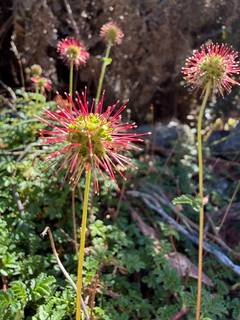
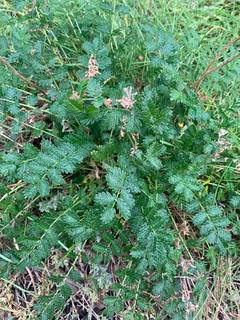
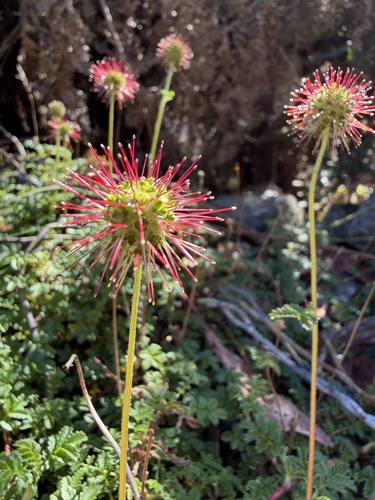
Acaena, commonly called bidibid or New Zealand burr, is a genus of about 100 low-growing perennials in the rose family (Rosaceae). The genus is centred on the Southern Hemisphere, with species in New Zealand, Australia, South America, and the Pacific, and a few reaching California and Hawaii. Plants form creeping evergreen to semi-evergreen mats only 2-15 cm (1-6 in) high that root as they spread and can cover 30-90 cm (12-36 in) across. The pinnate leaves carry small toothed leaflets and come in shades of green, blue-grey, and bronze; the coloured-leaved species are grown as foliage groundcover. Tiny petalless flowers are packed into rounded heads on short stalks in summer; as the heads ripen they harden into burrs armed with barbed spines, often red or brown, that catch on fur and clothing and so spread the seed. The burrs are how the plants disperse and also how some species have become weedy outside their native range, including naturalised populations in parts of Britain. Plants tolerate poor, dry soils once established and stand light foot traffic.
Native Range
Acaena is native mainly to the Southern Hemisphere, with its greatest diversity in New Zealand and southern South America and additional species in Australia, New Guinea, and on subantarctic islands. Isolated species occur in California and Hawaii.Suggested Uses
Acaena species are planted as groundcover between paving, in gravel gardens, on banks, and at the front of dry borders, where the coloured foliage spreads into a low carpet. They tolerate occasional foot traffic in paths and rockeries. Vigorous spread and clinging burrs make some species unsuited to plantings near long-haired pets or tidy lawns.How to Identify
Appearance
Size & Dimensions
Height1" - 6"
Width/Spread1' - 3'
Bloom Information
Flowering occurs mainly in summer, when short stalks lift the small round flower heads just above the foliage. The flowers themselves are small and green, and the main seasonal feature is the coloured burrs that follow. Burrs persist into autumn.
Detailed Descriptions
Flower Description
greenish-white with red to brown burrsFoliage Description
blue-grey, green, or bronzeGrowing Conditions
Sun Requirements
Requires 5-10 hours of direct sunlight daily
• Full Sun: 6+ hours of direct sunlight
• Partial Shade: 3-6 hours of direct sunlight
• Full Shade: Less than 3 hours of direct sunlight
Water & Climate
Water Needs
Drought Tolerance
Drought tolerant when established
Care & Maintenance
Care Guide
Plants grow in full sun to part shade on light, well-drained soil at a pH of 5.5-7.0. Once established they tolerate drought, poor ground, and exposure, though they may scorch in prolonged heat with no moisture. Most species are hardy to about USDA zone 6, with some less cold-tolerant. Growth is fast, and stems root as they run, so plants knit into a dense mat. Overly rich, wet soil produces lax growth and can cause rot.Pruning
A trim or mow over the mat in late winter removes tired growth and keeps it low. Spreading stems are cut back at the edges to contain the patch. Taking off burrs before they ripen reduces unwanted self-sowing.Container Growing
Suitable for container growing
Minimum container size: 1 gallons