Image 1 of 12
1 / 12
Plant Reference
Abeliophyllum, Genus, distichum, Species,
- Genus & species
white forsythia
Central Korea, primarily Chungcheongbuk-do province; rocky slopes and forest edges at 300-1,000 feet (90-300 m)
Overview
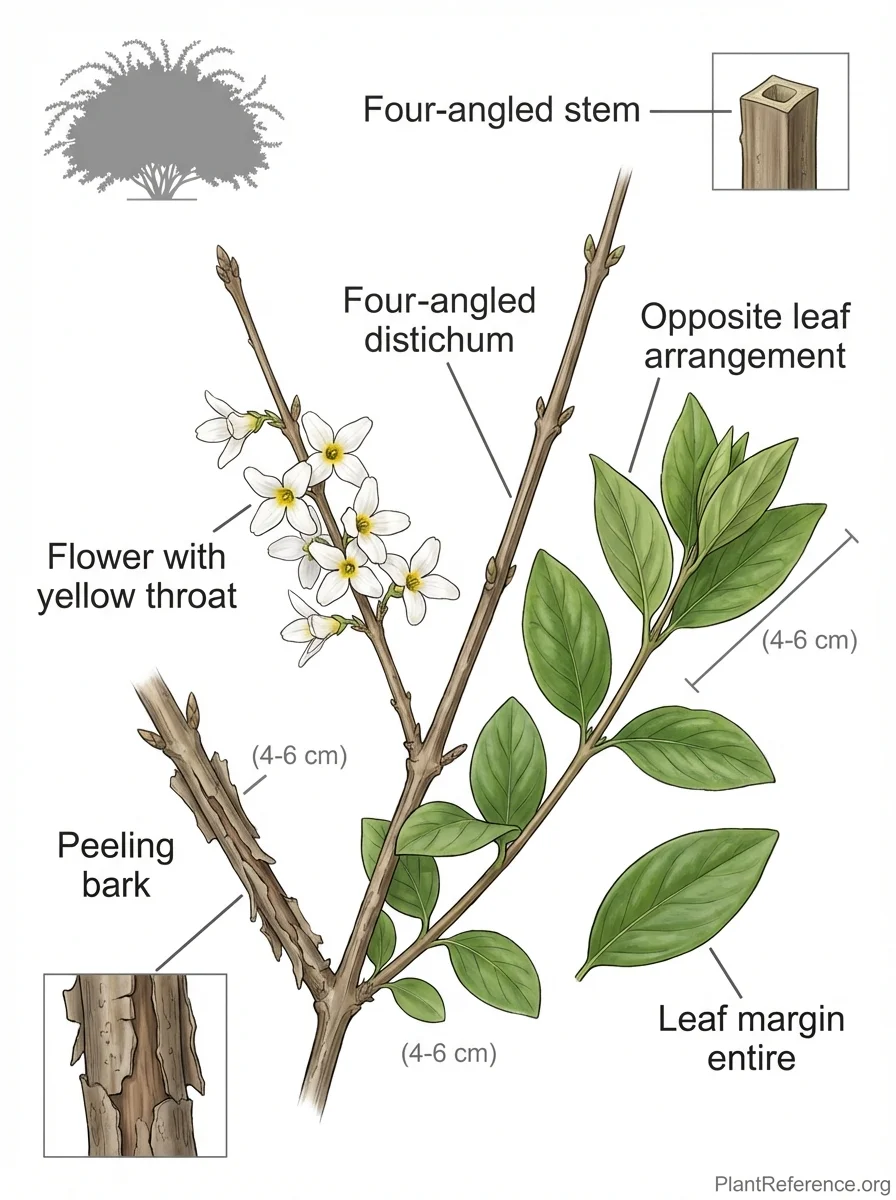
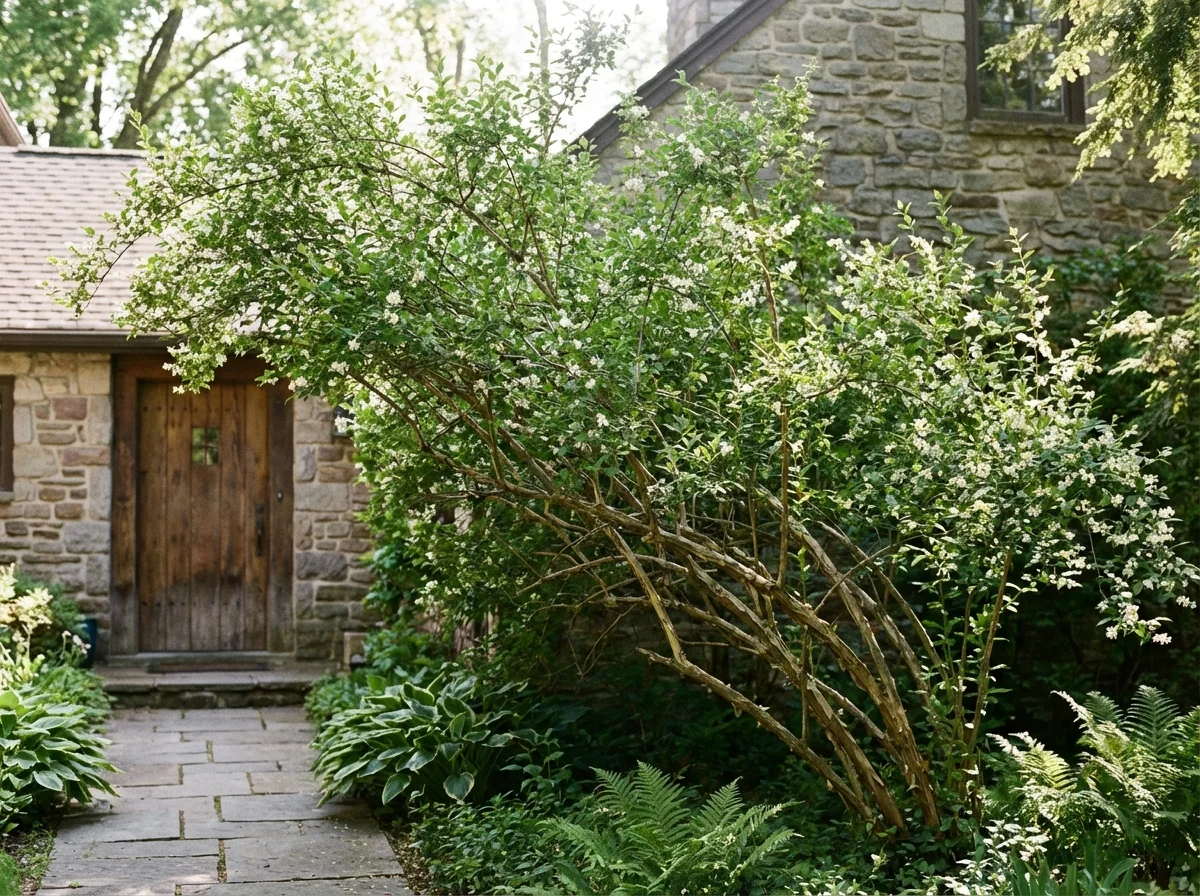
Abeliophyllum distichum is a deciduous shrub in the family Oleaceae reaching 3-5 feet (90-150 cm) tall with an equal to somewhat greater spread at maturity. Young plants grow in an upright form; older specimens develop an arching, spreading branch structure. Stems are four-angled and grayish-brown, and older bark peels in thin strips revealing lighter brown underlayers. Leaves are opposite, ovate to elliptic, medium green through the growing season, and develop purple-tinged tones in fall before dropping. Flowers 0.5 inch (1.3 cm) across, white to pale pink with a yellow throat, open on bare stems in late winter, typically 3-5 weeks before Forsythia species in the same zone. The arching branch structure is visible through winter once the leaves drop. The genus is monotypic — A. distichum is the only species — and the plant is classified as endangered in its native Korean range due to habitat loss and limited geographic distribution. Late hard frosts after buds open can turn the petals brown and curtail the display for that season, and plants in shade flower sparsely and develop leggy growth over 2-3 years.
Native Range
Abeliophyllum distichum is native to a restricted area of central Korea, primarily in Chungcheongbuk-do province, where it grows on rocky slopes and forest edges in well-drained soils at 300-1,000 feet (90-300 m) elevation. The species is classified as endangered in its native range due to habitat loss and its narrow geographic distribution.Suggested Uses
Planted in mixed shrub borders and foundation plantings at 4-5 foot (1.2-1.5 m) spacing. The late-winter flowering period suits placements near entries, walkways, and windows where the light fragrance is encountered in passing. Flowering branches are cut and forced indoors in January and February when buds show color. The informal arching habit does not hold a formal hedge shape.How to Identify
Appearance
Size & Dimensions
Height3' - 5'
Width/Spread3' - 5'
Bloom Information
Flowers open in late February through March in zones 5-7, extending into April in zones 4-5, and as early as January in zones 8-9. Individual flowers last 7-10 days; total bloom period averages 2-3 weeks. Flowers appear on bare stems before leaves emerge. Late hard freezes after buds open can turn petals brown and reduce the bloom display for that year.
Detailed Descriptions
Flower Description
white to pale pink with yellow throat; 0.5 inch (1.3 cm) across; borne on bare stems in late winterFoliage Description
medium green during the growing season; purple-tinged in fallGrowing Conditions
Sun Requirements
Requires 4-12 hours of direct sunlight daily
• Full Sun: 6+ hours of direct sunlight
• Partial Shade: 3-6 hours of direct sunlight
• Full Shade: Less than 3 hours of direct sunlight
Care & Maintenance
Care Guide
Plant in full sun in well-drained soil with a pH of 6.0-7.5; tolerated soil types include loam, sand, and clay. Water weekly during the first two growing seasons in the absence of rainfall. Established plants tolerate dry intervals of 10-14 days but perform poorly in prolonged drought. Poorly drained or consistently wet soils can lead to root rot within 1-2 years of planting. Full sun produces the heaviest flower set; plants in shade flower sparsely and develop an open, leggy structure over time. Apply balanced fertilizer after flowering in spring; excess fertilizer shifts growth toward vegetative shoots at the expense of flower bud formation. In zones 4-5, flower buds can be damaged when winter temperatures fall below -15°F (-26°C) without adequate snow cover.Pruning
Pruning is done immediately after flowering in late March or April; pruning in fall or winter removes the following season's flower buds. Approximately one-third of the oldest stems (those over 4-5 years) are cut at ground level each year to sustain flowering wood. Overgrown specimens can be cut back to 6-12 inches (15-30 cm) after spring bloom; such plants regenerate but do not flower the following year. All pruning ends by mid-May to allow next season's buds to develop on new wood.Pruning Schedule
Prune: March–April
early spring
Toxicity
Non-toxicBotanical Flashcard