Turf Care

Best Grass for Your Climate Zone: The Complete Selection Guide
Last updated: October 30, 2025
Match your grass to your climate zone before anything else. This guide covers every major turfgrass species by region — cool-season, warm-season, and transition zone — with real performance data and variety recommendations.
JJames Martinez
October 30, 2025
Share:
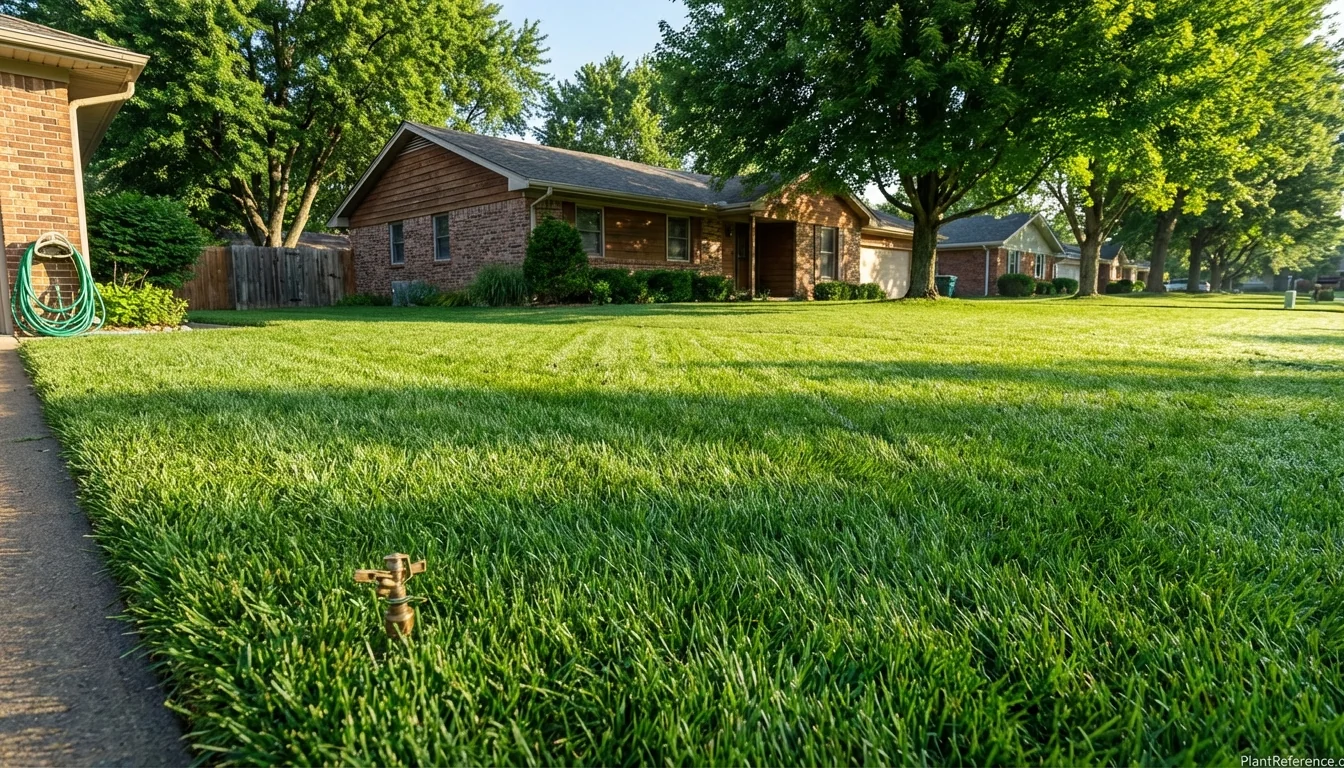
Dense healthy lawn with defined edges in suburban backyard showing well-matched turfgrass for regional climate

Image © PlantReference.org 2026
Quick Answer
Cool-season grasses suit the northern U.S., warm-season grasses suit the South. The Transition Zone through Virginia, Tennessee, and Missouri is toughest — tall fescue or zoysiagrass typically perform best there.
TL;DR
The most important lawn decision you will ever make is choosing the right grass for your climate. Cool-season grasses — Poa pratensis, tall fescue, fine fescues — thrive in the northern third of the U.S. at 60–75°F (16–24°C). Warm-season grasses — Cynodon dactylon, Zoysia japonica, St. Augustine — dominate the South at 80–95°F (27–35°C). The Transition Zone running through Virginia, Tennessee, Missouri, and Kansas is the hardest place in America to grow a lawn, where both grass types struggle. Get the species right first — then worry about everything else.
Frequently Asked Questions

What is the best grass for the Transition Zone?

Festuca arundinacea (tall fescue) in a modern turf-type variety is the most widely successful choice for Transition Zone lawns that will be seeded. It handles summer heat better than Kentucky bluegrass and winter cold better than bermudagrass, though it looks stressed in August and needs periodic overseeding.

How do I know which grass zone I'm in?

Find your USDA Plant Hardiness Zone (available at planthardiness.ars.usda.gov) and cross-reference with your region's average summer high temperatures. If your summers regularly exceed 90°F (32°C) and winters rarely drop below 10°F (-12°C), you're in warm-season territory. If summers stay mostly below 85°F (29°C) and winters go below 0°F (-18°C), you're firmly in cool-season country. If you're in between — Virginia, Tennessee, Missouri, Kansas, the Carolinas — you're in the Transition Zone.

Can I mix cool-season and warm-season grasses in the same lawn?

Intentional mixing rarely works well as a permanent solution. The maintenance requirements — mowing height, fertilization timing, irrigation — conflict directly between the two grass types. The one exception is overseeding dormant warm-season lawns (typically Cynodon dactylon or Zoysia japonica) with Lolium perenne in fall for winter color. This works in the Transition Zone and upper South, but requires careful spring management to let the bermudagrass or zoysia break through the ryegrass canopy.

When is the right time to establish a new lawn?

Cool-season grasses: mid-August through mid-October for seeding. Soil temperatures in the 50–65°F (10–18°C) range provide ideal germination conditions, weed competition is reduced, and seedlings get two growth periods — fall and spring — before facing summer stress.
NEW PLANT DAILY

Think you know your plants?

Test your botanical knowledge with a new plant identification challenge every day. Build your streak, learn fascinating plant facts, and become a plant identification expert!

Build your streak
One chance per day
Learn as you play

Free account required • Takes less than 30 seconds

Written By
J

James Martinez

James is a lawn care professional in Dallas who runs a small residential maintenance company. He started mowing lawns as a teenager and worked his way up to running crews for a large landscaping firm before going out on his own. James specializes in warm-season turf grasses—Bermuda, St. Augustine, and Zoysia—and knows how to keep a lawn alive through Texas summers without wasting water. He's also experienced with the transition zone challenges that Dallas faces, where warm-season and cool-season grasses overlap. James takes a practical, science-informed approach to lawn care and pushes back on the idea that a good lawn requires heavy chemical inputs.
Related Plants

Other Articles You May Enjoy