1 / 4
Annuals
Solanum lycopersicum 'Yellow Pear'
Yellow Pear Tomato
SolanaceaeSouth America
At a Glance
Typeannual
Habitindeterminate vining
Foliagedeciduous
Height6-8 feet
Width2-3 feet
Growing Zones
USDA Hardiness Zones
4a - 10bZone 4a
Zone 4b
Zone 5a
Zone 5b
Zone 6a
Zone 6b
Zone 7a
Zone 7b
Zone 8a
Zone 8b
Zone 9a
Zone 9b
Zone 10a
Zone 10b
These zones indicate the coldest temperatures this plant can typically survive.
Frost Tolerancetender
Overview
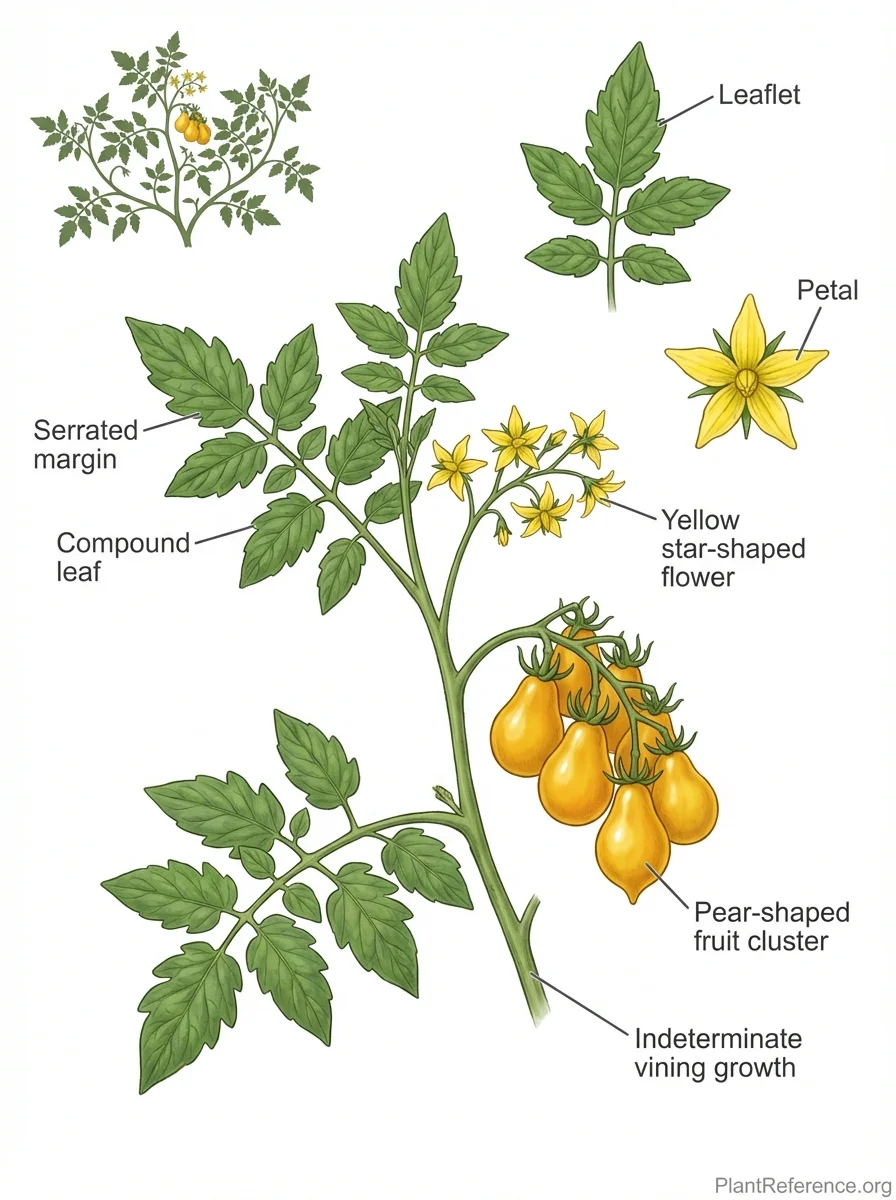
Solanum lycopersicum 'Yellow Pear' is an indeterminate heirloom tomato cultivar known for its distinctive small, pear-shaped fruits that ripen to a bright golden-yellow color. This vigorous annual vine produces clusters of 1-inch long fruits that taper from a rounded base to a pointed tip, resembling tiny yellow pears. The plant features the characteristic compound leaves of tomatoes, with deeply serrated leaflets arranged pinnately along sturdy stems that require support due to their vining growth habit.
The small yellow fruits are prized for their sweet, mild flavor with low acidity, making them excellent for fresh eating, salads, and garnishing. Solanum lycopersicum 'Yellow Pear' is highly productive, with plants often reaching 6-8 feet in height when properly staked or caged. The cultivar produces small yellow flowers typical of tomatoes, which develop into the characteristic pear-shaped fruits that hang in grape-like clusters throughout the growing season.
Native Range
Solanum lycopersicum is native to western South America, particularly the Andes mountains of Peru, Ecuador, and northern Chile, where wild ancestors still grow naturally in diverse habitats from coastal areas to high-altitude regions.Suggested Uses
Solanum lycopersicum 'Yellow Pear' works well in vegetable gardens, raised beds, and large containers with adequate support structures. Excellent for fresh eating, salads, garnishes, and preserving. The attractive yellow fruits make beautiful additions to mixed vegetable platters and are perfect for cherry tomato applications where a unique shape and color are desired.How to Identify
Appearance
Bloom Information
continuously from late spring through fallDetailed Descriptions
Flower Description
bright yellowFoliage Description
medium to dark greenGrowing Conditions
Sun Requirements
full sun
Soil pH
6.0-7.0
Water & Climate
Water Needs
moderate to high
Frost Tolerance
tender
Time to Maturity
70-80 days
Care & Maintenance
Care Guide
Solanum lycopersicum 'Yellow Pear' requires consistent moisture throughout the growing season, needing deep watering 2-3 times per week or daily during hot, dry periods. Provide strong support with cages, stakes, or trellises as plants can reach 6-8 feet tall. Feed regularly with balanced fertilizer every 2-3 weeks, switching to lower nitrogen formula once flowering begins to encourage fruit production. Mulch around plants to retain moisture and suppress weeds. Remove suckers that develop in leaf axils to direct energy into fruit production and improve air circulation.Pruning
Prune Solanum lycopersicum 'Yellow Pear' by removing suckers that grow between the main stem and leaf branches throughout the growing season. Remove lower leaves that touch the soil to prevent disease. Pinch growing tips in late summer to direct energy into ripening existing fruits. Remove any diseased or damaged foliage promptly. As an indeterminate variety, the plant will continue growing until frost, so regular sucker removal is essential for manageable growth and optimal fruit production.⚠️ Toxicity Warning
Solanum lycopersicum 'Yellow Pear' produces edible fruits that are safe for human consumption. However, like all tomato plants, the green parts including leaves, stems, and unripe fruits contain solanine and other alkaloids that can be toxic if consumed in large quantities. Keep pets and children from eating the foliage or green plant parts.Planting Guide
Planting Methods & Timing
Planting Method
transplant
Indoor Start
6 weeks before last frost
Direct Sow Timing
not recommended for direct sowing
Days to Maturity
70–80 days
Plant Spacing
24 inches
Companion Planting
Good Companions
basil
oregano
parsley
marigolds
nasturtiums
carrots
lettuce
Avoid Planting With
fennel
brassicas
corn
dill
walnut trees