1 / 5
Perennials
Tulipa spp.
tulips
LiliaceaeEurope, Asia
At a Glance
TypeBulb
HabitUpright
FoliageDeciduous
Height4–28 inches (10–70 cm)
Width4–8 inches (10–20 cm)
Maturity1 years
Growing Zones
USDA Hardiness Zones
3 - 8Zone 3
Zone 4
Zone 5
Zone 6
Zone 7
Zone 8
These zones indicate the coldest temperatures this plant can typically survive.
Frost Tolerancehardy
Key Features
Attracts Pollinators
Drought Tolerant
Container Friendly
Maintenancemoderate
Overview
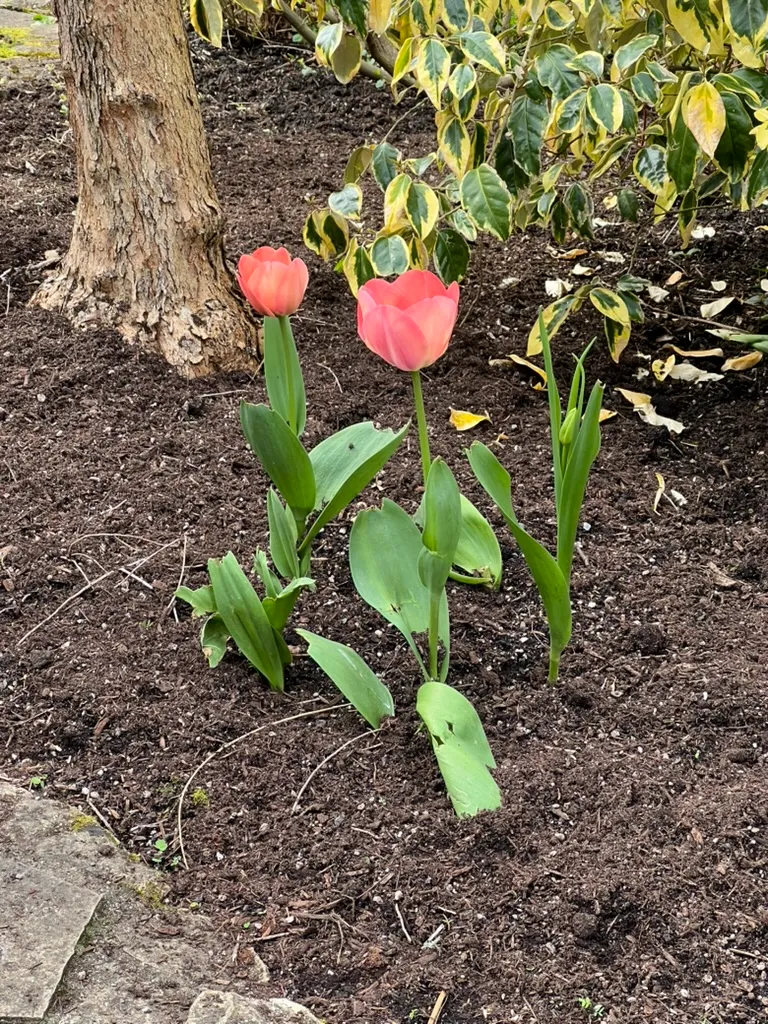
Tulipa is a genus of approximately 75–110 species of spring-blooming bulbiferous geophytes in the family Liliaceae, native to a broad arc from southern Europe and North Africa east through Turkey, the Caucasus, Central Asia, and the Himalayas to western China, with the greatest species diversity in the steppes of Central Asia and the mountains of the Pamir-Alai. Each plant grows from a tunicate bulb — with papery outer scales — producing two to six strap-shaped, waxy, blue-green leaves and a single erect flowering stem topped by a solitary, showy flower with six tepals (three petals and three sepals of similar appearance) in every color except true blue-green. Plants typically grow 4–28 inches (10–70 cm) tall depending on species and cultivar class. The 15 horticultural divisions of the modern garden tulip — including Single Early, Darwin Hybrid, Triumph, Parrot, Viridiflora, Fringed, and Species (Botanical) tulips — collectively provide flowering across an eight-to-ten-week window from late winter through late spring. In Pacific Northwest gardens, tulips are planted as autumn bulbs and flower March–May depending on class. Note: in the cool, moist Pacific Northwest climate, most garden tulip hybrids perform reliably for two to four years before diminishing; Species (Botanical) tulips such as T. clusiana, T. humilis, T. bakeri, and T. tarda are more reliably perennial. All parts are mildly toxic to pets.
Native Range
Native to a broad arc from southern Europe (Spain, Italy, Greece, Crete) and North Africa east through Turkey, the Caucasus, Iran, Afghanistan, Central Asia (Kazakhstan, Uzbekistan, Kyrgyzstan, Tajikistan), and the Pamir-Alai mountains to western China, growing in dry, rocky steppes, open hillsides, and mountain meadows in well-drained soils with cold winters and dry summers. Not native to North America.Suggested Uses
Tulips are among the most important and versatile spring-flowering bulbs for Pacific Northwest gardens, providing color across an eight-to-ten-week window depending on cultivar class. Outstanding in formal bedding schemes, mixed perennial borders, naturalized meadow plantings, and containers. Species tulips — particularly T. clusiana, T. humilis 'Violacea', T. tarda, and T. sylvestris — are longer-lived and more reliably perennial in Pacific Northwest conditions and are recommended for permanent planting. Darwin Hybrid tulips offer the largest flowers and strongest stems for cut flower use. Combine across classes for maximum seasonal extension.How to Identify
Appearance
Size & Dimensions
Height4" - 2'4"
Width/Spread4" - 8"
Reaches mature size in approximately 1 years
Colors
Flower Colors
red
yellow
pink
white
purple
orange
Foliage Colors
green
blue
Fall Foliage Colors
no change
Bloom Information
Bloom Period
~3 weeksJ
F
M
A
M
J
J
A
S
O
N
D
Spring
Detailed Descriptions
Flower Description
Every color except true blue-green; six tepals, solitary, erect; often with contrasting dark basal blotch; forms vary widely by cultivar classFoliage Description
Strap-shaped, waxy, blue-green; two to six leaves per stem; often with wavy marginsGrowing Conditions
Sun Requirements
Full Sun
Requires 6-12 hours of direct sunlight daily
• Full Sun: 6+ hours of direct sunlight
• Partial Shade: 3-6 hours of direct sunlight
• Full Shade: Less than 3 hours of direct sunlight
Soil Requirements
pH Range6.0 - 7.0(Neutral)
357912
Soil Types
loamsandchalk
Drainage
well drained
Water & Climate
Water Needs
Low
Frost Tolerance
hardy
Time to Maturity
1 year
Drought Tolerance
Drought tolerant when established
Care & Maintenance
Care Guide
Plant bulbs in autumn, October–November in Pacific Northwest gardens, at a depth of 6–8 inches (15–20 cm) in full sun in well-drained, moderately fertile soil. Tulips require full sun and excellent drainage — wet soils cause bulb rot. In the Pacific Northwest, heavier soils benefit from the addition of coarse grit and raised planting to improve drainage. Allow foliage to die back fully after flowering (six to eight weeks) before removing — do not tie or cut back prematurely as the bulb requires this period to build energy. Most garden tulip hybrids perform best for two to four years in Pacific Northwest conditions; Species tulips are more reliably perennial.Pruning
Deadhead spent flowers by snapping off the flower head, leaving the stem and all foliage intact. Allow foliage to die back naturally over six to eight weeks after flowering — this is essential for bulb renewal. Only remove foliage once it is fully yellow and papery. Interplant with later-emerging perennials to conceal the ripening foliage in formal beds.Pruning Schedule
J
F
M
A
M
J
J
A
S
O
N
D
late spring
Maintenance Level
moderateContainer Growing
✓ Suitable for container growing
Minimum container size: 3 gallons