Annuals
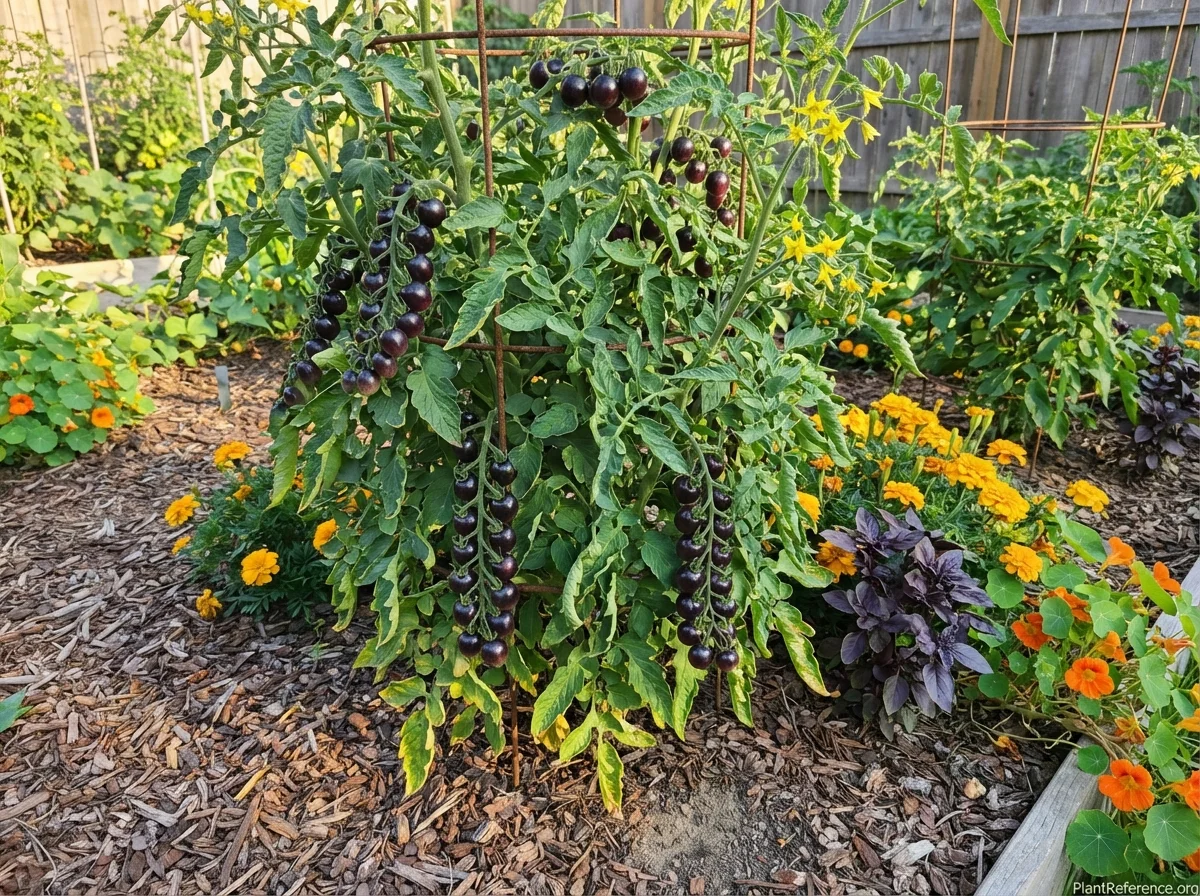
Solanum lycopersicum 'Black Cherry'
Black Cherry Tomato
UnknownSouth America
At a Glance
Typeannual
Habitvining
Foliagedeciduous
Height6-8 feet
Width2-3 feet
Maturity1 years
Growing Zones
USDA Hardiness Zones
9a - 11bZone 9a
Zone 9b
Zone 10a
Zone 10b
Zone 11a
Zone 11b
These zones indicate the coldest temperatures this plant can typically survive.
Frost Tolerancetender
Key Features
Attracts Pollinators
Attracts Butterflies
Deer Resistant
Container Friendly
Maintenancehigh
Overview
Solanum lycopersicum 'Black Cherry' is a distinctive indeterminate cherry tomato cultivar renowned for its remarkably dark, almost burgundy-black fruits that create a striking contrast in the garden. This vigorous annual produces abundant clusters of small, round tomatoes that measure approximately 1 inch in diameter, with each cluster containing 6-12 fruits that develop from green to deep purple-black when fully ripe, displaying the darkest coloration on the shoulders and upper portions. The plant exhibits the classic tomato characteristics with compound, deeply serrated leaves that are medium to dark green in color, providing an attractive backdrop for the small, bright yellow star-shaped flowers that are arranged in simple racemes. As an indeterminate variety, the vines continue growing and producing fruit throughout the growing season until killed by frost, often reaching impressive heights of 6-8 feet when properly supported, making this cultivar both productive and visually striking in the vegetable garden.
Native Range
Solanum lycopersicum is native to western South America, particularly the Andes Mountains region encompassing parts of Peru, Ecuador, and northern Chile, where wild ancestors of modern tomatoes still grow in their natural mountain habitats today.Suggested Uses
Solanum lycopersicum 'Black Cherry' excels in vegetable gardens, raised beds, and large containers with adequate support systems, where its unique dark fruits create visual interest and conversation. The striking dark cherry tomatoes make excellent fresh additions to salads, providing both sweet flavor and dramatic color contrast, and are popular for gourmet cooking applications where the unusual appearance creates impressive visual impact. This cultivar is ideal for specialty farmers market sales, fresh eating as garden snacks, creative garnishes for culinary presentations, and preserving applications including sauces and canning where the distinctive color adds uniqueness to preserved products.How to Identify
Appearance
Size & Dimensions
Height6' - 8'
Width/Spread2' - 3'
Reaches mature size in approximately 1 years
Colors
Flower Colors
yellow
Foliage Colors
green
Bloom Information
Bloom Period
~26 weeksJ
F
M
A
M
J
J
A
S
O
N
D
SummerFall
Detailed Descriptions
Flower Description
bright yellowFoliage Description
medium to dark greenGrowing Conditions
Sun Requirements
Full Sun
• Full Sun: 6+ hours of direct sunlight
• Partial Shade: 3-6 hours of direct sunlight
• Full Shade: Less than 3 hours of direct sunlight
Soil Requirements
pH Range6.0 - 6.8(Neutral)
357912
Drainage
well drained
Water & Climate
Water Needs
moderate to high
Frost Tolerance
tender
Time to Maturity
75-80 days
Care & Maintenance
Care Guide
Solanum lycopersicum 'Black Cherry' requires consistent, deep watering providing approximately 1-2 inches per week through infrequent but thorough watering sessions rather than frequent shallow applications to encourage deep root development. Apply a balanced fertilizer at planting time, then transition to a lower nitrogen, higher phosphorus and potassium fertilizer once flowering begins to promote abundant fruit production over excessive foliage growth. Provide sturdy support structures such as tall cages, stakes, or trellises, as the indeterminate vines become quite heavy when laden with fruit clusters. Apply a 2-3 inch layer of organic mulch around the base to retain soil moisture and suppress weeds, while keeping the mulch several inches away from the main stem to prevent fungal disease issues.Pruning
Prune Solanum lycopersicum 'Black Cherry' by regularly removing suckers that develop in the crotch between the main stem and side branches to direct the plant's energy into fruit production rather than excessive vegetative growth. Remove the lower leaves that touch the ground or come close to soil level to improve air circulation and reduce the risk of soil-borne diseases. As the growing season progresses, promptly remove any yellowing, damaged, or diseased foliage to maintain plant health. In late summer, consider topping the main growing points to encourage the plant to focus its remaining energy on ripening existing fruits rather than producing new growth that won't have time to mature before frost.Pruning Schedule
J
F
M
A
M
J
J
A
S
O
N
D
summerfall
Maintenance Level
highContainer Growing
✓ Suitable for container growing
Minimum container size: 5 gallons
⚠️ Toxicity Warning
The ripe fruits of Solanum lycopersicum 'Black Cherry' are completely safe for human consumption and highly nutritious. However, like all members of the nightshade family, the green parts of the plant including leaves, stems, and unripe green fruits contain solanine and other glycoalkaloids that can be toxic to humans and pets if consumed in significant quantities. Keep pets and children from eating the foliage or unripe green fruits, and always allow fruits to fully ripen to their characteristic dark color before consumption.Planting Guide
Planting Methods & Timing
Planting Method
both
Indoor Start
6 weeks before last frost
Direct Sow Timing
after last frost when soil temperature reaches 60°F
Days to Maturity
75–80 days
Plant Spacing
24 inches
Companion Planting
Good Companions
basil
oregano
parsley
marigolds
nasturtiums
carrots
lettuce
spinach
Avoid Planting With
brassicas
fennel
corn
dill
potatoes
eggplant
peppers