1 / 13
Deciduous Shrubs
Rosa
floribunda roses
Rosaceae
Complex hybrid origin (developed in Europe and North America)
At a Glance
TypeShrub
HabitMounding
FoliageDeciduous
Height2-4 feet (0.6-1.2 m)
Width2-3 feet (0.6-0.9 m)
Maturity3 years
Growing Zones
USDA Hardiness Zones
5 - 9Zone 5
Zone 6
Zone 7
Zone 8
Zone 9
These zones indicate the coldest temperatures this plant can typically survive.
Frost Tolerancehardy
Key Features
Attracts Pollinators
Attracts Butterflies
Fragrant (moderate)
Container Friendly
Maintenancehigh
Overview
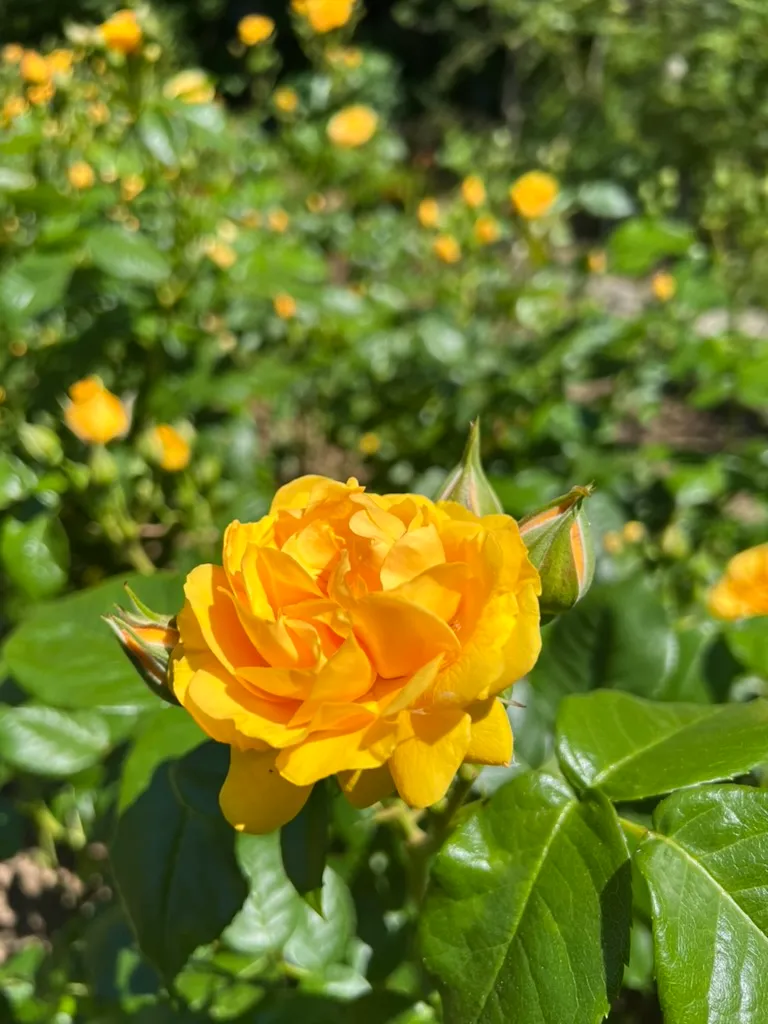
Floribunda roses are a class of Rosa hybrids reaching 2-4 feet (0.6-1.2 m) tall with a spread of 2-3 feet (0.6-0.9 m), developed in the early 20th century by crossing hybrid tea roses with polyantha roses. The name means 'many-flowered,' and the class is characterized by flowers produced in large clusters (sprays) of 3-15 or more blooms per stem, providing a continuous mass of color. Individual flowers range from single (5 petals) through semi-double to double (25-30 petals), 2-3.5 inches (5-9 cm) across — smaller than hybrid teas but far more numerous per stem. Flower forms are typically less formal and high-centered than hybrid teas, with a more open, cupped, or rosette shape. Available in the full range of rose colors: white, pink, red, yellow, orange, apricot, lavender, and bicolors. Many are fragrant, though generally less intensely than hybrid teas. Leaves are alternate, pinnately compound, with 5-7 glossy, serrate leaflets. Growth habit is bushy, compact, and well-branched. Repeat-blooming from late May through October in the Pacific Northwest. Generally more disease-resistant and cold-hardy than hybrid teas, and lower-maintenance overall. First officially recognized as a class by the American Rose Society in 1952. In the Pacific Northwest, black spot, powdery mildew, and rust are persistent concerns; disease-resistant cultivars are strongly recommended.
Native Range
Complex hybrid origin, developed in the early 20th century primarily from crosses between hybrid tea roses and polyantha roses. Key early breeders include Dines Poulsen (Denmark) and Eugene Boerner (USA). Parent species in the hybrid background include Rosa chinensis, Rosa multiflora, Rosa gallica, and others.Suggested Uses
Planted in rose beds, mixed borders, foundation plantings, and mass plantings for continuous color, spaced 2-3 feet (0.6-0.9 m) apart. The cluster flowering habit provides more landscape color per plant than hybrid teas. Lower hedges of floribundas are effective along paths and driveways. Disease-resistant cultivars for the Pacific Northwest include 'Iceberg' (white), 'Julia Child' (yellow, fragrant), 'Sexy Rexy' (pink), and Knock Out® series (various colors, exceptional disease resistance). Suitable for large containers (minimum 10-gallon).How to Identify
Appearance
Size & Dimensions
Height2' - 4'
Width/Spread2' - 3'
Reaches mature size in approximately 3 years
Colors
Flower Colors
white
pink
red
yellow
orange
Foliage Colors
green
Fall Foliage Colors
no change
Bloom Information
Bloom Period
~20 weeksJ
F
M
A
M
J
J
A
S
O
N
D
SpringSummerFall
Detailed Descriptions
Flower Description
Varies: white, pink, red, yellow, orange, apricot, lavender, bicolorFoliage Description
Glossy dark greenGrowing Conditions
Sun Requirements
Full Sun
Requires 6-12 hours of direct sunlight daily
• Full Sun: 6+ hours of direct sunlight
• Partial Shade: 3-6 hours of direct sunlight
• Full Shade: Less than 3 hours of direct sunlight
Soil Requirements
pH Range6.0 - 7.0(Neutral)
357912
Soil Types
loamclay
Drainage
well drained
Water & Climate
Water Needs
Medium
Frost Tolerance
hardy
Time to Maturity
1-2 years
Care & Maintenance
Care Guide
Water deeply 1-2 inches (2.5-5 cm) per week during the growing season, applied at the base to keep foliage dry and reduce fungal disease. Plant in full sun with at least 6 hours of direct light and good air circulation. Requires fertile, well-drained soil amended with compost. Mulch 2-3 inches (5-8 cm). Black spot and powdery mildew are persistent concerns in the Pacific Northwest; select disease-resistant cultivars. Fertilize monthly May through August; stop by mid-August to allow hardening. Aphids are common in spring; manage with strong water spray or insecticidal soap.Pruning
Prune in late winter (February through early March) as buds begin to swell. Remove dead, damaged, and diseased canes. Remove thin, twiggy growth. Reduce remaining canes by one-third to one-half, cutting to an outward-facing bud. Aim to retain 5-8 strong canes forming a vase-shaped framework. Deadhead spent flower clusters during the growing season by cutting to the first 5-leaflet leaf below the cluster.Pruning Schedule
J
F
M
A
M
J
J
A
S
O
N
D
late spring
Maintenance Level
highContainer Growing
✓ Suitable for container growing
Minimum container size: 10 gallons