1 / 12
Perennials
Rodgersia
rodgersia
SaxifragaceaeAsia
At a Glance
TypePerennial
HabitClumping
FoliageDeciduous
Height36–60 inches (90–150 cm)
Width36–60 inches (90–150 cm)
Maturity3 years
Growing Zones
USDA Hardiness Zones
4 - 8Zone 4
Zone 5
Zone 6
Zone 7
Zone 8
These zones indicate the coldest temperatures this plant can typically survive.
Frost Tolerancehardy
Key Features
Attracts Pollinators
Deer Resistant
Maintenancelow
Overview
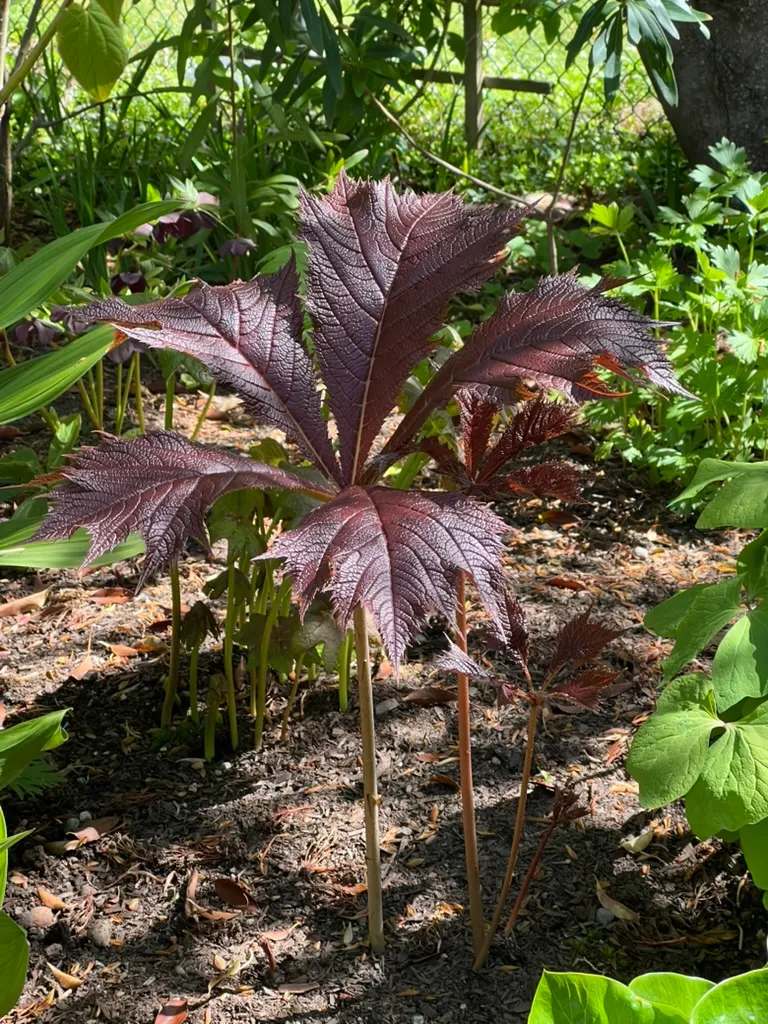
Rodgersia is a genus of approximately six species of bold, rhizomatous herbaceous perennials in the family Saxifragaceae, native to moist woodland margins, stream banks, and boggy meadows across China, Japan, Korea, and adjacent regions of eastern Asia. Rodgersias are among the most impressive large-leaved shade perennials available for Pacific Northwest gardens, combining spectacular compound foliage with plume-like astilbe-type flower panicles in summer. The large, compound leaves are either palmately arranged (as in R. podophylla, with five to seven toothed leaflets resembling a duck's foot) or pinnately arranged (as in R. pinnata and R. sambucifolia), and frequently develop handsome bronze or copper tints — particularly on emerging spring foliage and in autumn. In early to midsummer, stout erect stems 3–5 feet (90–150 cm) tall carry large, feathery panicles of tiny apetalous flowers in white, cream, or pink. Key species in Pacific Northwest cultivation include R. podophylla (duckfoot rodgersia), R. pinnata (featherleaf rodgersia), R. aesculifolia (fingerleaf rodgersia), and R. sambucifolia (elderberry-leaved rodgersia). Named in honor of Rear Admiral John Rodgers (1812–1882), who commanded the 1852–1856 North Pacific Exploring Expedition.
Native Range
Native to moist woodland margins, stream banks, valley floors, and boggy meadows across China (widespread in Sichuan, Yunnan, Hubei, and adjacent provinces), Japan, Korea, and Myanmar at low to mid elevations. Grows in humus-rich, consistently moist to wet, fertile soils in partial to full shade. Not native to North America.Suggested Uses
Rodgersias are indispensable large-scale shade perennials for the Pacific Northwest woodland and moisture garden, providing the most impressive combination of bold compound foliage and tall summer flower panicles of any hardy shade perennial in this climate. Outstanding at the margins of ponds, streams, or bog gardens, where consistent moisture is naturally available. In the large shaded border, effective in sweeps or as specimens combined with Hosta, Astilbe, Ligularia, Darmera, Persicaria amplexicaulis, and large ornamental grasses. The bronzy young foliage of R. podophylla is outstanding in spring; the deep pink flower panicles of R. pinnata 'Superba' are among the most striking of summer shade perennials. Allow 3–5 feet (90–150 cm) of space in all directions for mature clumps.How to Identify
Appearance
Size & Dimensions
Height3' - 5'
Width/Spread3' - 5'
Reaches mature size in approximately 3 years
Colors
Flower Colors
white
pink
Foliage Colors
green
brown
Fall Foliage Colors
brown
red
Bloom Information
Bloom Period
~5 weeksJ
F
M
A
M
J
J
A
S
O
N
D
Summer
Detailed Descriptions
Flower Description
White, cream, or pink (deep rose in some cultivars); tiny, apetalous, in large feathery branched panicles on stout erect stemsFoliage Description
Large compound leaves; palmate (5–7 toothed leaflets) or pinnate depending on species; heavily textured, impressed-veined; bronze to copper tints on young and autumn foliageGrowing Conditions
Sun Requirements
Partial Shade
Full Shade
Requires 2-6 hours of direct sunlight daily
• Full Sun: 6+ hours of direct sunlight
• Partial Shade: 3-6 hours of direct sunlight
• Full Shade: Less than 3 hours of direct sunlight
Soil Requirements
pH Range5.5 - 7.0(Neutral)
357912
Soil Types
loamclaypeat
Drainage
moist
Water & Climate
Water Needs
High
Frost Tolerance
hardy
Time to Maturity
2–3 years
Care & Maintenance
Care Guide
Plant in partial shade in consistently moist to wet, humus-rich, fertile soil. Rodgersias thrive in the cool, moist conditions of Pacific Northwest gardens and are among the best large-scale shade perennials for the region. Incorporate generous organic matter at planting. Consistent moisture throughout the growing season is essential — the large leaves scorch and flag rapidly in dry conditions or hot afternoon sun. A position with morning sun and afternoon shade, or in dappled woodland shade, suits most species well. Mulch annually to conserve moisture. Do not allow to dry out in summer. Divide every four to five years in early spring to maintain vigor and control spread.Pruning
Leave the attractive dried flower panicles and seed heads standing through autumn for additional ornamental interest and wildlife value. Cut all stems and foliage back to ground level in late autumn or early spring before new growth emerges. Divide every four to five years in early spring to rejuvenate clumps. No other pruning is required.Pruning Schedule
J
F
M
A
M
J
J
A
S
O
N
D
fallearly spring