1 / 3
Perennials
Rheum palmatum 'Atrosanguineum'
ornamental rhubarb
PolygonaceaeAsia
At a Glance
TypePerennial
HabitClumping
FoliageDeciduous
Height60–84 inches (150–210 cm)
Width60–72 inches (150–180 cm)
Maturity4 years
Growing Zones
USDA Hardiness Zones
5 - 9Zone 5
Zone 6
Zone 7
Zone 8
Zone 9
These zones indicate the coldest temperatures this plant can typically survive.
Frost Tolerancehardy
Key Features
Attracts Pollinators
Deer Resistant
Maintenancelow
Overview
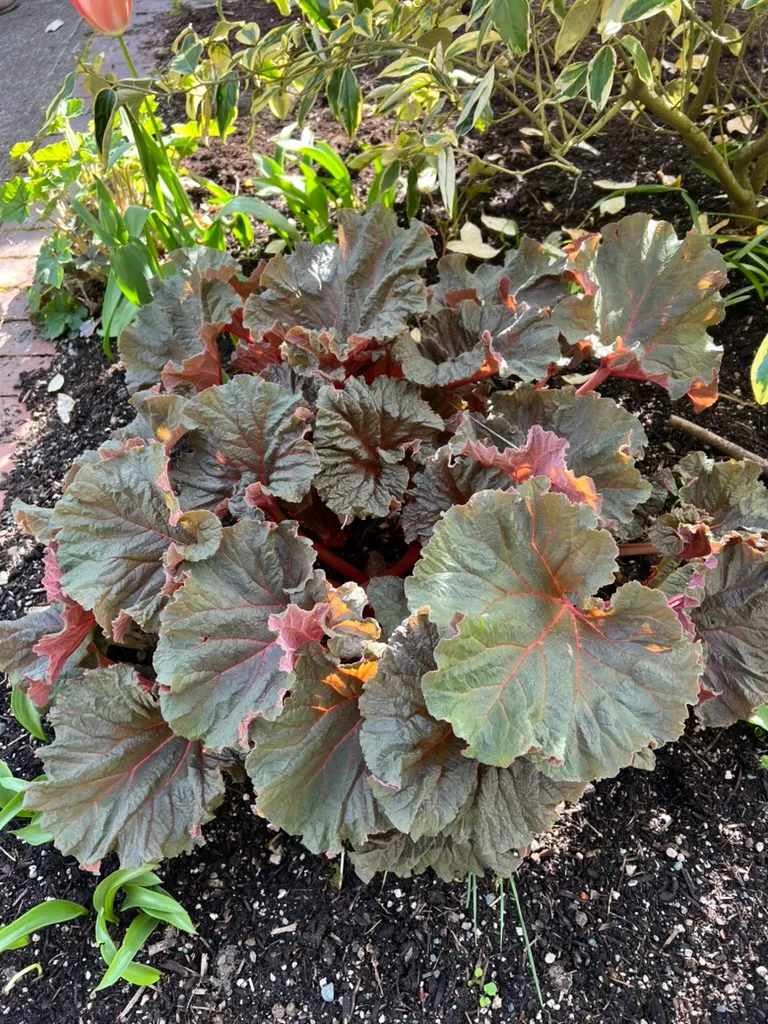
Rheum palmatum 'Atrosanguineum' is a spectacular, clump-forming herbaceous perennial in the family Polygonaceae, a cultivar of Chinese rhubarb native to western China, northern Tibet, and the Mongolian Plateau, where it grows in open, moist mountain meadows and valley slopes at high elevations. It is one of the most boldly architectural perennials available for Pacific Northwest gardens, producing enormous rounded to palmately lobed basal leaves 2–4 feet (60–120 cm) across on stout red-tinged petioles — among the largest leaves of any hardy herbaceous perennial in Pacific Northwest cultivation. 'Atrosanguineum' is distinguished by its deep burgundy-red leaf undersides and young foliage that emerges vivid crimson-red in spring before maturing to dark green above with red retained beneath. In early summer, towering branched panicles 5–7 feet (1.5–2.1 m) tall carry dense clusters of tiny deep crimson-red flowers, creating an exceptionally dramatic vertical element. The plant dies back completely in autumn. Note: unlike common edible rhubarb (R. x hybridum), the leaf stalks of R. palmatum are not edible; the leaves and roots of all Rheum species are toxic. This plant requires space — a bold specimen for the large garden.
Native Range
Native to open, moist mountain meadows, valley slopes, and streamside habitats of western China (Gansu, Qinghai, Sichuan, Yunnan), northern Tibet, and the Mongolian Plateau, growing in deep, moist, fertile soils at high elevations (6,500–13,000 feet / 2,000–4,000 m). Not native to North America.Suggested Uses
Ornamental rhubarb 'Atrosanguineum' is a bold architectural specimen for the large Pacific Northwest garden, providing a tropical scale of foliage and dramatic vertical flower spires in a completely hardy, reliably returning perennial. The enormous leaves provide exceptional textural contrast alongside grasses, Rodgersia, Gunnera, and large-flowered border perennials. The crimson spring foliage and deep red summer flowers make it among the most colorful of all large-leaved perennials. Best sited at the back of a large border, at a garden boundary, or as a standalone specimen beside water or in a bog garden. Not suitable for small gardens — requires 5–6 feet (1.5–1.8 m) of space and adequate moisture.How to Identify
Appearance
Size & Dimensions
Height5' - 7'
Width/Spread5' - 6'
Reaches mature size in approximately 4 years
Colors
Flower Colors
red
Foliage Colors
green
red
purple
Fall Foliage Colors
yellow
Bloom Information
Bloom Period
~4 weeksJ
F
M
A
M
J
J
A
S
O
N
D
Summer
Detailed Descriptions
Flower Description
Deep crimson-red; tiny, in dense branched panicles on erect stems 5–7 feet (1.5–2.1 m) tallFoliage Description
Enormous, rounded to palmately lobed; dark green above with deeply impressed veins; deep burgundy-red reverse and petioles; emerging foliage vivid crimson-red in springGrowing Conditions
Sun Requirements
Full Sun
Partial Shade
Requires 4-8 hours of direct sunlight daily
• Full Sun: 6+ hours of direct sunlight
• Partial Shade: 3-6 hours of direct sunlight
• Full Shade: Less than 3 hours of direct sunlight
Soil Requirements
pH Range5.5 - 7.0(Neutral)
357912
Soil Types
loamclaypeat
Drainage
moist
Water & Climate
Water Needs
High
Frost Tolerance
hardy
Time to Maturity
3–4 years
Care & Maintenance
Care Guide
Plant in full sun to partial shade in deep, fertile, consistently moist, humus-rich soil. Ornamental rhubarb performs best with generous moisture — it originates from mountain streamside and meadow habitats and is not drought-tolerant. In Pacific Northwest gardens, plant in a position with morning sun and afternoon shade, or in full sun with reliable moisture. Incorporate generous organic matter at planting and apply a thick mulch annually in autumn. Allow at least 5–6 feet (1.5–1.8 m) of space in all directions. Fertilize in early spring as growth begins. The leaves and roots are toxic; only cultivated edible rhubarb (R. x hybridum) has edible leaf stalks.Pruning
No pruning during the growing season. Allow the foliage to die back naturally in autumn. Cut all the dead stems and foliage to ground level in late autumn or early spring. Apply a thick mulch over the crown to protect against late spring frosts which can damage emerging growth. No division needed for several years — established clumps develop thick, deep crowns that resent disturbance.Pruning Schedule
J
F
M
A
M
J
J
A
S
O
N
D
fallearly spring