1 / 9
Perennials
Polygonatum
Solomon's seal
Asparagaceae
Temperate Northern Hemisphere; P. biflorum native to eastern and central North America
At a Glance
TypePerennial
HabitUpright
FoliageDeciduous
Height18–48 inches (45–120 cm)
Width18–24 inches (45–60 cm)
Maturity3 years
Growing Zones
USDA Hardiness Zones
3 - 8Zone 3
Zone 4
Zone 5
Zone 6
Zone 7
Zone 8
These zones indicate the coldest temperatures this plant can typically survive.
Frost Tolerancehardy
Key Features
Attracts Pollinators
Drought Tolerant
Fragrant (light)
Native to North America
Maintenancevery low
Overview
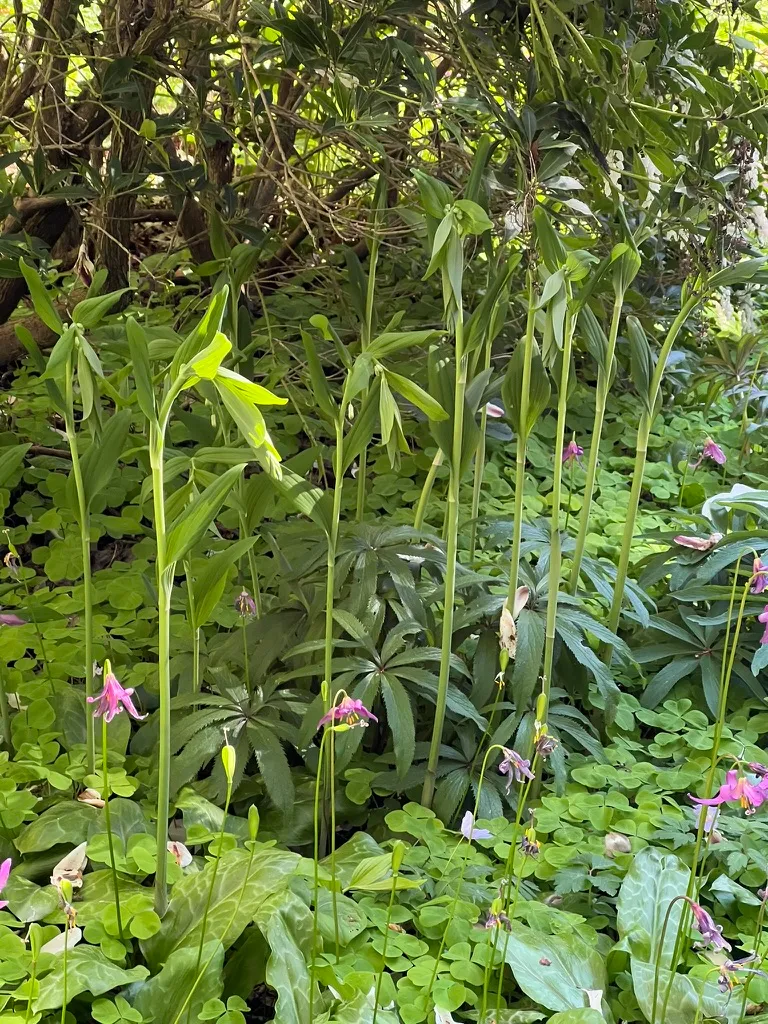
Polygonatum (Solomon's seal) includes approximately 60 species of rhizomatous herbaceous perennials native to temperate regions of the Northern Hemisphere, with highest diversity in Asia. Plants emerge in spring from thick creeping rhizomes, producing unbranched, arching stems 18–48 inches (45–120 cm) tall depending on species. Leaves alternate, ovate to elliptic, 2–5 inches (5–13 cm) long, with prominent parallel veins, arranged in two ranks along the stem creating an elegant horizontal tiered effect. Small tubular bell-shaped flowers, 0.5–1 inch (1.2–2.5 cm) long, white to greenish-white, hang in pairs or small clusters from the leaf axils beneath the stems; in P. odoratum they are sweetly fragrant. Flowers in late spring are followed by blue-black berries 0.25–0.4 inch (6–10 mm) in diameter by late summer. Plants die to the ground in fall. All parts are toxic to pets and potentially toxic to humans if ingested. Hardy in USDA zones 3–8 (species-dependent).
Native Range
Polygonatum species range across the temperate Northern Hemisphere. P. biflorum (great Solomon's seal) is native to eastern and central North America, from Quebec south to Florida and Texas, growing in moist, shaded woodlands and forest margins. P. odoratum (fragrant Solomon's seal) is native to Europe and Asia. Most commonly cultivated species prefer shaded, humus-rich woodland conditions.Suggested Uses
Used as a groundcover and shade garden perennial at 18–24 inch (45–60 cm) spacing. The arching stems create elegant horizontal layers in shaded beds. Combines well with hostas, ferns, astilbe, and trillium in woodland gardens. The variegated cultivar P. odoratum Variegatum (cream-edged leaves) is widely grown as a foliage accent. Berries attract birds in fall.How to Identify
Appearance
Size & Dimensions
Height1'6" - 4'
Width/Spread1'6" - 2'
Reaches mature size in approximately 3 years
Colors
Flower Colors
white
green
Foliage Colors
green
Fall Foliage Colors
yellow
gold
Bloom Information
Bloom Period
~3 weeksJ
F
M
A
M
J
J
A
S
O
N
D
Spring
Detailed Descriptions
Flower Description
White to greenish-white, small pendulous bellsFoliage Description
Medium green, ovate to elliptic with prominent parallel veins; golden-yellow in fallGrowing Conditions
Sun Requirements
Partial Shade
Full Shade
Tolerates up to 4 hours of direct sunlight daily
• Full Sun: 6+ hours of direct sunlight
• Partial Shade: 3-6 hours of direct sunlight
• Full Shade: Less than 3 hours of direct sunlight
Soil Requirements
pH Range5.5 - 7.0(Neutral)
357912
Soil Types
loamclay
Drainage
moist
Water & Climate
Water Needs
Medium
Frost Tolerance
hardy
Time to Maturity
3–5 years
Drought Tolerance
Drought tolerant when established
Care & Maintenance
Care Guide
Plant rhizomes 1–2 inches (2.5–5 cm) deep in partial to full shade in moist, humus-rich, well-drained to moist soil. Space plants 18–24 inches (45–60 cm) apart; they spread slowly by rhizomes to form colonies over time. Water during establishment; once established, tolerates moderate dry shade, especially P. biflorum. Apply compost or leaf mulch annually in fall to mimic woodland conditions. Divide congested clumps every 5–7 years in early spring or fall. Solomon's seal sawfly (Phymatocera aterrima) occasionally strips leaves; handpick larvae or apply an organic insecticide if severe.Pruning
No deadheading needed. Cut stems to the ground in fall after the foliage turns yellow and dies back, or leave standing for winter interest. Leave berries for wildlife through fall and early winter. Divide by separating rhizomes in early spring as growth begins or in fall after die-back.Pruning Schedule
J
F
M
A
M
J
J
A
S
O
N
D
fall