1 / 3
Perennials
Phygelius x rectus Hybrids
cape fuchsia
Scrophulariaceae
Garden origin; parents from Eastern Cape, KwaZulu-Natal, and Lesotho, South Africa
At a Glance
TypePerennial
HabitUpright
FoliageSemi-evergreen
Height36-48 inches (90-120 cm)
Width36-48 inches (90-120 cm)
Growing Zones
USDA Hardiness Zones
7 - 9Zone 7
Zone 8
Zone 9
These zones indicate the coldest temperatures this plant can typically survive.
Frost Tolerancehardy
Key Features
Attracts Pollinators
Attracts Hummingbirds
Deer Resistant
Container Friendly
Maintenancelow
Overview
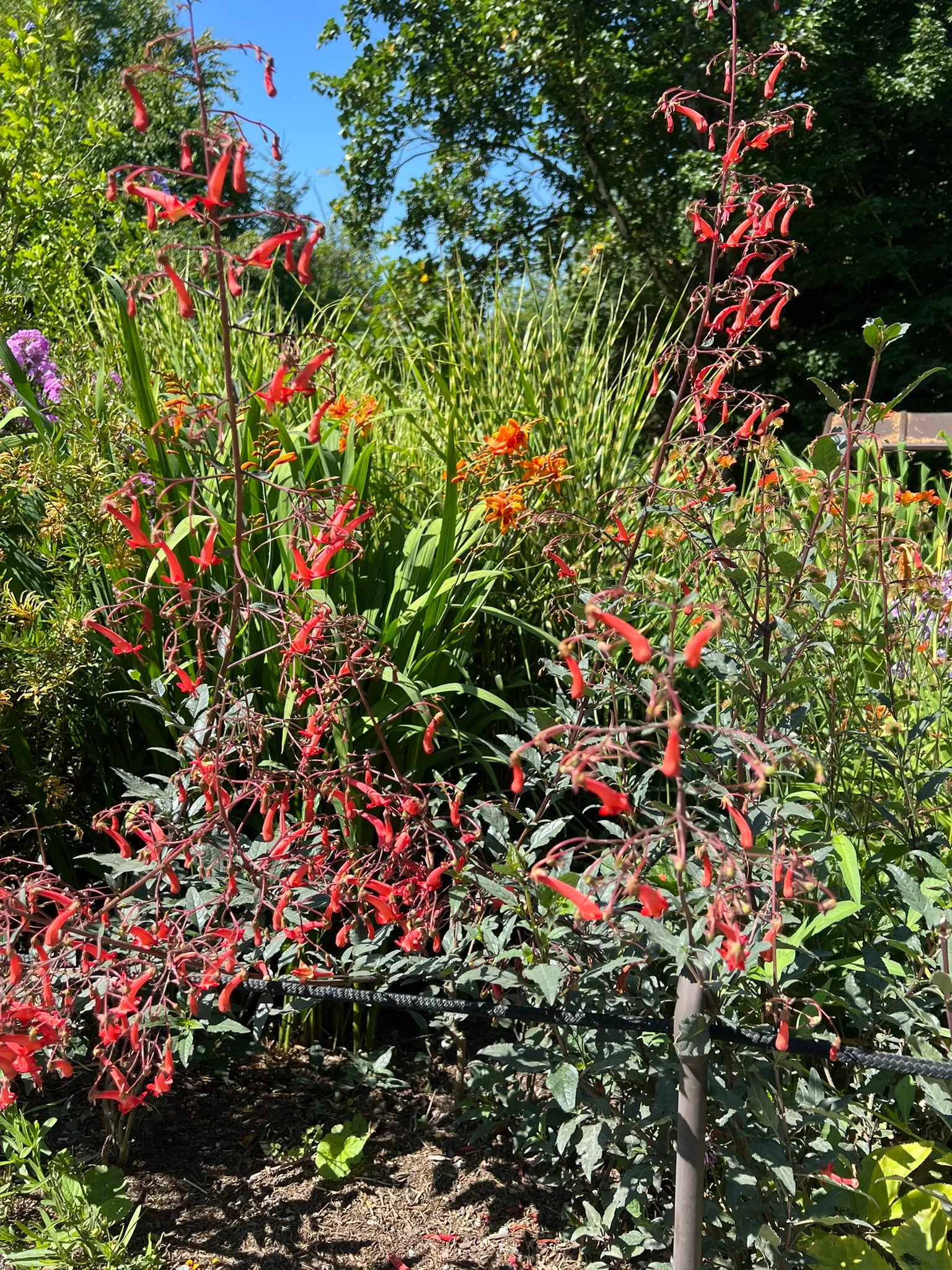
A group of upright, suckering subshrubs in the family Scrophulariaceae, derived from crosses between Phygelius aequalis and P. capensis, both native to the rocky stream banks and moist slopes of South Africa. Phygelius x rectus hybrids form spreading, rhizomatous clumps of erect, four-angled stems 36–48 inches (90–120 cm) tall bearing opposite, dark green, lance-shaped to ovate leaves 2–4 inches (5–10 cm) long. From midsummer through fall, terminal and axillary panicles of pendant, tubular, curved flowers 1.25–2 inches (3–5 cm) long are produced in a wide color range across named cultivars: 'African Queen' (deep red), 'Salmon Leap' (orange-salmon), 'Moonraker' (creamy yellow), 'Devil's Tears' (red with yellow throat), and 'Trewidden Pink' (soft pink). The flowers are adapted for hummingbird pollination in their native habitat; in temperate gardens they attract bumblebees and other long-tongued pollinators. Plants spread steadily by underground runners, forming colonies over time. Hardy in zones 7–9 with a sheltered position; plants die back to the root crown in cold winters and resprout vigorously in spring. Non-toxic.
Native Range
Phygelius x rectus hybrids are of garden origin, bred from P. aequalis and P. capensis, both native to the Eastern Cape, KwaZulu-Natal, and Lesotho in South Africa, growing on rocky, moist stream banks, cliff faces, and waterfall margins in partial shade to full sun.Suggested Uses
Planted in mixed perennial borders, against warm sheltered walls, and in courtyard gardens at 30–36 inch (75–90 cm) spacing. The pendant tubular flowers in warm tones combine well with blue and purple late-summer perennials (agastache, salvia, veronicastrum). Effective as a late-season specimen alongside ornamental grasses. In containers (minimum 10-gallon / 38L), makes an outstanding patio plant overwintered under cover in zones below 7.How to Identify
Appearance
Size & Dimensions
Height3' - 4'
Width/Spread3' - 4'
Colors
Flower Colors
red
orange
salmon
pink
yellow
cream
Foliage Colors
green
Fall Foliage Colors
no change
Bloom Information
Bloom Period
~14 weeksJ
F
M
A
M
J
J
A
S
O
N
D
SummerFall
Detailed Descriptions
Flower Description
red, orange-salmon, pink, creamy yellow, or bicolor depending on cultivar; pendant tubular curved flowers in one-sided paniclesFoliage Description
dark green, opposite, lance-shaped to ovate; four-angled stemsGrowing Conditions
Sun Requirements
Full Sun
Partial Shade
Requires 4-8 hours of direct sunlight daily
• Full Sun: 6+ hours of direct sunlight
• Partial Shade: 3-6 hours of direct sunlight
• Full Shade: Less than 3 hours of direct sunlight
Soil Requirements
pH Range6.0 - 7.5(Neutral)
357912
Soil Types
loamsand
Drainage
moist
Water & Climate
Water Needs
Medium
Frost Tolerance
hardy
Time to Maturity
1-2 years
Care & Maintenance
Care Guide
Plant in full sun to partial shade in moist, well-drained, fertile soil with a pH of 6.0–7.5. Requires consistent moisture during the growing season — reduce watering as plants enter dormancy in fall. In zone 7, plant against a warm, sheltered wall and mulch heavily in fall. Spreads by underground runners — contain at the perimeter annually with a sharp spade. In zones below 7, grow in containers and overwinter frost-free at 40–50°F (4–10°C). Cut back hard in early spring to stimulate vigorous new growth from the base.Pruning
Cut back all stems hard to 6–8 inches (15–20 cm) in early spring before new growth begins — this is the most important annual task, stimulating the most vigorous and floriferous new growth. In zones 8–9, stems may overwinter above ground; cut back by half to two-thirds. Remove runner suckers at the perimeter in spring and fall to control spread. Lightly shear spent panicles in late summer to encourage lateral branching and continued bloom.Pruning Schedule
J
F
M
A
M
J
J
A
S
O
N
D
early springfall
Maintenance Level
lowContainer Growing
✓ Suitable for container growing
Minimum container size: 10 gallons