1 / 3
Broadleaf Evergreen Shrubs
Photinia davidiana
tall stranvaesia
Rosaceae
Central and western China (Hubei, Sichuan, Yunnan) and Vietnam
At a Glance
TypeShrub
HabitUpright
FoliageEvergreen
Height12-25 feet (3.6-7.5 m)
Width10-20 feet (3-6 m)
Maturity10 years
Growing Zones
USDA Hardiness Zones
6 - 9Zone 6
Zone 7
Zone 8
Zone 9
These zones indicate the coldest temperatures this plant can typically survive.
Frost Tolerancehardy
Key Features
Attracts Pollinators
Drought Tolerant
Maintenancelow
Overview
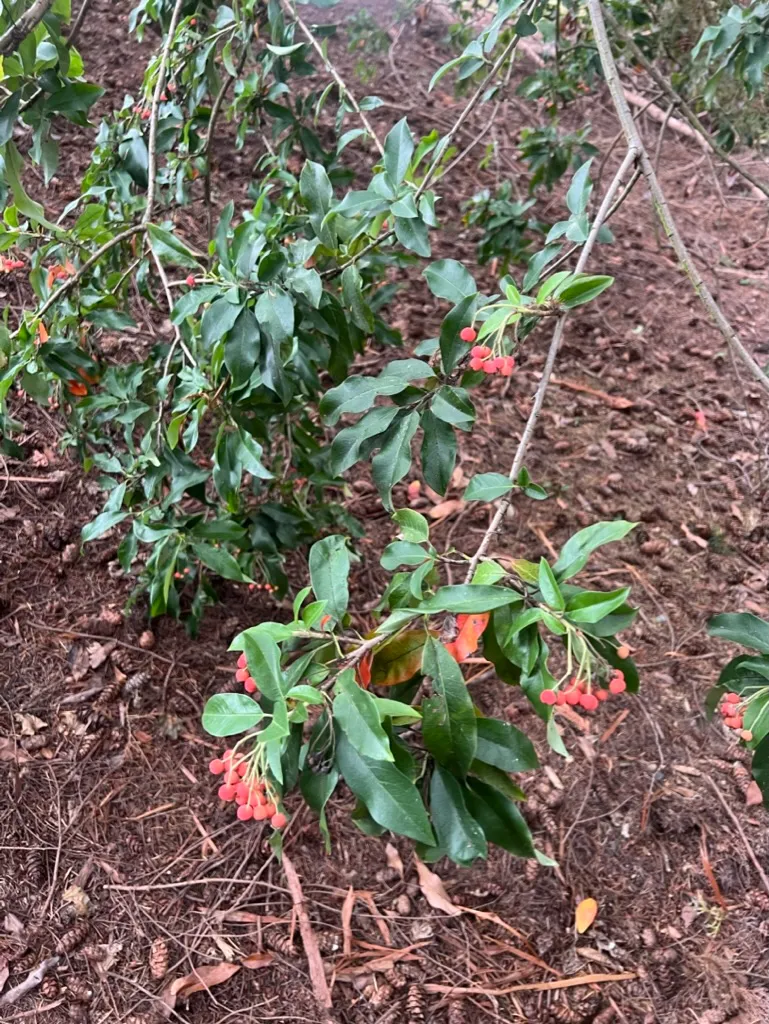
An upright, spreading broadleaf evergreen shrub or small tree reaching 12-25 feet (3.6-7.5 m) tall and 10-20 feet (3-6 m) wide. Growth rate is moderate to fast, adding 12-18 inches (30-45 cm) per year. Formerly classified as Stranvaesia davidiana; reclassified to Photinia based on molecular phylogenetic analysis. Leaves are alternate, elliptical to oblong-lanceolate, 2.5-5 inches (6-13 cm) long and 0.75-1.5 inches (2-4 cm) wide, glossy dark green with finely serrated margins. New growth emerges bronze to reddish-bronze. Young stems and leaf undersides have a distinctive rusty-brown pubescence. Some older leaves turn vivid red to scarlet individually in fall and winter before dropping, while the majority of the foliage remains green, creating a scattered mosaic of red leaves among green — a distinctive feature. Flowers appear in June in broad, flat-topped terminal corymbs 2-4 inches (5-10 cm) across, white, each approximately 0.3 inches (8 mm) across, resembling hawthorn flowers. Fruit is a cluster of bright red, globose pomes approximately 0.3 inches (8 mm) in diameter, ripening in September to October and persisting through winter. Berries hang in pendulous clusters and are a significant food source for birds. Susceptible to fire blight (Erwinia amylovora), which can cause dieback of branches. Hardy to approximately -5 to 5°F (-20 to -15°C).
Native Range
Native to central and western China, primarily in Hubei, Sichuan, and Yunnan provinces, and extending into Vietnam. Found in mixed forests, forest margins, and scrubland at elevations of 3,000-8,000 feet (900-2,400 m).Suggested Uses
Commonly planted as a large screening shrub, informal hedge, or small specimen tree at 6-10 foot (1.8-3 m) spacing. The persistent red berry clusters provide winter color and wildlife food value. Suitable for the back of large mixed borders, woodland edges, and wildlife gardens. Not suitable for small residential gardens due to mature size. Tolerates urban pollution.How to Identify
Appearance
Size & Dimensions
Height12' - 25'
Width/Spread10' - 20'
Reaches mature size in approximately 10 years
Colors
Flower Colors
white
Foliage Colors
dark green
bronze
red
Bloom Information
Bloom Period
~3 weeksJ
F
M
A
M
J
J
A
S
O
N
D
Summer
Detailed Descriptions
Flower Description
WhiteFoliage Description
Bronze-red new growth; glossy dark green mature; individual leaves turning vivid red in fall/winterGrowing Conditions
Sun Requirements
Full Sun
Partial Shade
Requires 4-8 hours of direct sunlight daily
• Full Sun: 6+ hours of direct sunlight
• Partial Shade: 3-6 hours of direct sunlight
• Full Shade: Less than 3 hours of direct sunlight
Soil Requirements
pH Range5.5 - 7.5(Neutral)
357912
Soil Types
loamclaysand
Drainage
well drained
Water & Climate
Water Needs
Medium
Frost Tolerance
hardy
Time to Maturity
5-10 years
Drought Tolerance
Drought tolerant when established
Care & Maintenance
Care Guide
Plant in full sun to partial shade in well-drained soil. Adapts to a range of soil types and pH from 5.5 to 7.5. Water regularly during the first two growing seasons; established plants tolerate moderate drought of 2-3 weeks. Mulch with 2-3 inches (5-8 cm) of organic material. Fire blight is the most significant disease concern; prune out infected branches 12 inches (30 cm) below visible symptoms, sterilizing tools between cuts. Avoid overhead irrigation and excessive nitrogen fertilization, which promote the succulent growth susceptible to fire blight. No other serious pest or disease problems.Pruning
Prune in late winter to early spring to shape and control size. Can be trained as a single-trunk small tree by removing lower branches gradually, or maintained as a multi-stemmed large shrub. Remove fire-blight-infected branches 12 inches (30 cm) below visible symptoms at any time, sterilizing tools with 10% bleach or 70% isopropyl alcohol between cuts. Responds to rejuvenation pruning if needed. Avoid heavy late-season pruning that promotes tender growth susceptible to fire blight.Pruning Schedule
J
F
M
A
M
J
J
A
S
O
N
D
winterearly spring