1 / 6
Perennials
Papaver orientale
Oriental poppy
PapaveraceaeAsia, Europe
At a Glance
TypePerennial
HabitClumping
FoliageDeciduous
Height18–36 inches (45–90 cm)
Width18–24 inches (45–60 cm)
Maturity3 years
Growing Zones
USDA Hardiness Zones
3 - 8Zone 3
Zone 4
Zone 5
Zone 6
Zone 7
Zone 8
These zones indicate the coldest temperatures this plant can typically survive.
Frost Tolerancehardy
Key Features
Attracts Pollinators
Deer Resistant
Drought Tolerant
Maintenancelow
Overview
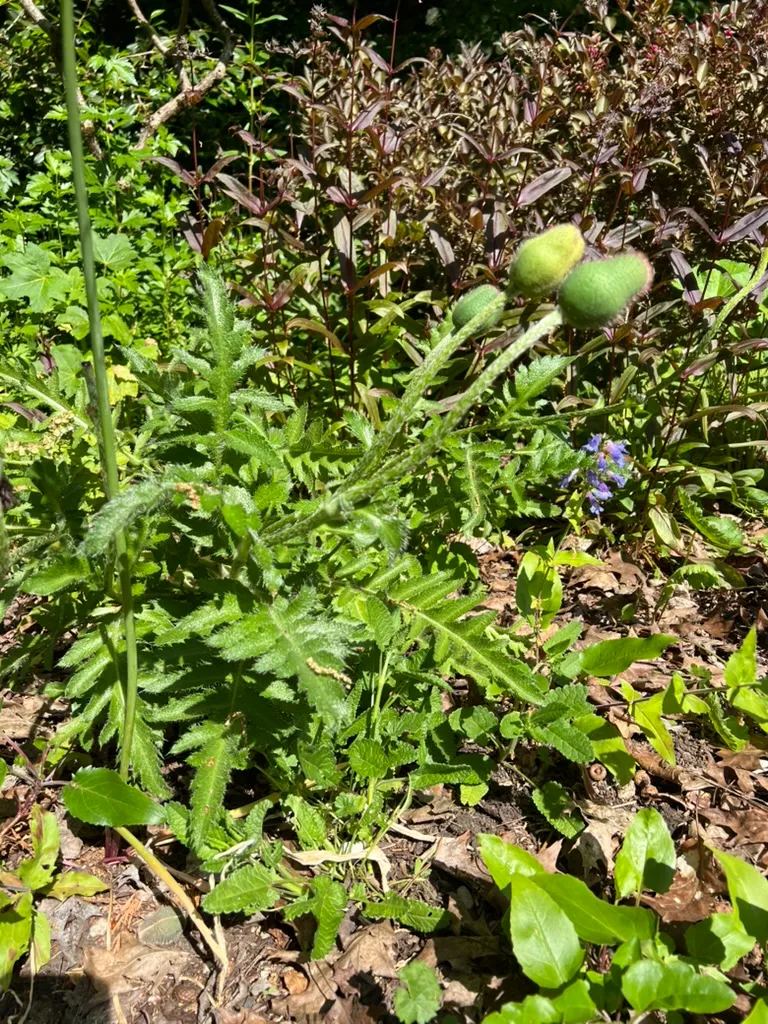
Papaver orientale, commonly called oriental poppy, is a clump-forming herbaceous perennial in the family Papaveraceae, native to the Caucasus, northeastern Turkey, and northern Iran, where it grows on dry, rocky hillsides and steppe margins. It produces some of the most spectacular flowers of any hardy perennial — large, bowl-shaped blooms 4–6 inches (10–15 cm) across with four to six crinkled, silky petals in vivid scarlet-orange, the species' signature color, surrounding a prominent boss of dark purple-black stamens and a black blotch at the base of each petal. An enormous number of cultivars have been developed, extending the color range to red, pink, salmon, white, lilac, and bicolors. Plants emerge as a bristly gray-green basal mound of deeply pinnately cut leaves in early spring, flower spectacularly in late spring and early summer, then enter complete summer dormancy — the foliage dies back entirely by midsummer, a critical consideration in garden design. New foliage re-emerges in autumn and persists through winter. Oriental poppies are long-lived and fleshy-rooted; they resent disturbance once established but reward patient gardeners with increasingly impressive clumps over time.
Native Range
Native to the Caucasus region (Georgia, Armenia, Azerbaijan), northeastern Turkey, and northern Iran, where the species grows on dry, rocky hillsides, steppe margins, and open forest clearings in well-drained, often poor soils at low to mid elevations. Not native to North America.Suggested Uses
Oriental poppies are among the most dramatic late-spring perennials for Pacific Northwest sunny borders, delivering a brief but unforgettable flowering display in May and June. The vivid scarlet-orange species and its cultivars suit cottage, perennial, and bold border styles. Plan carefully for the summer dormancy gap — interplant with late-emerging companions such as ornamental grasses, Gypsophila paniculata, or Geranium x magnificum that expand to fill the space. Outstanding as cut flowers when harvested in bud, with stems seared immediately after cutting to prevent latex sealing the stem.How to Identify
Appearance
Size & Dimensions
Height1'6" - 3'
Width/Spread1'6" - 2'
Reaches mature size in approximately 3 years
Colors
Flower Colors
orange
red
pink
white
Foliage Colors
green
Fall Foliage Colors
no change
Bloom Information
Bloom Period
~3 weeksJ
F
M
A
M
J
J
A
S
O
N
D
Spring
Detailed Descriptions
Flower Description
Vivid scarlet-orange (species); red, pink, salmon, white, or bicolor in cultivars; four to six crinkled silky petals; dark black-purple stamens and basal blotchFoliage Description
Deeply pinnately divided, gray-green, bristly-hairy; forms basal mound; dies back completely in midsummerGrowing Conditions
Sun Requirements
Full Sun
Requires 6-12 hours of direct sunlight daily
• Full Sun: 6+ hours of direct sunlight
• Partial Shade: 3-6 hours of direct sunlight
• Full Shade: Less than 3 hours of direct sunlight
Soil Requirements
pH Range6.0 - 7.5(Neutral)
357912
Soil Types
loamsandchalk
Drainage
well drained
Water & Climate
Water Needs
Low
Frost Tolerance
hardy
Time to Maturity
2–3 years
Drought Tolerance
Drought tolerant when established
Care & Maintenance
Care Guide
Plant in full sun in well-drained, moderately fertile soil. Oriental poppies are drought-tolerant once established and resent wet conditions, particularly summer waterlogging during dormancy — excellent drainage is essential. In Pacific Northwest gardens they perform excellently in typical loamy or sandy border soil but may rot in heavy clay with poor drainage. Plant the fleshy, brittle roots with the crown 2–3 inches (5–8 cm) below soil surface. Space generously at 18–24 inches (45–60 cm) to allow for summer dormancy management. Avoid moving established plants — they resent disturbance and take several years to re-establish after transplanting.Pruning
Allow the foliage to die back naturally in midsummer — do not cut it back while still green, as this weakens the plant. Once the foliage has completely dried and turned yellow, cut the whole clump back to ground level. Stake the heavy flower stems before they elongate in spring to prevent rain and wind damage. Deadheading after flowering is optional — the large, attractive seed capsules can be left for ornamental value.Pruning Schedule
J
F
M
A
M
J
J
A
S
O
N
D
summer