1 / 4
Broadleaf Evergreen Shrubs
Osmanthus x burkwoodii
Burkwood osmanthus
Oleaceae
Hybrid of garden origin (O. delavayi × Phillyrea decora); does not occur in the wild
At a Glance
TypeShrub
HabitUpright
FoliageEvergreen
Height6-10 feet (1.8-3 m)
Width6-8 feet (1.8-2.4 m)
Maturity8 years
Growing Zones
USDA Hardiness Zones
6 - 9Zone 6
Zone 7
Zone 8
Zone 9
These zones indicate the coldest temperatures this plant can typically survive.
Frost Tolerancehardy
Key Features
Attracts Pollinators
Deer Resistant
Drought Tolerant
Fragrant (strong)
Container Friendly
Maintenancelow
Overview
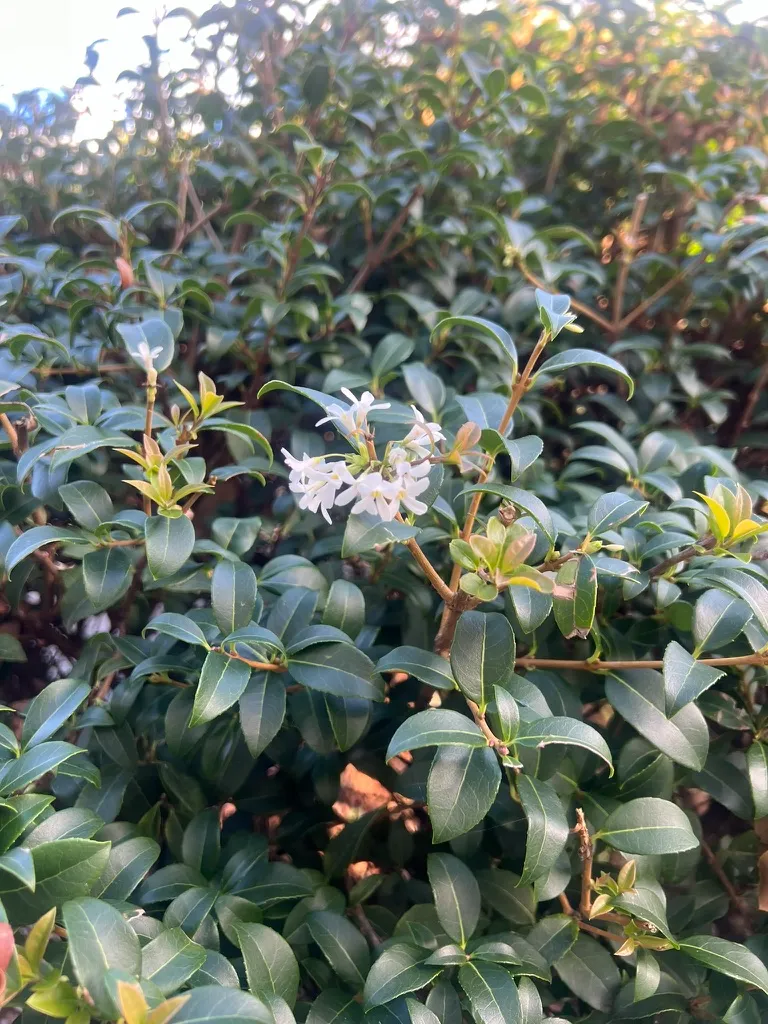
A dense, upright to rounded broadleaf evergreen shrub reaching 6-10 feet (1.8-3 m) tall and 6-8 feet (1.8-2.4 m) wide. Growth rate is moderate, adding 6-10 inches (15-25 cm) per year. This intergeneric hybrid (formerly × Osmarea burkwoodii) was raised from a cross between Osmanthus delavayi and Phillyrea decora, combining the fragrance and small leaves of O. delavayi with the vigor and larger leaf size of P. decora. Leaves are opposite, elliptical to ovate, 1-2 inches (2.5-5 cm) long and 0.5-0.75 inches (13-19 mm) wide, glossy dark green, thick and leathery, with finely serrated margins (not spiny). The medium-sized leaves create a texture intermediate between the fine-textured O. delavayi and the coarser O. heterophyllus. Flowers appear in March to April in dense axillary clusters, each flower tubular, four-lobed, white, approximately 0.3 inches (8 mm) across, with an intensely sweet, jasmine-like fragrance detectable from 10-15 feet (3-4.5 m). Flowers are produced profusely along the stems. Fruit is an ovoid drupe approximately 0.4 inches (10 mm) long, blue-black, produced sparsely. More cold-hardy than O. delavayi, tolerating temperatures to approximately -10°F (-23°C). Received the Royal Horticultural Society Award of Garden Merit. One of the most reliable fragrant spring-flowering evergreen shrubs for Pacific Northwest gardens.
Native Range
A hybrid of garden origin, raised by Burkwood and Skipwith nursery in England circa 1930 from a cross between Osmanthus delavayi (native to Yunnan, China) and Phillyrea decora (native to the Caucasus and western Asia). Does not occur in the wild.Suggested Uses
Commonly planted as a formal or informal hedge at 3-4 foot (0.9-1.2 m) spacing, as a specimen, or as a boxwood alternative with the added benefit of intense spring fragrance. Site near walkways, entries, patios, and windows where the spring fragrance can be appreciated. Suitable for foundation plantings and mixed borders. Suitable for containers of at least 10 gallons (38 L). Tolerates urban pollution.How to Identify
Appearance
Size & Dimensions
Height6' - 10'
Width/Spread6' - 8'
Reaches mature size in approximately 8 years
Colors
Flower Colors
white
Foliage Colors
dark green
Bloom Information
Bloom Period
~3 weeksJ
F
M
A
M
J
J
A
S
O
N
D
Spring
Detailed Descriptions
Flower Description
WhiteFoliage Description
Glossy dark greenGrowing Conditions
Sun Requirements
Full Sun
Partial Shade
Requires 4-8 hours of direct sunlight daily
• Full Sun: 6+ hours of direct sunlight
• Partial Shade: 3-6 hours of direct sunlight
• Full Shade: Less than 3 hours of direct sunlight
Soil Requirements
pH Range5.5 - 7.5(Neutral)
357912
Soil Types
loamclaysand
Drainage
well drained
Water & Climate
Water Needs
Medium
Frost Tolerance
hardy
Time to Maturity
5-8 years
Drought Tolerance
Drought tolerant when established
Care & Maintenance
Care Guide
Plant in full sun to partial shade in well-drained soil. The densest growth and heaviest flowering occur in full sun to part sun with at least 4-6 hours of direct light. Adapts to a range of soil types and pH from 5.5 to 7.5. Water regularly during the first two growing seasons; established plants tolerate moderate drought of 2-3 weeks. Mulch with 2 inches (5 cm) of organic material. More cold-hardy than O. delavayi, tolerating zone 6 without special protection in most sites. No serious pest or disease problems. Generally free of the boxwood blight that affects Buxus species, making it a reliable boxwood alternative.Pruning
Prune immediately after flowering in April to maintain shape, as flower buds form on the previous season's growth. Responds well to shearing for formal hedging; prune 1-2 times during the growing season for a tailored appearance. Avoid late-season pruning (after July), which removes developing flower buds. Hard rejuvenation pruning to 12-18 inches (30-45 cm) in late winter is tolerated but sacrifices one season of flowering. The natural dense, rounded form is attractive with minimal intervention.Pruning Schedule
J
F
M
A
M
J
J
A
S
O
N
D
early springlate spring
Maintenance Level
lowContainer Growing
✓ Suitable for container growing
Minimum container size: 10 gallons