1 / 3
Perennials
Lilium
orienpet lilies
Liliaceae
Hybrid origin; Oriental parents from Japan, Trumpet parents from China and Myanmar
At a Glance
TypeBulb
HabitUpright
FoliageDeciduous
Height4-7 feet (120-210 cm)
Width12-18 inches (30-45 cm)
Growing Zones
USDA Hardiness Zones
4 - 9Zone 4
Zone 5
Zone 6
Zone 7
Zone 8
Zone 9
These zones indicate the coldest temperatures this plant can typically survive.
Frost Tolerancehardy
Key Features
Attracts Pollinators
Attracts Butterflies
Fragrant (strong)
Maintenancelow
Overview
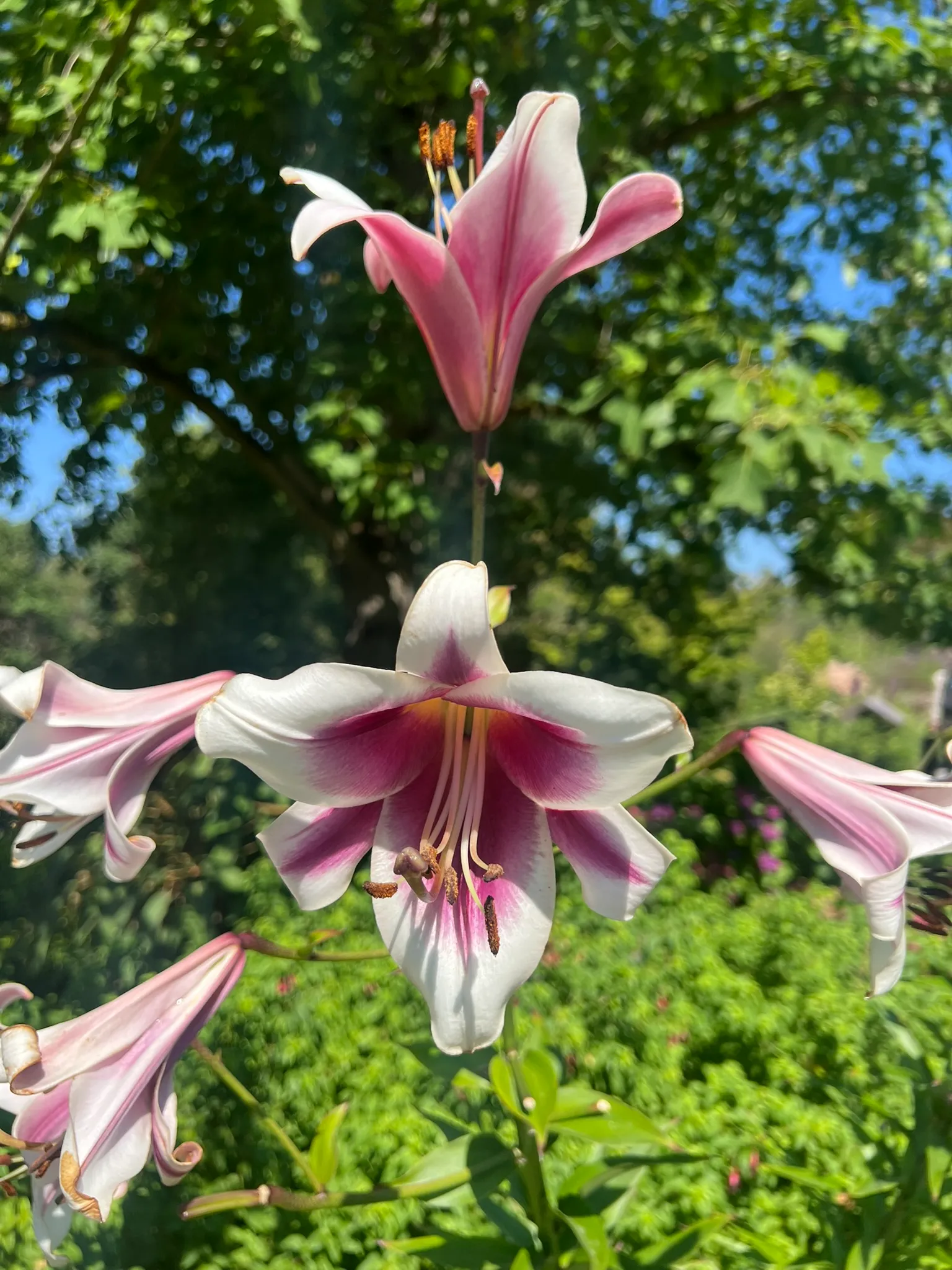
Orienpet lily hybrids (also called OT hybrids or trumpet-oriental crosses, Division VII) are a relatively recent development in lily breeding, combining the tall, sturdy stems and hardiness of Trumpet lilies with the large, intensely fragrant flowers of Oriental lilies. Plants grow from large, scaly bulbs producing robust, erect stems 4–7 feet (120–210 cm) tall with abundant, lance-shaped leaves. In mid to late summer, stems bear 6–20 or more outward-facing to slightly nodding flowers 6–10 inches (15–25 cm) across with broad, overlapping tepals in white, cream, yellow, orange, peach, pink, red, and bicolors — often with darker centers or picotee edges. Fragrance is strong to very strong, intermediate between the heavy Oriental scent and the lighter Trumpet fragrance. Orienpet hybrids are significantly more vigorous and heat-tolerant than pure Oriental lilies and are hardy in zones 4–9. Well-known cultivars include 'Black Beauty', 'Scheherazade', 'Boogie Woogie', and the 'Silk Road' series. Caution: highly toxic to cats.
Native Range
Orienpet hybrids are of garden origin, first developed in the 1960s–1980s by lily breeders including Jan de Graaff, Leslie Woodriff, and others. The Oriental parent species are native to Japan; the Trumpet lily parents are native to China and Myanmar.Suggested Uses
Planted at the back of perennial borders, in cutting gardens, and as specimen plants at 12–18 inch (30–45 cm) spacing. The exceptional height and bold fragrant flowers make Orienpets one of the most dramatic summer-blooming plants available. Stagger planting of Asiatic, Orienpet, and Oriental lilies for a continuous lily season from June through September. Outstanding cut flowers with a vase life of 7–10 days.How to Identify
Appearance
Size & Dimensions
Height4' - 7'
Width/Spread1' - 1'6"
Colors
Flower Colors
white
yellow
orange
peach
pink
red
cream
Foliage Colors
green
Fall Foliage Colors
no change
Bloom Information
Bloom Period
~6 weeksJ
F
M
A
M
J
J
A
S
O
N
D
SummerFall
Detailed Descriptions
Flower Description
white, cream, yellow, orange, peach, pink, red; often with contrasting centers or picotee edgesFoliage Description
medium green, lance-shaped, abundant along stemGrowing Conditions
Sun Requirements
Full Sun
Partial Shade
Requires 4-8 hours of direct sunlight daily
• Full Sun: 6+ hours of direct sunlight
• Partial Shade: 3-6 hours of direct sunlight
• Full Shade: Less than 3 hours of direct sunlight
Soil Requirements
pH Range6.0 - 6.5(Neutral)
357912
Soil Types
loamsand
Drainage
well drained
Water & Climate
Water Needs
Medium
Frost Tolerance
hardy
Time to Maturity
1-2 years
Care & Maintenance
Care Guide
Plant bulbs in fall or early spring 6–8 inches (15–20 cm) deep and 12–18 inches (30–45 cm) apart in full sun to partial shade in well-drained, fertile, slightly acidic soil with a pH of 6.0–6.5. Tall stems (4–7 feet/120–210 cm) require staking in exposed positions. Mulch heavily to keep roots cool. Water consistently during active growth. Apply a balanced fertilizer as shoots emerge in spring and again as buds form. Avoid alkaline soils — plants yellow and decline. Highly toxic to cats — do not grow where cats have access.Pruning
Remove spent flower heads individually as they fade to prevent seed set and maintain appearance, but leave the full stem and foliage in place until they yellow and die back naturally — this is essential for bulb replenishment. Cut to ground level only after stems have fully yellowed. Stake before stems reach 24 inches (60 cm). Divide congested clumps every 4–5 years in early fall.Pruning Schedule
J
F
M
A
M
J
J
A
S
O
N
D
fall