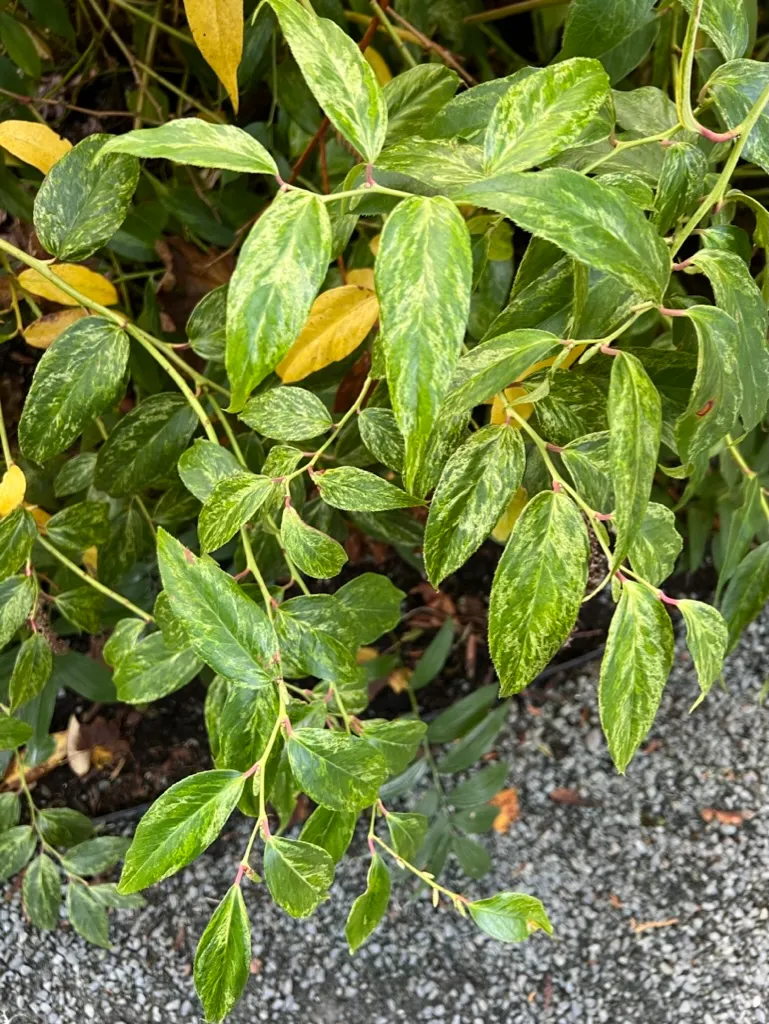
Broadleaf Evergreen Shrubs
Leucothoë fontanesiana 'Girard's Rainbow'
Rainbow leucothoe
Ericaceae
Species native to southeastern United States (Appalachian Mountains); cultivar of garden origin (Girard Nurseries, Ohio)
At a Glance
TypeShrub
HabitSpreading
FoliageEvergreen
Height3-5 feet (0.9-1.5 m)
Width3-6 feet (0.9-1.8 m)
Maturity5 years
Growing Zones
USDA Hardiness Zones
5 - 8Zone 5
Zone 6
Zone 7
Zone 8
These zones indicate the coldest temperatures this plant can typically survive.
Frost Tolerancehardy
Key Features
Attracts Pollinators
Deer Resistant
Container Friendly
Native to North America
Maintenancemoderate
Overview
A cultivar of Leucothoë fontanesiana forming a spreading, mounding evergreen shrub reaching 3-5 feet (0.9-1.5 m) tall and 3-6 feet (0.9-1.8 m) wide, with gracefully arching stems. Growth rate is moderate, adding 4-8 inches (10-20 cm) per year, slower than the all-green species type due to reduced chlorophyll in the variegated foliage. This cultivar is distinguished from the species by its multicolored foliage: new growth emerges pink to red, maturing to a mosaic of green, cream-white, and pink sectors. The variegation pattern is irregular, with each leaf showing a different proportion of colors. In winter, the pink and red tones intensify, particularly in sites with more light exposure. Leaves are alternate, lance-shaped, 2-5 inches (5-13 cm) long, leathery, with finely serrated margins. Stems are arching, green to reddish-brown. Flowers appear in April to May in pendulous racemes 2-3 inches (5-8 cm) long, consisting of small white urn-shaped blooms each approximately 0.25 inches (6 mm) long. Spreads slowly by underground suckers. Requires acidic soil with pH 4.5-6.0. The variegated foliage is more susceptible to leaf scorch in full sun than the species type. Branches that revert to all-green foliage should be removed promptly, as reverted shoots grow more vigorously and will dominate the plant.
Native Range
The species Leucothoë fontanesiana is native to the southeastern United States, from Virginia south through the Appalachian Mountains to Georgia and Tennessee. Found naturally along mountain stream banks, moist ravines, and bluff bases in acidic, humus-rich soils under deciduous canopy shade at elevations of 1,000-5,000 feet (300-1,500 m). The cultivar 'Girard's Rainbow' originated in cultivation at Girard Nurseries in Ohio.Suggested Uses
Commonly planted in woodland gardens, shade borders, and foundation plantings where the variegated foliage provides color in low-light areas, at 3-4 foot (0.9-1.2 m) spacing. Frequently used in combination with darker-foliaged shade plants such as Helleborus and ferns for contrast. Suitable for containers of at least 5 gallons (19 L) with acidic potting mix. Not suitable for hot, sunny positions.How to Identify
Appearance
Size & Dimensions
Height3' - 5'
Width/Spread3' - 6'
Reaches mature size in approximately 5 years
Colors
Flower Colors
white
Foliage Colors
green
cream
pink
red
Bloom Information
Bloom Period
~3 weeksJ
F
M
A
M
J
J
A
S
O
N
D
Spring
Detailed Descriptions
Flower Description
WhiteFoliage Description
Variegated: green, cream-white, and pink to red sectors; intensified pink-red winter colorGrowing Conditions
Sun Requirements
Partial Shade
Full Shade
Requires 2-4 hours of direct sunlight daily
• Full Sun: 6+ hours of direct sunlight
• Partial Shade: 3-6 hours of direct sunlight
• Full Shade: Less than 3 hours of direct sunlight
Soil Requirements
pH Range4.5 - 6.0(Acidic)
357912
Soil Types
loampeat
Drainage
moist
Water & Climate
Water Needs
Medium
Frost Tolerance
hardy
Time to Maturity
3-5 years
Care & Maintenance
Care Guide
Plant in acidic soil with pH 4.5-6.0 in partial to full shade; the variegated foliage scorches more readily in direct sun than the green species type, particularly in afternoon sun during summer. Requires consistent moisture; water weekly in the absence of rain during the first two growing seasons and during summer dry periods thereafter. Mulch with 2-3 inches (5-8 cm) of acidic organic material. Remove any all-green reverted branches at their point of origin immediately upon discovery, as reverted growth is more vigorous and will overtake variegated portions. Cercospora leaf spot may develop in humid, poorly ventilated conditions; improve air circulation and remove affected foliage. Protect from cold, desiccating winter winds in exposed sites in zones 5-6.Pruning
Prune after flowering in late spring by removing the oldest one-third of stems at ground level annually to maintain vigor and encourage colorful new growth. Leggy or overgrown plants can be cut back to 6-8 inches (15-20 cm) in late winter; regrowth emerges from the base within the same season. Remove all-green reverted branches at their point of origin at any time of year. Remove winter-damaged foliage in early spring before new growth begins.Pruning Schedule
J
F
M
A
M
J
J
A
S
O
N
D
late spring
Maintenance Level
moderateContainer Growing
✓ Suitable for container growing
Minimum container size: 5 gallons