1 / 7
Coniferous Trees
Larix
larch
Pinaceae
Northern Hemisphere — Europe, Asia, North America depending on species
At a Glance
TypeTree
HabitUpright
FoliageDeciduous
Height40-100 feet (12-30 m)
Width15-40 feet (4.5-12 m)
Maturity25 years
Growing Zones
USDA Hardiness Zones
2 - 7Zone 2
Zone 3
Zone 4
Zone 5
Zone 6
Zone 7
These zones indicate the coldest temperatures this plant can typically survive.
Frost Tolerancehardy
Key Features
Deer Resistant
Native to North America
Maintenancelow
Overview
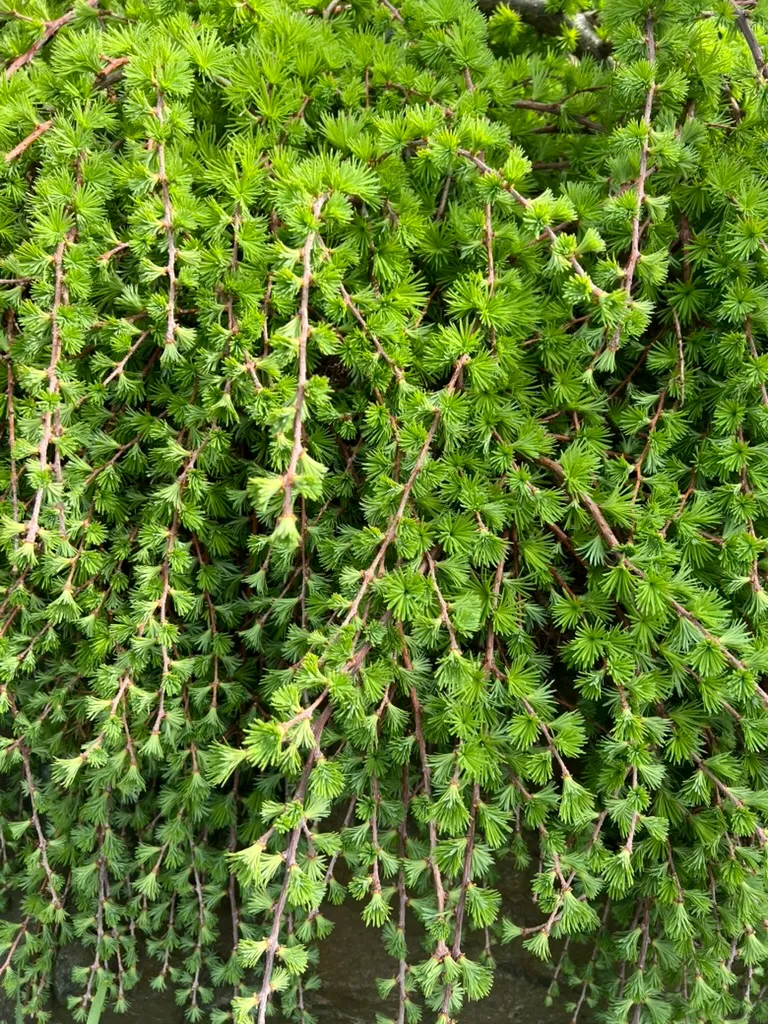
Larix species are deciduous conifers — unusual among needle-leaved trees in dropping all foliage annually. Depending on species, they reach 40-100 feet (12-30 m) tall with conical to broadly pyramidal crowns 15-40 feet (4.5-12 m) wide. Needles are soft, flexible, and 0.75-2 inches (2-5 cm) long, arranged in dense clusters of 10-50 on short spur shoots and singly on elongating long shoots. Spring foliage emerges bright lime-green, matures to medium to blue-green in summer, then turns golden-yellow before dropping in autumn. Small upright seed cones 0.5-1.5 inches (1.3-4 cm) long, initially red to purple at emergence, mature to brown and persist on branches for several years. Bark on mature trees is thick, furrowed, and reddish-brown to gray. Growth rate varies by species but is generally moderate to fast, adding 12-24 inches (30-60 cm) annually. Root systems are moderately deep. Larches are among the most cold-tolerant of all trees, with some species surviving temperatures below -60°F (-51°C). Several species are cultivated, including Larix decidua (European larch), Larix kaempferi (Japanese larch), and Larix occidentalis (western larch), each with differing mature sizes and regional adaptations. Susceptible to larch casebearer and larch sawfly in some regions.
Native Range
Various Larix species are native across the Northern Hemisphere. Larix decidua is native to mountainous regions of central Europe; Larix kaempferi to Japan; Larix laricina to northern North America from Alaska to the northeastern United States; and Larix occidentalis to the Pacific Northwest mountains of British Columbia, Washington, Oregon, Idaho, and Montana. Found in cool, moist montane forests, bogs, and high-elevation sites.Suggested Uses
Planted as specimen trees in parks and large residential landscapes at 20-30 foot (6-9 m) spacing. The seasonal needle color change provides interest not available from other conifers. Dwarf and weeping cultivars suit smaller gardens and container growing in pots of at least 15 gallons (57 L). Larix occidentalis is used in forestry and timber production in the Pacific Northwest.How to Identify
Appearance
Size & Dimensions
Height40' - 100'
Width/Spread15' - 40'
Reaches mature size in approximately 25 years
Colors
Flower Colors
red
purple
Foliage Colors
green
blue green
Fall Foliage Colors
gold
yellow
Bloom Information
Bloom Period
~2 weeksJ
F
M
A
M
J
J
A
S
O
N
D
Spring
Detailed Descriptions
Flower Description
Red to purple (seed cones at emergence)Foliage Description
Medium to blue-green needles, emerging lime-green in springGrowing Conditions
Sun Requirements
Full Sun
Requires 6-12 hours of direct sunlight daily
• Full Sun: 6+ hours of direct sunlight
• Partial Shade: 3-6 hours of direct sunlight
• Full Shade: Less than 3 hours of direct sunlight
Soil Requirements
pH Range5.0 - 7.0(Neutral)
357912
Soil Types
loamsandclay
Drainage
well drained
Water & Climate
Water Needs
Medium
Frost Tolerance
hardy
Time to Maturity
10-15 years
Care & Maintenance
Care Guide
Water regularly during the first two growing seasons; established trees tolerate moderate dry periods but perform best with consistent soil moisture. Requires full sun — shade causes thin, sparse growth and eventual decline. Prefers cool climates and struggles in areas with hot, humid summers. Susceptible to larch casebearer (moth larvae in portable cases on needles) and larch sawfly in eastern North America. Needle cast diseases may cause premature defoliation in humid years. Does not tolerate air pollution well; foliage may yellow prematurely in urban areas with poor air quality.Pruning
Prune in late winter to early spring while dormant, before bud break. Remove dead, damaged, or crossing branches. Larches have a strong central leader that should be maintained; do not top. Minimal pruning is required on established specimens beyond deadwood removal. Weeping cultivars may need staking of the leader to achieve desired height.Pruning Schedule
J
F
M
A
M
J
J
A
S
O
N
D
late spring