1 / 6
Perennials
Kniphofia Hybrids
torch lily, red hot poker
Asphodelaceae
Sub-Saharan Africa, primarily South Africa; hybrid cultivars of garden origin
At a Glance
TypePerennial
HabitClumping
FoliageEvergreen
Height24–60 inches (60–150 cm)
Width18–36 inches (45–90 cm)
Maturity2 years
Growing Zones
USDA Hardiness Zones
5 - 9Zone 5
Zone 6
Zone 7
Zone 8
Zone 9
These zones indicate the coldest temperatures this plant can typically survive.
Frost Tolerancehardy
Key Features
Attracts Pollinators
Attracts Hummingbirds
Deer Resistant
Drought Tolerant
Maintenancelow
Overview
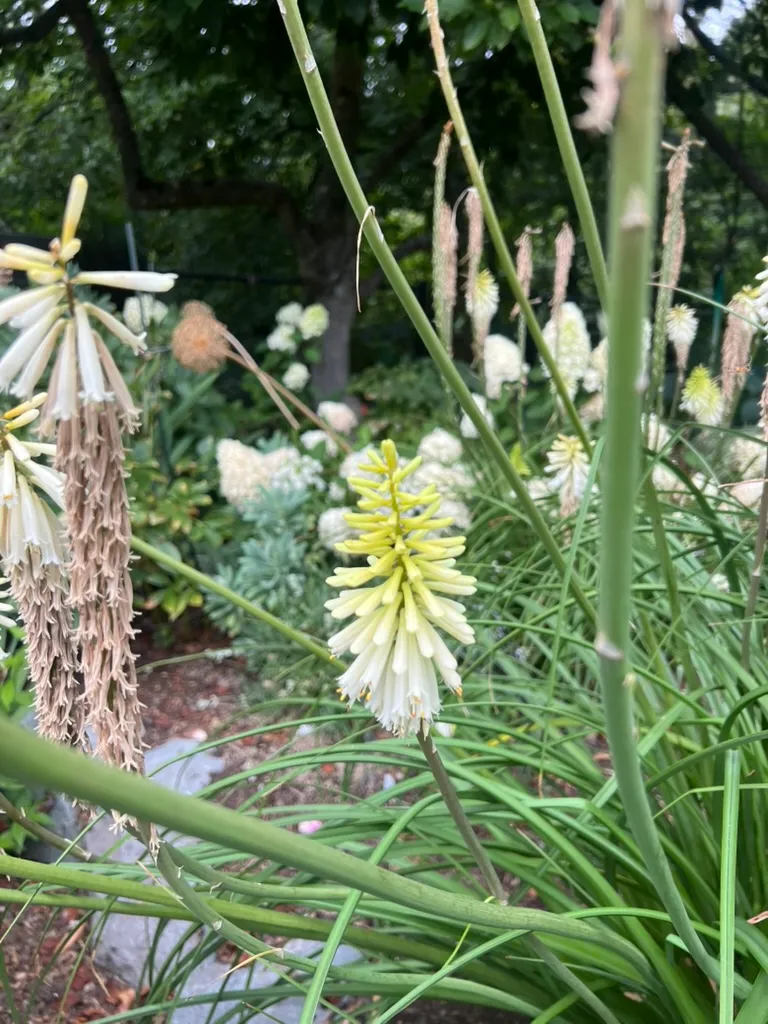
A clump-forming perennial reaching 24–60 inches (60–150 cm) tall in bloom and 18–36 inches (45–90 cm) wide, depending on the hybrid. Leaves narrow, strap-like to grass-like, 18–36 inches (45–90 cm) long and 0.5–1 inch (1.2–2.5 cm) wide, arching, mid- to dark green, forming dense basal clumps. Flower spikes erect on stout stems above the foliage, bearing dense cylindrical racemes of pendent tubular florets 1–1.5 inches (2.5–4 cm) long. The classic bicolor effect — orange-red to scarlet buds opening downward to yellow or cream — gives the characteristic torch appearance, though modern hybrids include single-color selections in white, cream, yellow, coral, orange, and red. Bloom season varies by hybrid: early-season types bloom May through June, mid-season July through August, and late-season September through October. Excellent hummingbird plant. Hardy in USDA zones 5–9 depending on the hybrid; drainage in winter is critical to cold hardiness.
Native Range
Kniphofia species are native to sub-Saharan Africa, primarily South Africa, Lesotho, Swaziland, and Ethiopia, growing in moist grasslands, streambanks, and rocky slopes at varying elevations. Hybrid garden cultivars are derived from multiple South African species and do not have a specific native range.Suggested Uses
Used as a bold specimen plant or in mixed borders at 24–36 inch (60–90 cm) spacing. The dramatic flower spikes provide strong vertical accent. Excellent hummingbird and pollinator plant. Combines well with ornamental grasses, crocosmia, rudbeckia, and echinacea in summer and fall borders. Cut flowers last 5–7 days in water.How to Identify
Appearance
Size & Dimensions
Height2' - 5'
Width/Spread1'6" - 3'
Reaches mature size in approximately 2 years
Colors
Flower Colors
orange
red
yellow
cream
white
coral
Foliage Colors
green
Fall Foliage Colors
no change
Bloom Information
Bloom Period
~8 weeksJ
F
M
A
M
J
J
A
S
O
N
D
SpringSummerFall
Detailed Descriptions
Flower Description
Orange-red to scarlet (upper buds) to yellow or cream (lower florets); single-color hybrids in white, yellow, coral, redFoliage Description
Mid- to dark green, narrow strap-like, archingGrowing Conditions
Sun Requirements
Full Sun
Requires 6-12 hours of direct sunlight daily
• Full Sun: 6+ hours of direct sunlight
• Partial Shade: 3-6 hours of direct sunlight
• Full Shade: Less than 3 hours of direct sunlight
Soil Requirements
pH Range6.0 - 7.0(Neutral)
357912
Soil Types
loamsand
Drainage
well drained
Water & Climate
Water Needs
Low
Frost Tolerance
hardy
Time to Maturity
2–3 years
Drought Tolerance
Drought tolerant when established
Care & Maintenance
Care Guide
Plant in full sun in well-drained to dry, sandy or loamy soil. Excellent drainage is essential — wet winter soils cause crown rot and are the primary cause of cold-climate failure even in hardy hybrids. Space plants 24–36 inches (60–90 cm) apart. Water during establishment; once established, tolerates extended dry periods of 2–4 weeks. Do not fertilize heavily; lean soils produce better flowering. In zones 5–6, tie leaves together loosely over the crown in late fall to provide insulation, or mulch heavily. Divide overcrowded clumps every 4–5 years in early spring. Do not cut leaves back hard — the strappy foliage provides crown insulation.Pruning
Cut spent flower spikes to the base after bloom — do not deadhead individual florets. Do not cut foliage back to the ground; the leaves protect the crown over winter. Remove dead or tattered outer leaves in early spring. Divide in early spring by separating offsets from the outer edge of established clumps.Pruning Schedule
J
F
M
A
M
J
J
A
S
O
N
D
summerearly spring