1 / 5
Broadleaf Evergreen Shrubs
Ilex x meserveae
blue-leaved hybrid holly
Aquifoliaceae
Hybrid of garden origin (Ilex aquifolium × Ilex rugosa); does not occur in the wild
At a Glance
TypeShrub
HabitUpright
FoliageEvergreen
Height6-10 feet (1.8-3 m)
Width6-8 feet (1.8-2.4 m)
Maturity10 years
Growing Zones
USDA Hardiness Zones
4 - 9Zone 4
Zone 5
Zone 6
Zone 7
Zone 8
Zone 9
These zones indicate the coldest temperatures this plant can typically survive.
Frost Tolerancehardy
Key Features
Attracts Pollinators
Deer Resistant
Drought Tolerant
Maintenancelow
Overview
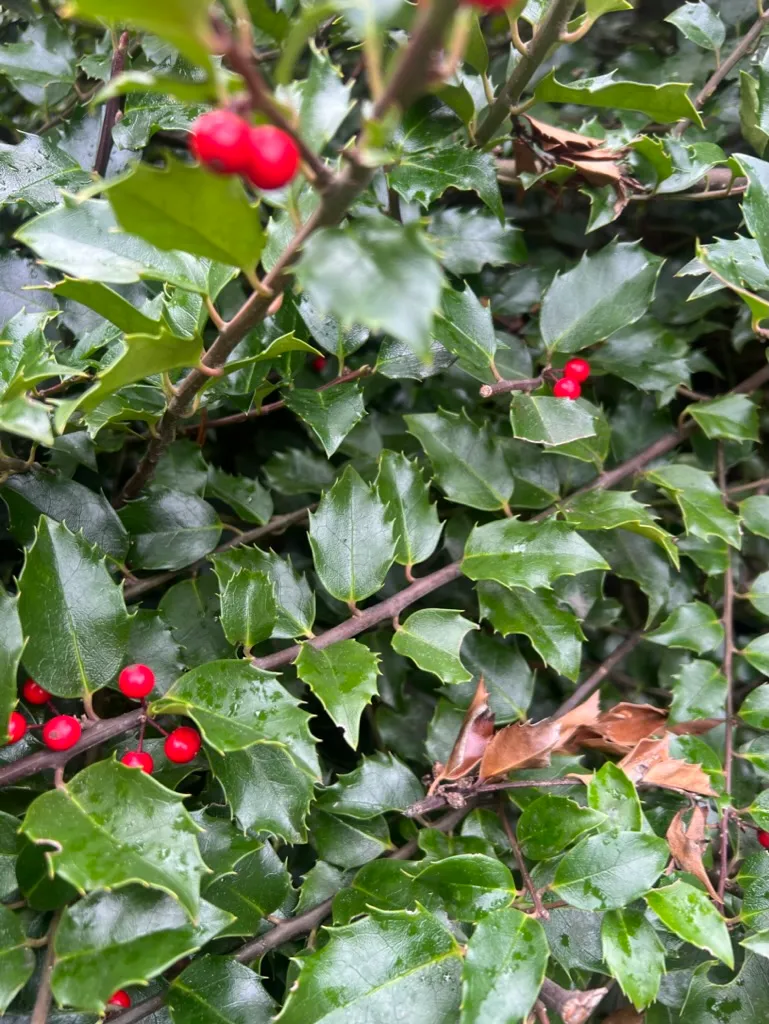
A broadleaf evergreen shrub reaching 6-10 feet (1.8-3 m) tall and 6-8 feet (1.8-2.4 m) wide at maturity, with a dense, rounded to pyramidal form. Growth rate is moderate, adding 6-10 inches (15-25 cm) per year. This hybrid group was developed by crossing Ilex aquifolium with I. rugosa, combining the ornamental foliage of English holly with the cold hardiness of the northeast Asian species. Leaves are ovate to oblong, 1.5-2.5 inches (4-6 cm) long and 0.75-1.25 inches (2-3 cm) wide, with wavy margins bearing prominent spines. Foliage is a distinctive blue-green to dark blue-green, glossier and deeper in color than typical English holly. Young stems and petioles have a purple to blue-purple cast, a distinguishing characteristic of this hybrid group. Dioecious: male and female cultivars are sold separately. Female cultivars produce bright red drupes approximately 0.25-0.3 inches (6-8 mm) in diameter, ripening in fall and persisting through winter when pollinated by a nearby male. Bark is smooth and gray-green. Hardy to approximately -20°F (-29°C), substantially hardier than I. aquifolium. The most widely sold cultivars include 'Blue Prince' (male) and 'Blue Princess' (female). Susceptible to holly leaf miner, scale, and spider mites, though generally less affected by pests than I. aquifolium in colder zones.
Native Range
A hybrid of garden origin, created in the 1950s by Kathleen Meserve of Long Island, New York, by crossing Ilex aquifolium (English holly, native to Europe and western Asia) with Ilex rugosa (Tsuru holly, native to Sakhalin, the Kuril Islands, and northern Japan). Does not occur in the wild.Suggested Uses
Commonly planted as a formal or informal hedge, foundation planting, or specimen shrub at 4-6 foot (1.2-1.8 m) spacing. Male and female cultivars are typically planted in proximity for berry production on females. Suitable for use as a screening plant or in mixed shrub borders. Tolerates urban pollution and partial shade. Not invasive, as the hybrid produces fewer viable seeds than I. aquifolium.How to Identify
Appearance
Size & Dimensions
Height6' - 10'
Width/Spread6' - 8'
Reaches mature size in approximately 10 years
Colors
Flower Colors
white
Foliage Colors
blue green
Bloom Information
Bloom Period
~3 weeksJ
F
M
A
M
J
J
A
S
O
N
D
Spring
Detailed Descriptions
Flower Description
WhiteFoliage Description
Blue-green to dark blue-green, glossyGrowing Conditions
Sun Requirements
Full Sun
Partial Shade
Requires 4-8 hours of direct sunlight daily
• Full Sun: 6+ hours of direct sunlight
• Partial Shade: 3-6 hours of direct sunlight
• Full Shade: Less than 3 hours of direct sunlight
Soil Requirements
pH Range5.0 - 6.5(Acidic)
357912
Soil Types
loamclaysand
Drainage
well drained
Water & Climate
Water Needs
Medium
Frost Tolerance
hardy
Time to Maturity
5-10 years
Drought Tolerance
Drought tolerant when established
Care & Maintenance
Care Guide
Plant in well-drained soil in full sun to partial shade; at least 4-6 hours of direct sun produces the densest growth and heaviest berry set on female plants. Water regularly during the first two growing seasons; established plants tolerate moderate drought but berry production and foliage quality decline during prolonged dry periods. Mulch root zone with 2-3 inches (5-8 cm) of organic material. Both a male and female plant must be present for berry production; one male pollinates 6-10 females within a 30-50 foot (9-15 m) radius. Holly leaf miner causes serpentine mines in leaves; damage is cosmetic. Spider mites may cause stippled foliage in hot, dry conditions. Foliage may bronze in winter in exposed, windy sites, particularly in zones 4-5, but recovers in spring.Pruning
Prune in late winter to early spring before new growth begins to shape and maintain desired size. Tolerates shearing for formal hedging; shape in mid-summer after the spring growth flush has hardened. Responds well to hard rejuvenation pruning to 12-18 inches (30-45 cm) in late winter; regrowth emerges from latent buds within one growing season. Trim lightly after the spring growth flush to maintain a formal shape. Avoid pruning after August to prevent stimulating tender growth vulnerable to winter damage.Pruning Schedule
J
F
M
A
M
J
J
A
S
O
N
D
wintersummer