1 / 7
Broadleaf Evergreen Shrubs
Hypericum Hybrids
hybrid hypericum
Hypericaceae
Garden origin; parent species from Europe, western and central Asia, and eastern Asia
At a Glance
TypeShrub
HabitMounding
FoliageSemi-evergreen
Height2-4 feet (60-120 cm)
Width3-5 feet (90-150 cm)
Maturity3 years
Growing Zones
USDA Hardiness Zones
5 - 9Zone 5
Zone 6
Zone 7
Zone 8
Zone 9
These zones indicate the coldest temperatures this plant can typically survive.
Frost Tolerancehardy
Key Features
Attracts Pollinators
Attracts Butterflies
Deer Resistant
Drought Tolerant
Container Friendly
Maintenancelow
Overview
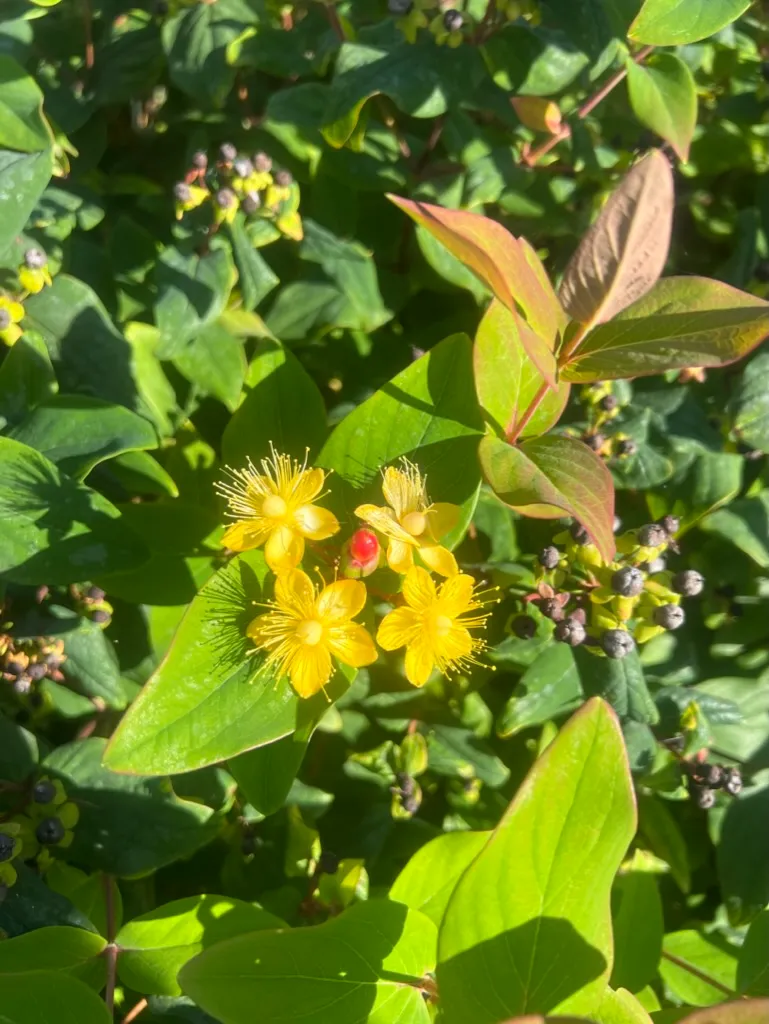
A group of hybrid shrubs derived primarily from crosses between Hypericum androsaemum, Hypericum patulum, Hypericum kouytchense, and related species. Plants form rounded to spreading mounds 2-4 feet (60-120 cm) tall and 3-5 feet (90-150 cm) wide. Stems are upright to arching, often reddish-brown when young, becoming woody and tan with age. Leaves are simple, opposite, oval to oblong, 1-3 inches (2.5-7.5 cm) long, medium green to blue-green, and semi-evergreen to evergreen depending on climate zone. Flowers appear in terminal and axillary cymes from June through August, each 1-2 inches (2.5-5 cm) across with five bright yellow petals surrounding a central boss of numerous stamens tipped with yellow anthers. Following flowering, many hybrid selections produce fleshy berry-like capsules 0.3-0.5 inches (8-13 mm) in diameter in shades of cream, pink, salmon, red, or burgundy, persisting from late summer into early winter. Berry color varies by cultivar and is a primary ornamental feature of modern selections. In zones 5-6, stems may die back to the ground in severe winters but typically regenerate from the base. Plants spread by underground runners in favorable conditions, forming loose colonies over time. Foliage may develop purplish tints in cold weather.
Native Range
Hypericum hybrids are of garden origin, derived from parent species native to Europe, western and central Asia, and eastern Asia. Hypericum androsaemum is native to western Europe and the Mediterranean; Hypericum patulum to southwestern China and the Himalayas; and Hypericum kouytchense to southwestern China.Suggested Uses
Commonly planted in mixed shrub borders, foundation plantings, and mass plantings at 3-4 foot (90-120 cm) spacing. Berry-producing cultivars are used in the cut flower trade for autumn arrangements. Suitable for informal hedging where a 3-4 foot (90-120 cm) height is acceptable.How to Identify
Appearance
Size & Dimensions
Height2' - 4'
Width/Spread3' - 5'
Reaches mature size in approximately 3 years
Colors
Flower Colors
yellow
Foliage Colors
green
blue green
Fall Foliage Colors
purple
green
Bloom Information
Bloom Period
~6 weeksJ
F
M
A
M
J
J
A
S
O
N
D
Summer
Detailed Descriptions
Flower Description
Bright yellowFoliage Description
Medium green to blue-green, semi-evergreen; purplish tints in cold weatherGrowing Conditions
Sun Requirements
Full Sun
Partial Shade
Requires 4-8 hours of direct sunlight daily
• Full Sun: 6+ hours of direct sunlight
• Partial Shade: 3-6 hours of direct sunlight
• Full Shade: Less than 3 hours of direct sunlight
Soil Requirements
pH Range5.5 - 7.0(Neutral)
357912
Soil Types
loamsandclay
Drainage
well drained
Water & Climate
Water Needs
Medium
Frost Tolerance
hardy
Time to Maturity
2-3 years
Drought Tolerance
Drought tolerant when established
Care & Maintenance
Care Guide
Water regularly during the first growing season, providing 1 inch (2.5 cm) per week in the absence of rain. Established plants tolerate moderate drought but produce fewer flowers and berries under prolonged dry conditions. Apply a 2-3 inch (5-7.5 cm) layer of organic mulch to conserve moisture and suppress weeds, keeping mulch 3 inches (7.5 cm) from the stem base. Fertilize in early spring with a balanced granular fertilizer. In zones 5-6, stems may die back in winter; leave dead stems until spring to protect the crown, then remove to ground level when new growth appears. Rust and leaf spot may develop in humid conditions with poor air circulation. Spider mites can be problematic in hot, dry summers.Pruning
Prune in late winter to early spring before new growth begins. Remove dead, damaged, or crossing branches first. Plants bloom on new wood, so hard pruning to 6-12 inches (15-30 cm) in early spring encourages vigorous flowering. In mild climates where dieback does not occur, selective thinning of older stems every 2-3 years maintains an open habit and improves air circulation. Deadheading spent flowers before berry set redirects energy but eliminates the ornamental berry display.Pruning Schedule
J
F
M
A
M
J
J
A
S
O
N
D
late winterearly spring
Maintenance Level
lowContainer Growing
✓ Suitable for container growing
Minimum container size: 5 gallons