1 / 4
Deciduous Shrubs
Hydrangea macrophylla
bigleaf hydrangea
HydrangeaceaeAsia
At a Glance
TypeShrub
HabitMounding
FoliageDeciduous
Height4–6 feet (1.2–1.8 m)
Width4–6 feet (1.2–1.8 m)
Maturity4 years
Growing Zones
USDA Hardiness Zones
5 - 9Zone 5
Zone 6
Zone 7
Zone 8
Zone 9
These zones indicate the coldest temperatures this plant can typically survive.
Frost Tolerancehardy
Key Features
Attracts Pollinators
Attracts Butterflies
Container Friendly
Maintenancemoderate
Overview
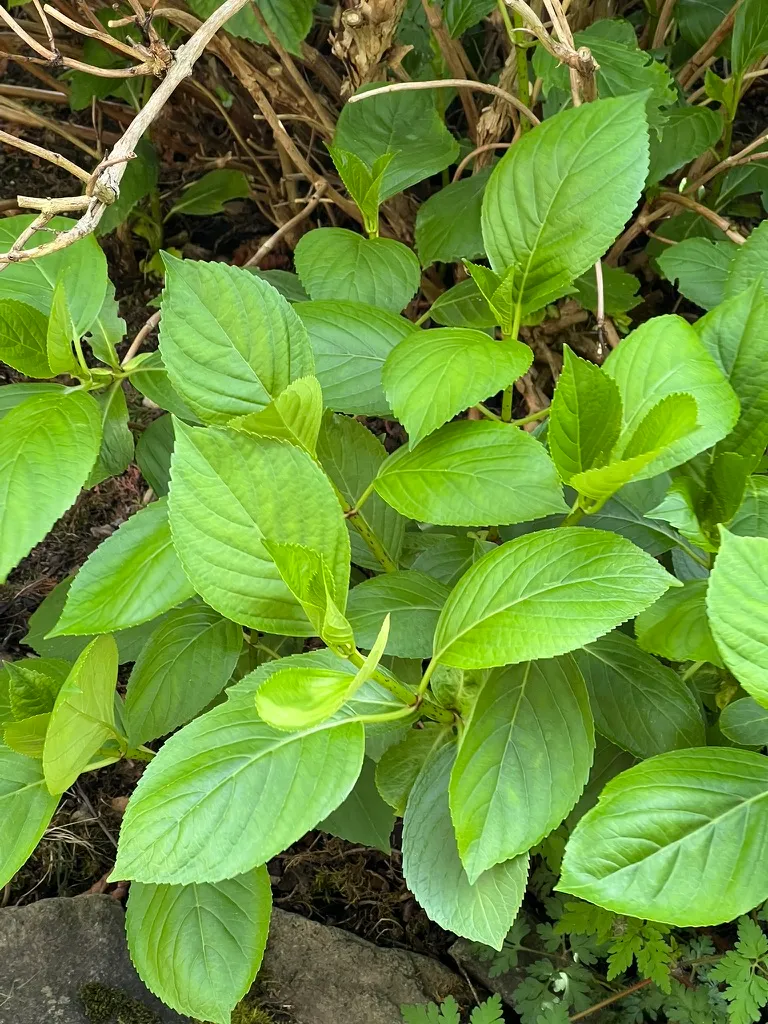
Hydrangea macrophylla (Hortensia/Mophead Group), commonly called bigleaf hydrangea or mophead hydrangea, is a large deciduous shrub in the family Hydrangeaceae native to the Pacific coast of Honshu, Japan. It is one of the most widely planted deciduous flowering shrubs in Pacific Northwest gardens, thriving in the region's mild, moist climate. Mophead cultivars produce large, rounded flower heads 6–12 inches (15–30 cm) across composed almost entirely of sterile florets, each with four to five broad, petal-like sepals. Flower color is pH-dependent: in acidic soils (pH below 6.0 — common in Pacific Northwest gardens) flowers are blue to purple; in alkaline soils (pH above 7.0) they are pink to red; at intermediate pH, colors are mixed or mauve. Adding aluminum sulfate acidifies soil and deepens blue tones; adding lime raises pH toward pink. Plants grow 4–6 feet (1.2–1.8 m) tall and wide with an arching, mounding habit. Traditional cultivars bloom on old wood (previous season's stems) — late frosts or improper autumn pruning removes the following year's flower buds; remontant cultivars ('Endless Summer', 'Let's Dance' series, 'Twist-n-Shout') bloom on both old and new wood. Leaves are large, opposite, broadly ovate, glossy dark green, 4–8 inches (10–20 cm), with coarsely serrated margins.
Native Range
Native to the Pacific coastal forests and cliffs of central and southern Honshu, Japan, growing in moist, well-drained, humus-rich soils at low to moderate elevations near the sea. Long cultivated in Japan and China; introduced to European horticulture in the late 18th century and developed into hundreds of garden cultivars. Not native to North America.Suggested Uses
Bigleaf mophead hydrangea is one of the most reliable and versatile deciduous shrubs for Pacific Northwest gardens, thriving in the region's naturally acidic soils and mild, moist summers. Outstanding as a shrub border specimen, foundation planting, container plant, and cut or dried flower plant. The large mophead flower clusters in blue, pink, or purple make a bold summer statement. Excellent combined with Hosta, Astilbe, Rodgersia, ferns, and Pieris in a partially shaded planting. Specify remontant cultivars for reliability after difficult winters. A Great Plant Pick for Pacific Northwest gardens.How to Identify
Appearance
Size & Dimensions
Height4' - 6'
Width/Spread4' - 6'
Reaches mature size in approximately 4 years
Colors
Flower Colors
blue
purple
pink
Foliage Colors
green
Fall Foliage Colors
no change
Bloom Information
Bloom Period
~6 weeksJ
F
M
A
M
J
J
A
S
O
N
D
Summer
Detailed Descriptions
Flower Description
Blue to purple (acidic soil, pH below 6.0); pink to red (alkaline soil, pH above 7.0); large rounded mophead clusters 6–12 inches (15–30 cm) across of sterile floretsFoliage Description
Opposite, broadly ovate, 4–8 inches (10–20 cm), glossy dark green, coarsely serratedGrowing Conditions
Sun Requirements
Partial Shade
Full Shade
Requires 3-6 hours of direct sunlight daily
• Full Sun: 6+ hours of direct sunlight
• Partial Shade: 3-6 hours of direct sunlight
• Full Shade: Less than 3 hours of direct sunlight
Soil Requirements
pH Range4.5 - 6.5(Acidic)
357912
Soil Types
loampeat
Drainage
moist
Water & Climate
Water Needs
High
Frost Tolerance
hardy
Time to Maturity
3–5 years
Care & Maintenance
Care Guide
Plant in partial shade to full sun in moist, well-drained, humus-rich, acidic to slightly acid soil. In Pacific Northwest gardens, bigleaf hydrangea performs best with morning sun and afternoon shade, or in bright dappled light. Consistent moisture is essential — mulch generously to retain soil moisture. For blue flowers: maintain soil pH below 6.0 and apply aluminum sulfate in early spring per package directions. For traditional cultivars, do not prune in autumn — remove only dead stems and spent flower heads in late winter (February–March), cutting stems to the first pair of plump buds. For remontant cultivars, light pruning is more forgiving. Protect from cold drying east winds and late spring frosts.Pruning
For traditional old-wood-blooming cultivars: do not prune in autumn. In late winter (February–March), remove dead stems at the base and cut remaining stems to the first pair of visible, plump buds — typically 12–18 inches (30–45 cm) above the ground. If stems are winter-killed, cut to ground level; the plant will produce new growth but may not flower until the following year. For remontant cultivars: cut back by one-third in early spring for a compact, floriferous plant.Pruning Schedule
J
F
M
A
M
J
J
A
S
O
N
D
early spring
Maintenance Level
moderateContainer Growing
✓ Suitable for container growing
Minimum container size: 15 gallons