1 / 3
Vines & Groundcovers
Hydrangea anomala ssp. petiolaris
climbing hydrangea
Hydrangeaceae
Japan, Korea, Sakhalin Island (Russia)
At a Glance
TypeVine
HabitClimbing
FoliageDeciduous
Height30-80 feet (9-24 m)
Width5-6 feet (1.5-1.8 m)
Maturity10 years
Growing Zones
USDA Hardiness Zones
4 - 8Zone 4
Zone 5
Zone 6
Zone 7
Zone 8
These zones indicate the coldest temperatures this plant can typically survive.
Frost Tolerancehardy
Key Features
Attracts Pollinators
Fragrant (light)
Maintenancelow
Overview
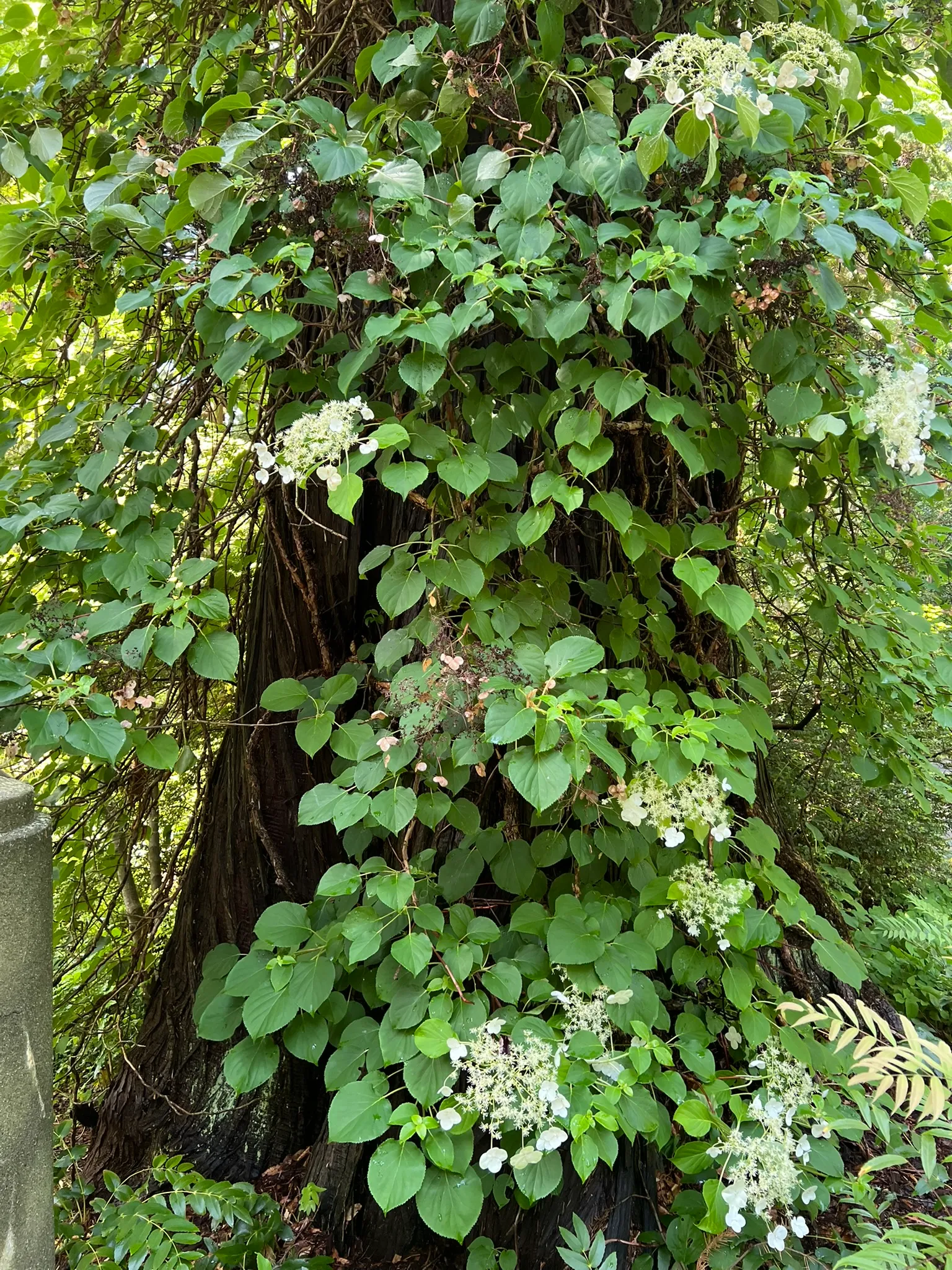
A deciduous, self-clinging climbing vine reaching 30-80 feet (9-24 m) on a suitable support structure, or spreading as a groundcover 3-4 feet (90-120 cm) tall over open ground. Stems attach to surfaces by means of small aerial rootlets. Bark on mature stems is brown and exfoliating, peeling in curling strips. Leaves are broadly ovate, 2-4 inches (5-10 cm) long, dark green, with finely serrated margins and cordate bases; petioles are 1-2 inches (2.5-5 cm) long. Foliage turns yellow in autumn before dropping. Flower heads are flat-topped lacecap corymbs 6-10 inches (15-25 cm) across, composed of small, fertile central flowers surrounded by showy sterile florets with 4 white petals each, 1-1.5 inches (2.5-4 cm) across. Flowering occurs in June-July. Growth is slow in the first 3-5 years; thereafter stems extend 1-2 feet (30-60 cm) per year. Does not flower reliably until 3-5 years after establishment.
Native Range
Native to Japan, Korea, and Sakhalin Island (Russia), growing in moist, forested mountain slopes, forest margins, and rocky cliff faces at elevations up to 6,600 feet (2,000 m). Found climbing on large trees and rock outcroppings in humid, shaded to semi-shaded conditions.Suggested Uses
Commonly trained on north- or east-facing walls, large trees, pergolas, and masonry structures. Grows as a groundcover on slopes at 5-8 foot (1.5-2.4 m) spacing. Not suitable for lightweight trellises or structures that cannot support significant weight; mature vines can weigh several hundred pounds.How to Identify
Appearance
Size & Dimensions
Height30' - 80'
Width/Spread5' - 6'
Reaches mature size in approximately 10 years
Colors
Flower Colors
white
Foliage Colors
green
Fall Foliage Colors
yellow
Bloom Information
Bloom Period
~4 weeksJ
F
M
A
M
J
J
A
S
O
N
D
Summer
Detailed Descriptions
Flower Description
White lacecap flower heads with sterile outer florets surrounding fertile inner flowersFoliage Description
Dark green, broadly ovate, with finely serrated margins; yellow in autumnGrowing Conditions
Sun Requirements
Full Sun
Partial Shade
Full Shade
Requires 2-8 hours of direct sunlight daily
• Full Sun: 6+ hours of direct sunlight
• Partial Shade: 3-6 hours of direct sunlight
• Full Shade: Less than 3 hours of direct sunlight
Soil Requirements
pH Range5.5 - 7.5(Neutral)
357912
Soil Types
loam
Drainage
moist
Water & Climate
Water Needs
Medium
Frost Tolerance
hardy
Time to Maturity
5-10 years
Care & Maintenance
Care Guide
Plant in moist, well-drained, humus-rich soil in partial shade to full sun. Full sun accelerates establishment and flowering but requires consistent moisture; plants in full sun in zones 6-8 need supplemental water during dry periods of more than 1 week. Water weekly for the first 2 years; established plants tolerate brief dry periods but wilt visibly when soil moisture drops significantly. Avoid planting against masonry or wood walls where moisture damage may be a concern, as rootlets can penetrate cracks and porous surfaces. Mulch 3 inches (8 cm) deep to retain soil moisture. No fertilization is needed in organically rich soils; apply a balanced slow-release fertilizer in early spring on poor soils. Powdery mildew may develop in dry summers with warm nights; it is cosmetic only.Pruning
Prune after flowering in July or August to shape and remove any dead stems; pruning in late winter removes flower buds. Remove dead or damaged stems at any time. Young plants should not be pruned for the first 3-4 years to encourage establishment. Long, wayward shoots extending beyond the desired area can be cut back after flowering. Hard rejuvenation is possible if growth becomes too dense; cut the entire vine to within 12-18 inches (30-45 cm) of the ground in late winter; expect no flowers for 2-3 years afterward.Pruning Schedule
J
F
M
A
M
J
J
A
S
O
N
D
summer